 Ulike ReGlow Pro★ 5.0 (511)




-
Irradiance (mW/cm²) measures how much light actually reaches the skin — more meaningful than LED count alone.
-
Dose combines irradiance and session time; more isn't always better.
-
Wavelength precision (±nm) shows how consistently a device hits its advertised wavelength.
-
Always check all three specs together, not just one headline number.
Scroll through any LED mask product page and you'll see big numbers thrown around: "272 LEDs," "4x more power," "30 mW/cm²." It's easy to assume bigger numbers automatically mean better results, but the science behind LED mask irradiance is more nuanced than that. Here's how to actually read the specs like someone who understands what they mean, not just someone impressed by a big font size on a product page.
This matters because manufacturers know most shoppers don't know how to interpret these numbers, which creates room for impressive-sounding but ultimately meaningless marketing claims. Once you understand irradiance, dose, and wavelength precision, you'll be equipped to see through that noise and actually compare devices on the metrics that matter.

Table of Contents:
- Part 1: What Is Irradiance, and Why Does It Matter More Than LED Count?
- Part 2: Understanding "Dose": Why More Power Isn't Always Better
- Part 3: Why Wavelength Precision Is the Spec Most People Overlook
- Part 4: How LED Masks Are Actually Tested
- Part 5: LED Mask Spec Sheet Checklist
- Part 6: How to Read an LED Mask Spec Sheet Like a Pro
- Part 7: How ReGlow's Engineering Addresses These Three Factors
- Part 8: Why Some Brands Avoid Publishing Full Specs
- Part 9: A Real-World Example: Comparing Two Hypothetical Devices
- Part 10: Why Manufacturers Rarely Agree on a Single Standard
- Part 11: Putting It All Together: A Sample Comparison Worksheet
- Part 12: A Concrete Example of Disclosed Specs: Ulike ReGlow's Published Numbers
- Part 13: Conclusion
- Part 14: Frequently Asked Questions
Part 1: What Is Irradiance, and Why Does It Matter More Than LED Count?
What Irradiance Actually Measures
Irradiance, sometimes called power density, is measured in mW/cm² and refers to how much light energy actually reaches the skin per square centimeter. It's a more meaningful measurement than simply counting LED bulbs, because a device with fewer, more efficiently arranged LEDs can deliver higher effective irradiance than one with more bulbs poorly distributed across the mask.
Why Bulb Count Alone Misleads
This is why comparing LED mask specs purely by bulb count can be misleading. What matters more is how evenly that light energy is distributed across the whole face and how consistently it's delivered session after session. A mask that claims "270 LEDs" but doesn't disclose its actual irradiance is giving you a headline number without the context needed to evaluate it properly.
Part 2: Understanding "Dose": Why More Power Isn't Always Better
Defining Dose in Photobiomodulation
In photobiomodulation science, "dose" refers to the total energy delivered during a session — a combination of irradiance and treatment time, usually expressed in joules per square centimeter (J/cm²). Research on red light therapy dose suggests there's a biphasic response: too little light won't trigger a meaningful biological effect, but too much can actually be counterproductive, potentially overwhelming cells rather than stimulating them.
Why Dose Control Matters More Than Power
Harvard Health notes that researchers still haven't definitively pinned down the ideal dose for every skin concern, partly because at-home devices vary so widely in strength — which is exactly why dose control, not just raw power, should be a priority when comparing LED masks. A device that pairs a specific irradiance with a specific, tested session length is giving you a controlled dose; a device that just says "use as long as you want" is leaving that calculation entirely up to guesswork.
Part 3: Why Wavelength Precision Is the Spec Most People Overlook
Every LED has a target wavelength, but manufacturing tolerances mean the actual output can drift. A mask advertised as "630nm red light" might, in reality, emit anywhere from 620-640nm depending on manufacturing quality. Wavelength precision — often expressed as a tolerance like ±2nm or ±10nm — tells you how close the actual output stays to the intended wavelength.
Poor wavelength precision matters for two reasons: it can reduce how effectively the light interacts with target cells, and in the case of blue light, drift toward shorter wavelengths increases the risk of edging into UV territory, which is something no skincare device should do. Tighter tolerances (lower ± numbers) generally indicate higher manufacturing quality and more consistent, predictable results, and they're a sign the manufacturer invested in quality control rather than just sourcing the cheapest available LEDs.
Part 4: How LED Masks Are Actually Tested
Reputable manufacturers typically use spectroradiometers — precision instruments that measure the exact wavelength and intensity of light emitted by each individual LED — as part of quality control. Some brands test every single bulb before assembly; others test a sample batch. If a manufacturer discloses independent testing certifications, like SGS or ISO, that's a meaningful signal that their irradiance and wavelength claims have been verified by someone other than their own marketing team.
Part 5: LED Mask Spec Sheet Checklist
Use this checklist to evaluate any device's published specifications:
| Spec | What It Means | What to Look For |
|---|---|---|
| Irradiance | Light energy reaching the skin | Stated in mW/cm², not just LED count |
| Dose | Total energy per session | Irradiance × session length, clearly defined |
| Wavelength tolerance | Manufacturing precision | Tighter (lower) ± number is better |
| Third-party testing | Independent verification | SGS, ISO, or similar certification |
Part 6: How to Read an LED Mask Spec Sheet Like a Pro
- Look for stated irradiance (mW/cm²), not just total LED count
- Check for wavelength tolerance (±nm) — tighter is better
- Confirm the device lists specific nanometer wavelengths, not vague color names
- Note the recommended session length, which reflects the intended dose
- Look for third-party testing certifications like SGS or ISO
Part 7: How ReGlow's Engineering Addresses These Three Factors
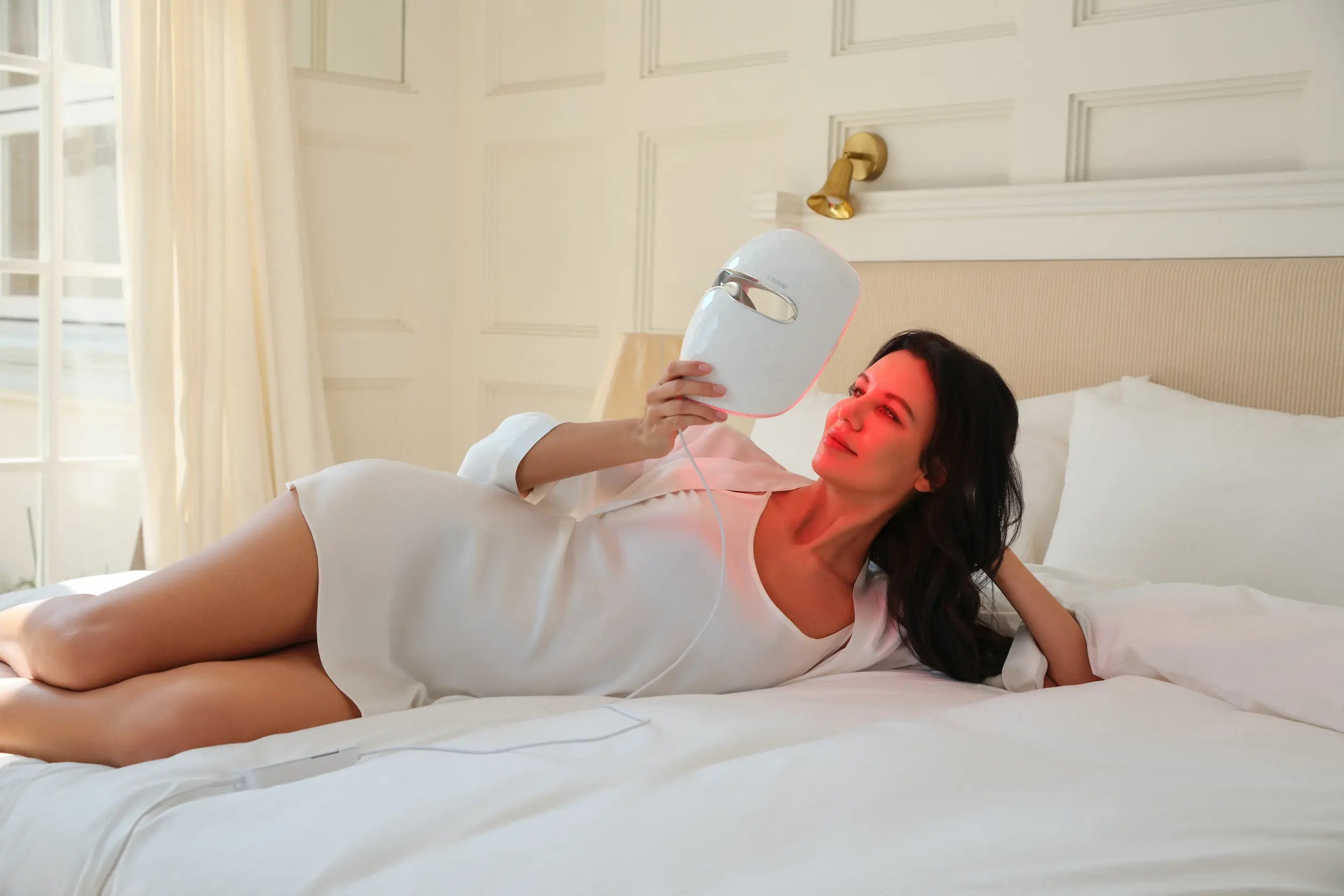
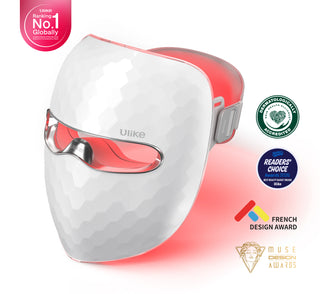
The Ulike ReGlow LED Light Therapy Mask was built around exactly these three principles. Its 360° mirror reflection technology is designed to boost effective irradiance by an additional 77.4% compared to direct exposure, meaning the light that reaches your skin is amplified rather than lost to open air. Each of its 272 LEDs is manufactured to ±2nm wavelength precision, and its four modes each pair a specific dose (session length) with a specific wavelength combination — 5 to 8 minutes depending on the mode — rather than a one-size-fits-all approach.
If you want to compare these specs directly against other options, the Ulike LED light therapy devices page lays out irradiance, wavelength, and session details side by side.
Part 8: Why Some Brands Avoid Publishing Full Specs
If you've noticed that some LED mask listings are surprisingly vague about irradiance or wavelength tolerance, that's not always an accident. Publishing detailed, verifiable specifications opens a brand up to direct comparison and scrutiny — something a brand with a less rigorously tested device may prefer to avoid. This doesn't mean every brand withholding detailed specs is acting in bad faith, but it's a reasonable pattern to notice: the more confident a manufacturer is in their engineering, the more likely they are to publish granular, comparable data.
As a shopper, you can use this as a practical filter. If two devices are priced similarly but one discloses irradiance, wavelength tolerance, and third-party testing certifications while the other only lists LED count and vague marketing language, that transparency gap is itself useful information about which brand has likely invested more in the underlying engineering.
Part 9: A Real-World Example: Comparing Two Hypothetical Devices
Imagine two masks, both priced around $350. Device A lists "160 LEDs" and calls itself "clinically proven" without further detail. Device B lists "150 LEDs," a stated irradiance of 25 mW/cm² at the skin surface, a wavelength tolerance of ±3nm, and SGS certification. Despite having a slightly lower LED count, Device B gives you meaningfully more information to evaluate its actual performance and lets you compare it against other devices using the same objective measurements.
This example illustrates why irradiance, dose, and wavelength precision are the specs worth prioritizing over LED count alone. A device that's transparent about these three factors is giving you the tools to make an informed decision, rather than asking you to trust a headline number and a marketing phrase.
Part 10: Why Manufacturers Rarely Agree on a Single Standard
Unlike some other consumer electronics categories, LED masks don't yet have a single universally adopted industry standard for how irradiance or dose should be measured and reported, which makes direct comparisons between brands more difficult than it should be. Some brands measure irradiance directly at the skin surface, others at a small distance from the device, and these different methodologies can produce different numbers for devices with genuinely similar real-world performance.
Given this lack of standardization, the most reliable approach is to look for brands that are transparent about their testing methodology, not just the resulting number, and to prioritize devices with independent, third-party verification (like SGS testing) over self-reported figures alone, since an independent test is less susceptible to methodology choices designed to produce a more flattering number.
Part 11: Putting It All Together: A Sample Comparison Worksheet
If you're seriously comparing multiple devices, it can help to build a simple worksheet with columns for each of the factors covered in the sections above: total LED count, LEDs per treatment position, stated irradiance, wavelength(s) and their tolerances, recommended session length per mode, and any third-party certifications. Filling this out for each device you're considering, rather than relying on memory or a general impression after browsing several product pages, makes the comparison far more objective and considerably less susceptible to whichever page happened to have the flashiest marketing copy.
This sort of structured comparison also tends to reveal gaps in what different brands choose to disclose. You may find that one device provides every data point cleanly, while another leaves several worksheet columns blank because that information simply isn't published anywhere on their site — itself a meaningful data point about how much the brand has invested in, and is willing to be transparent about, its underlying engineering.
Once you've filled out a worksheet like this for two or three serious contenders, the decision usually becomes considerably clearer than it seemed when you started, since you're now comparing verified, like-for-like specifications rather than each brand's own marketing narrative about why their product is best.
Part 12: A Concrete Example of Disclosed Specs: Ulike ReGlow's Published Numbers
Rather than speaking only in hypotheticals, it's worth looking at a real example of the kind of disclosure this article recommends. Ulike publishes ReGlow's LED configuration as 272 total LEDs arranged 4 per treatment slot (compared to a single-LED-per-slot design in many competing devices), and states that its 360° mirror reflection technology increases light energy irradiance by 77.4% compared to direct exposure, based on its light-refraction design. These are the kinds of specific, footnoted figures — not vague marketing adjectives — that this article encourages you to look for when comparing any two devices.
Ulike also discloses its clinical testing basis for these figures: reports certified by SGS (an independent, internationally recognized testing and certification company), including data showing 96.9% of users tested reported a significant reduction in forehead lines after 4 weeks of use, based on self-reported data where individual results may vary.
Part 13: Conclusion
LED count alone doesn't determine how effective a mask actually is — irradiance, dose, and wavelength precision matter far more than a raw bulb-count headline. The Ulike ReGlow LED Light Therapy Mask discloses all three: a 77.4% irradiance boost from its mirror reflection technology, mode-specific dosing, and ±2nm wavelength precision across its LEDs.
Shoppers comparing devices often search for wavelength precision LED mask specs, power density red light therapy figures, or simply how much power red light therapy actually needs to be effective. Unfortunately, most LED mask specs explained on a typical product page stop at bulb count, leaving out the irradiance vs power LED mask distinction that actually determines results.
If you want to go deeper, look specifically for red light therapy joules per session data, the best LED mask specs disclosed by a manufacturer, and any explanation of how LED masks are tested — ideally citing mW/cm2 red light therapy figures rather than vague marketing language. This is exactly the kind of transparency that separates genuine LED face mask science from guesswork.
Part 14: Frequently Asked Questions
Q1: What is a good irradiance level for an LED mask?
There's no single universal number, but many effective at-home devices operate in the range of roughly 20-30 mW/cm² at the skin's surface. What matters most is that the irradiance is delivered evenly and consistently across the whole treatment area.
Q2: Does more LED bulbs mean better results?
Not necessarily. A device's effective irradiance and how evenly light reaches the skin matter more than raw bulb count. A well-engineered mask with fewer, better-positioned LEDs can outperform one with more, poorly distributed bulbs.
Q3: What does wavelength precision mean?
It refers to how closely a device's actual light output matches its advertised wavelength, usually expressed as a tolerance like ±2nm. Tighter tolerances generally mean more consistent, predictable results.
Q4: Can too much red light therapy be harmful?
Research suggests there's a point where more light energy stops adding benefit and may even reduce effectiveness, which is why session length (dose) matters as much as power.
Q5: How can I verify a brand's irradiance and wavelength claims?
Look for third-party testing certifications, such as SGS or ISO, which indicate an independent organization has verified the manufacturer's stated specifications.
Q6: How many LEDs does Ulike ReGlow have?
ReGlow uses 272 total LEDs, arranged with 4 LED beads per treatment slot, which Ulike states delivers 4 times more light output compared to a single-LED-per-slot design.
Q7: What does ReGlow's 360° mirror reflection technology do?
It's a light-refraction design that Ulike states increases light energy irradiance by 77.4% compared to direct exposure, helping light reach more of the face's natural contours for more even coverage.