




At Ulike’s Future Beauty, Powered by Light event in Boston, Nobel Prize–winning neuroscientist Dr. Ardem Patapoutian explored how the body senses temperature, touch, and pain. His research offers a useful principle for beauty technology: a device should be designed around the way skin and the nervous system actually experience it.
That principle challenges a familiar assumption that effective beauty treatments must feel uncomfortable. Skin is not a passive surface. It continually detects temperature and mechanical force, then converts those signals into information the nervous system can interpret. Any technology that touches the skin—from a spa treatment to an at-home IPL hair removal device—interacts with that sensory system.

What to Know
- The body detects temperature, mechanical force, and chemicals through specialized sensory receptors and ion channels.
- Pain serves a protective role by warning the body about potential or actual harm.
- TRPM8 is activated by innocuous cooling and menthol. Research shows that TRPM8 contributes to the pain-relieving effects of menthol, although cold can also be painful in some conditions.
- Patapoutian’s laboratory identified PIEZO1 and PIEZO2, mechanically activated ion channels that help cells detect force. PIEZO2 is essential to touch and proprioception.
- For at-home beauty devices, comfort should be considered alongside performance from the start of product design.
The Scientist Who Helped Explain Touch
Dr. Ardem Patapoutian is a professor at Scripps Research and a Howard Hughes Medical Institute investigator. In 2021, he shared the Nobel Prize in Physiology or Medicine with Dr. David Julius for discoveries of receptors for temperature and touch.

Patapoutian’s work helped answer a basic question: how does a cell detect physical force? His laboratory identified PIEZO1 and PIEZO2, a class of ion channels that open in response to mechanical pressure. These channels convert force into electrical and chemical signals that cells can use.
This basic science reaches far beyond the laboratory. It has changed how researchers study touch, body position, pain, blood pressure, and other processes that depend on cells sensing force.
How Skin Senses Touch Temperature and Pain
A hot surface, cool air, light pressure, and pain feel immediate, but each sensation begins with specialized molecular sensors. Ion channels in sensory cells respond to particular types of stimuli. When activated, they allow charged particles to cross the cell membrane and help generate signals that travel through the nervous system.
These systems overlap, but they are not interchangeable. Temperature receptors respond to ranges of heat or cold. Mechanically activated channels respond to force. Nociceptors detect potentially damaging stimuli and contribute to pain. Together, they help the body interpret its surroundings and respond quickly.
For products used directly on skin, this biology matters. Temperature, surface texture, pressure, and the timing of each contact all shape the user’s experience. A design that accounts for those signals can feel more controlled and comfortable.
Why Pain Matters
Pain is unpleasant for a reason. It alerts the body to potential or actual injury and prompts protective action. Touch a hot surface, and the nervous system rapidly helps you pull away. Without that warning, damaging exposure could continue.

Pain is therefore more than a feeling; it is protective information. Understanding where those signals begin and how the nervous system changes them is central to research on acute and chronic pain.
“The flip side of touch is pain.”
What Cooling Does to the Sensory System

TRPM8 is an ion channel that responds to innocuous cooling and compounds such as menthol. It helps the nervous system detect cool temperatures. Animal research also shows that TRPM8 is central to menthol-induced analgesia in models of acute and inflammatory pain.
That does not mean every cold sensation reduces pain. Excessive cold can be uncomfortable, and some forms of nerve injury cause painful cold sensitivity. The more accurate conclusion is that controlled cooling can change sensory signaling and, in the right context, make an experience feel more comfortable.
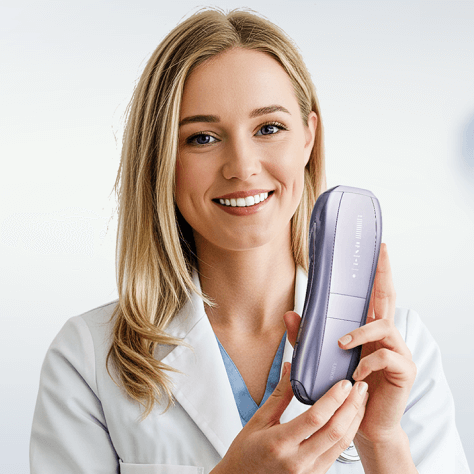
This distinction matters for IPL hair removal. IPL devices deliver light energy that creates heat in the target area. A cooled treatment window can help manage the sensation at the skin’s surface during use. Ulike’s Sapphire Cooling Technology is designed around that interaction, combining IPL delivery with continuous contact cooling for a more comfortable at-home experience.
How PIEZO Channels Detect Pressure
Patapoutian’s laboratory discovered PIEZO1 and PIEZO2, mechanically activated ion channels that respond when force deforms a cell membrane. When a PIEZO channel opens, positively charged ions enter the cell and begin a signaling process.

PIEZO2 plays a major role in light touch and proprioception, the sense of where the body is and how it is moving without having to look. These findings show that pressure is not a vague physical input. Cells have dedicated machinery for detecting it.
That insight also applies to devices that touch skin. Contact force, movement, surface finish, and pressure distribution can all affect how an interaction feels. Gentle design is therefore measurable at the level of the stimulus, not merely described in marketing language.

A More Skin Conscious Approach to Beauty Technology
Beauty technology should consider both what a device does and how the body experiences it. Comfort and performance do not have to be treated as opposing goals. In practice, comfort depends on careful control of temperature, pressure, surface contact, and treatment timing.
Patapoutian’s research does not prescribe a specific beauty routine or product. It offers a stronger foundation: understand the sensory system first, then design the interaction around it. For at-home IPL and other skin-contact technologies, that approach makes gentleness a product requirement rather than an afterthought.
For a closer look at how the skin protects, renews, and adapts, read our companion article on skin barrier health and the science of resilience, featuring Dr. Anna Mandinova’s keynote from the same event.