 Ulike ReGlow Pro★ 5.0 (511)


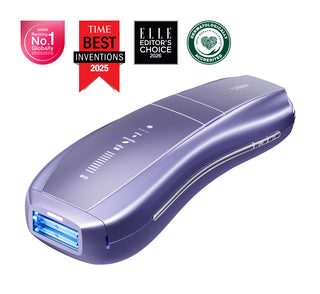


Table of Contents
Last Updated: 2026-07-28 — This update adds a comparison subtable for Alexandrite, Diode, and Nd:YAG laser hair removal technologies, along with supporting academic citation sources.
Table of Contents:
- Part 1: Which Hair Removal Method Lasts the Longest?
- Part 2: Temporary Methods: Shaving, Waxing, and Depilatory Creams
- Part 3: Semi-Permanent Methods: IPL and Professional Laser
- Part 4: Permanent Hair Removal: Electrolysis
- Part 5: Which Hair Removal Method Is Right for You?
- Part 6: Frequently Asked Questions
Part 1: Which Hair Removal Method Lasts the Longest?
Electrolysis is the most permanent hair removal method — it is the only technique officially recognized by the FDA as delivering permanent results. For at-home use, an IPL hair removal device offers the longest-lasting hair reduction available without a clinical visit. Methods like shaving and waxing are entirely temporary and require ongoing upkeep every few days to weeks.
If you're weighing the different methods of hair removal and want to invest in something that genuinely reduces regrowth over time, read on — this guide covers everything from quick shaving to permanent electrolysis, with an honest hair removal methods comparison so you can make the best decision for your skin, budget, and lifestyle.
Here’s how every major hair removal method compares on permanence, cost, and convenience.
| Method | Permanence | Cost | Pain | At-home available | Best for |
|---|---|---|---|---|---|
| Shaving | None (1–3 days) | Very Low | None | Yes | Quick, painless upkeep |
| Waxing | Temporary (3–6 weeks) | Low–Medium | Moderate–High | Yes (kits) | Longer smoothness without clinic |
| Depilatory Creams | Temporary (3–7 days) | Very Low | None | Yes | Large areas, sensitive skin |
| IPL | Long-term reduction (months–years) | Medium | Low–Mild | Yes | At-home long-term reduction |
| Professional Laser | Semi-permanent (70–90% reduction) | High | Mild–Moderate | No (clinic only) | Fast, powerful results per session |
| Electrolysis | Permanent (FDA-recognized) | Very High | Moderate | No (clinic only) | True permanent removal, any hair/skin |
Part 2: Temporary Methods: Shaving, Waxing, and Depilatory Creams
Temporary methods remove hair at the surface or just below it but leave the follicle intact, meaning regrowth is inevitable. They're accessible and affordable but require continuous maintenance.
Shaving
Shaving is the most common and fastest hair removal method. A razor cuts hair at the skin's surface, leaving follicles completely untouched. Results last anywhere from one to three days before stubble reappears, depending on individual hair growth rates. Cost is minimal — a pack of razors and shaving cream amounts to just a few dollars — but the cumulative time and expense over a lifetime adds up significantly. Shaving is painless, convenient, and can be done anywhere, but it offers zero lasting benefit and can cause irritation, ingrown hairs, and razor burn with repeated use.

Waxing
Waxing removes hair from the root rather than the surface, which means results last noticeably longer — typically three to six weeks. Because the follicle is pulled out entirely, regrowth tends to come back finer and softer over time with regular sessions. Waxing can be done at home with over-the-counter strips or at a salon for a cleaner finish. It does involve moderate to high pain, particularly in sensitive areas like the bikini line, underarms, or face. Cost varies from a few dollars for at-home kits to $20–$80+ per salon appointment. While objectively longer-lasting than shaving, waxing is still classified as temporary — the follicle remains active, and hair always returns.

Depilatory Creams
Depilatory creams use chemical compounds (typically thioglycolates) to dissolve the hair shaft just beneath the skin's surface. Results usually last a little longer than shaving — around three to seven days — but not as long as waxing. They're painless, inexpensive, and suitable for large areas like legs or arms. The main drawbacks are a strong chemical smell and potential skin sensitivity, particularly for those with eczema or reactive skin. Like shaving, depilatory creams do not affect the follicle, making them a purely temporary solution.

Part 3: Semi-Permanent Methods: IPL and Professional Laser
Semi-permanent methods target the hair follicle itself using light or laser energy. Over multiple sessions, they significantly reduce hair density and slow regrowth — with results that can last months to years. These are the most popular options for people seeking lasting hair removal methods comparison results without committing to permanent treatment.
At-Home IPL Hair Removal — How It Works and How Long Results Last
At-home IPL provides long-term hair reduction for most skin types, with results lasting months to years after the initial treatment cycle. IPL (Intense Pulsed Light) works by emitting broad-spectrum light pulses that penetrate the skin and are absorbed by melanin in the hair shaft. This light converts to heat, which travels down to the follicle and disrupts the hair growth cycle without damaging surrounding skin tissue.
A standard at-home laser hair removal or IPL treatment cycle typically runs 10 to 12 weeks, with sessions every one to two weeks. After completing the initial cycle, most users find they only need occasional maintenance treatments — roughly once every one to three months — to sustain results. Clinical evidence suggests that a well-designed IPL laser hair removal device can deliver up to 90%+ hair reduction with consistent use.
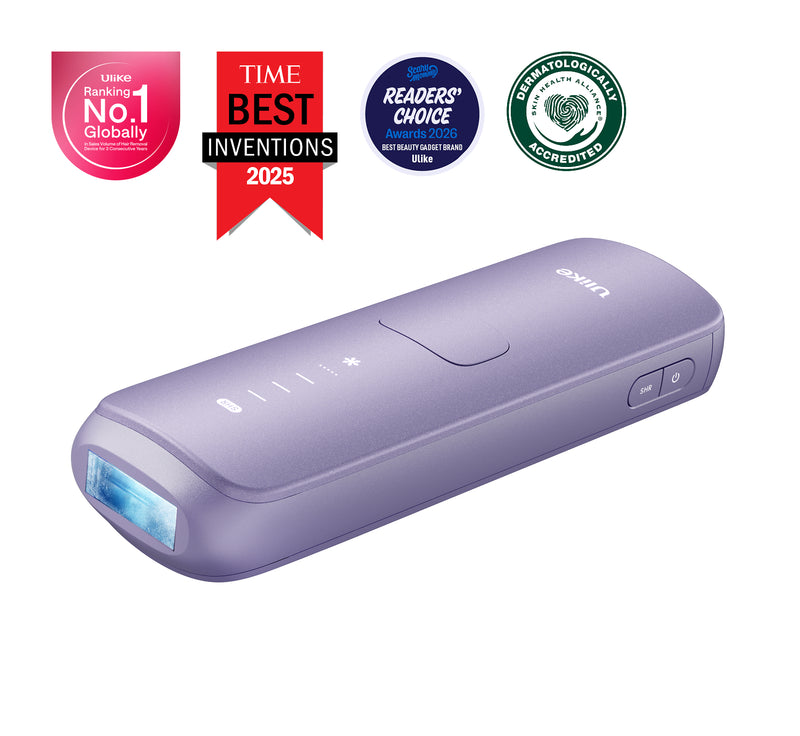
A leading example in this category is the Ulike Air 10, which features Sapphire Ice-Cooling technology to minimize discomfort during treatment and has demonstrated a 96% hair reduction rate in user testing (see official website for full specifications). If you're ready to compare specific at-home models, browse Ulike's IPL hair removal devices to see current devices side by side. The device is designed for at-home use across multiple body areas, making it one of the most accessible hair removal device options for long-term results without clinic visits.

It’s important to note that according to FDA guidelines on home-use devices, IPL provides long-term hair reduction rather than permanent removal. This distinguishes it from electrolysis in regulatory terms, though in practice, many users experience results that last for years.
Professional Laser Hair Removal — How It Works and How Long Results Last
Professional laser hair removal machine treatments at a clinic use concentrated single-wavelength laser beams — such as Alexandrite, Diode, or Nd:YAG — to target melanin in hair follicles with greater precision and power than at-home IPL devices. Because clinic lasers deliver more energy per pulse, results tend to be faster per session and may extend longer between maintenance appointments.
A typical professional laser treatment course involves six to eight sessions spaced four to six weeks apart. Most clients achieve 70–90% permanent hair reduction after completing the full course, though touch-up sessions are usually recommended once or twice a year. Professional laser treatment is more effective for coarser, darker hair and is generally not suitable for very light, grey, or red hair due to the lack of melanin to target.
When comparing IPL vs. professional laser, the key difference is precision and intensity: clinic lasers use a single targeted wavelength tuned to the follicle's depth, while IPL emits a broader spectrum of light. This gives laser treatments a slight edge in efficacy per session, but at-home IPL laser hair removal devices close this gap significantly over a complete treatment cycle. For a full breakdown, see our guide on IPL vs salon laser hair removal.
Diode vs. Alexandrite vs. Nd:YAG: How They Compare for Long-Term Reduction
Although all three clinic laser types target melanin in the hair follicle, they differ in wavelength, ideal skin/hair matching, and how often maintenance sessions are typically needed to sustain results. The table below summarizes how they compare.
| Laser Type | Wavelength | Best Skin/Hair Match | Long-Term Reduction Range* | Maintenance Considerations |
|---|---|---|---|---|
| Alexandrite | 755 nm | Lighter skin tones with dark, coarse hair | ~35-84%* | Often fewer touch-ups for well-matched candidates, but not recommended for darker skin due to pigment-change risk |
| Diode | 800-810 nm | Widest range of skin tones; versatile | ~33-69%* | A balanced middle option; maintenance frequency still varies with device power and hair coarseness |
| Nd:YAG | 1064 nm | Darker skin tones (longer wavelength is safer here) | ~30-74%* | May need more sessions for very light or fine hair, since it targets melanin less precisely than shorter wavelengths |
Evidence Note: These comparison ranges are drawn from a 2022 systematic review published in the Journal of Cosmetic and Laser Therapy, which pooled five randomized controlled trials covering a combined 223 patients. That is a relatively small and heterogeneous evidence base, so the figures above should be treated as general reference ranges rather than guaranteed outcomes for any individual.

Part 4: Permanent Hair Removal: Electrolysis
Electrolysis is the only FDA-recognized permanent hair removal method, but it requires multiple sessions per follicle. Unlike light-based technologies, electrolysis works by inserting a fine probe directly into each individual hair follicle and delivering an electric current that permanently destroys the follicle's ability to produce hair. Because it treats one follicle at a time, it is highly precise — and it is the only method capable of permanently eliminating hair of any color on any skin tone.
This universality is one of electrolysis's greatest advantages. IPL and laser rely on melanin contrast between hair and skin, which limits their effectiveness on very light or white hair and darker skin tones. Electrolysis has no such limitation, making it the go-to option for those with blonde, grey, or red hair who want permanent removal.
The trade-offs are time and cost. Each follicle requires multiple sessions, and treating even a small area like the upper lip or chin can take dozens of appointments over one to two years. Per-session costs typically range from $50 to $150, depending on location and session length, making full-body electrolysis extremely costly. For small, targeted areas, however, it remains the gold standard when permanent removal is the priority.
For a detailed comparison of at-home IPL and electrolysis across cost, convenience, and results, see our full guide on IPL vs electrolysis hair removal.
Part 5: Which Hair Removal Method Is Right for You?
The best method depends on your goals, budget, pain tolerance, and the area you want to treat. Here are four common scenarios to help guide your decision:
- For permanent removal of small areas (upper lip, chin, or eyebrows): Electrolysis is the only method proven to permanently eliminate hair on any skin or hair type. It requires patience and investment, but for small zones, the total number of sessions is manageable.
- For long-term hair reduction on larger areas at home: An IPL hair removal device is your best bet. Devices like the Ulike Air 10 deliver results comparable to professional treatments at a fraction of the lifetime cost, and they can be used on legs, arms, underarms, bikini line, and the face.
- For medical-grade results with a larger budget: Professional laser hair removal offers the most powerful light-based results available, with fewer sessions needed and a trained technician adjusting settings to your specific skin and hair profile.
- For occasional or temporary hair removal: Waxing or shaving remain perfectly valid options. Waxing is better for longer-lasting smoothness (3–6 weeks), while shaving is faster and painless for quick upkeep.
Part 6: Frequently Asked Questions
Q1: What is the most permanent method of hair removal?
Electrolysis is the only method officially recognized by the FDA as permanently removing hair. It works on all skin tones and hair colors by destroying individual follicles with an electric current. No other method — including laser or IPL — has received this specific FDA designation, though both can deliver long-lasting reduction that lasts years.
Q2: Is IPL hair removal permanent?
No — IPL is classified as long-term hair reduction, not permanent removal. After a full treatment cycle of 10–12 weeks, most users experience a dramatic decrease in hair density and much slower regrowth. However, periodic maintenance sessions are typically needed every few months to sustain results. For more context, see our section on semi-permanent methods above.
Q3: What's the difference between IPL and laser hair removal?
The main technical difference is the light type. A laser hair removal machine used in clinics emits a single concentrated wavelength of light specifically tuned to target hair follicles at a precise depth. IPL devices, including at-home models, emit broad-spectrum light across multiple wavelengths. Clinic lasers are more powerful per session and can be finely calibrated, while at-home IPL is safer for self-use and more cost-effective over time. Both work on the same principle — using light energy to damage the hair follicle and inhibit future growth — and the results after a complete cycle are comparable for most users.
Q4: Which laser technology (Alexandrite, Diode, or Nd:YAG) needs the fewest maintenance sessions?
There isn't one technology that is universally “best” for minimizing maintenance — it depends heavily on how well the laser's wavelength matches your skin tone and hair color. Alexandrite tends to need fewer touch-ups for people with light skin and dark, coarse hair, but is generally not recommended for darker skin tones. Nd:YAG is the safer choice for darker skin but may require more sessions on lighter or finer hair. Diode falls in between and works across a wider range of skin tones. See the technology comparison table in Part 3 for a fuller breakdown of these trade-offs.
Q5: How much clinical evidence supports these laser maintenance frequency claims?
The comparison figures above are based on a 2022 systematic review that pooled five randomized controlled trials covering 223 patients total — a useful but limited evidence base. Because sample sizes were small and study designs varied, these numbers are best read as general reference ranges rather than a guarantee of a specific maintenance schedule for any individual. See the Evidence Note in Part 3 for more detail.
Conclusion
When comparing different hair removal options, the right answer comes down to how permanent you need results to be and how much time and money you’re willing to invest. Electrolysis wins for permanence; professional laser wins for speed and precision; and at-home IPL wins for the best balance of affordability, convenience, and long-lasting results. Whatever your choice, consistency is key — no method works overnight, but the right one, used correctly, can transform your hair removal routine for years to come.