 Ulike ReGlow Pro★ 5.0 (511)




-
There's no strong evidence that time of day changes red light therapy's effectiveness.
-
The best time is whichever slot you'll consistently stick to.
-
Ulike's own instructions don't specify morning or evening use.
-
Anchor your session to an existing daily habit for better consistency.
One of the most common questions people ask before starting red light therapy has nothing to do with wavelengths or modes — it's simply, "when do I actually do this?" Between a morning rush and an exhausted evening routine, finding a consistent slot matters more than picking the theoretically "perfect" time.
It's worth acknowledging upfront that this question causes more hesitation than almost any technical spec discussed elsewhere. Scheduling friction — not skepticism about whether the device works — is often the real reason a new LED mask ends up unused in a drawer after a few weeks. Solving the scheduling question is genuinely as important as understanding the science.

Table of Contents:
- Part 1: The Case for a Morning Routine
- Part 2: The Case for an Evening Routine
- Part 3: Does the Time of Day Actually Change the Results?
- Part 4: Tips for Building a Routine You'll Actually Stick To
- Part 5: What to Do When Your Schedule Changes
- Part 6: Why Ulike ReGlow's Documented Steps Don't Specify a Time of Day
- Part 7: Letting Ulike ReGlow's Design Work With Whatever Time You Choose
- Part 8: Conclusion
- Part 9: Frequently Asked Questions
Part 1: The Case for a Morning Routine
Using your mask in the morning means you start the day with a brighter, more energized-looking complexion — a nice psychological boost alongside the physical benefits. It also means your skin has the full day to benefit from any post-session serum application before you add makeup or sunscreen. If your evenings are unpredictable, anchoring your session to something consistent, like your coffee or breakfast, can help lock in the habit. The main tradeoff: mornings are often rushed, and an 8-minute session can feel like a lot to fit in before work or school.
Part 2: The Case for an Evening Routine
Many people prefer red light therapy before bed, treating it as a wind-down ritual rather than one more task on a morning checklist. Skin undergoes much of its natural repair overnight, so some people like the idea of pairing that biological window with a session designed to support collagen and cellular repair — a mechanism the American Academy of Dermatology also points to when explaining how red light is believed to work. Evening sessions also naturally follow makeup removal and cleansing, which is exactly the clean-skin state your mask needs to work effectively. The tradeoff here is that evenings can get pushed later and later, making it easier to skip sessions on busy or tired nights.
Part 3: Does the Time of Day Actually Change the Results?
There's no strong evidence that time of day meaningfully changes effectiveness on a biological level — the mitochondrial mechanism behind photobiomodulation isn't tied to a specific circadian window the way some other treatments are. Harvard Health describes red light therapy's effects on inflammation and collagen production as a general biological response, not one that's been shown to differ meaningfully by time of day. What matters far more is consistency: a session you'll actually do every day at 7am beats a "theoretically optimal" evening session you keep skipping.
Part 4: Tips for Building a Routine You'll Actually Stick To
- Pick a time slot tied to an existing habit (right after brushing your teeth, during a podcast episode, etc.).
- Keep your mask somewhere visible so it becomes part of your visual routine, not something buried in a drawer.
- Use a charging routine that matches your usage routine — charge overnight if you use it in the morning, or vice versa.
- Set a recurring reminder for the first few weeks until the habit sticks on its own.
Syncing Your Routine With Other Habits
Habit stacking — attaching a new habit to an already-established one — is one of the most effective ways to build consistency with any new routine, LED masks included. If you already have a reliable daily habit (making coffee, journaling, a specific point in your commute-free morning), attaching your LED mask session directly after that existing habit borrows its consistency. Over several weeks, the two behaviors become linked in your routine, making it far less likely you'll simply forget or deprioritize your session on a busy day.
How Weekend Routines Differ From Weekdays
Many people find their weekday and weekend schedules are different enough that a single fixed time slot doesn't work for both. Rather than forcing an identical schedule across all seven days, it can be more sustainable to have a weekday anchor (like right after your morning shower before work) and a separate weekend anchor (like during a slower Saturday morning routine). What matters is that each version of your schedule has a reliable trigger, even if the specific time of day shifts.
Part 5: What to Do When Your Schedule Changes
Life doesn't stay consistent forever — travel, new work schedules, or seasonal changes can all disrupt an established routine. Rather than abandoning your LED mask habit entirely when your schedule shifts, it's worth deliberately re-anchoring your session to a new consistent cue rather than leaving it to chance. A habit that survives schedule changes tends to be one that's tied to a specific trigger (like a meal or a daily task) rather than a specific clock time alone. It's also worth explicitly giving yourself permission to abandon the search for a theoretically perfect schedule — the research discussed above simply doesn't support the idea that one specific time of day meaningfully outperforms another.
Reviewing Your Schedule Choice Every Few Months
Even once you've settled into a consistent morning or evening routine, it's worth periodically reassessing whether it's still the right choice as your life circumstances change. A schedule that worked well during one season of life — say, a quiet period working from home — might need adjustment after a job change, a new baby, or a shift in your general daily structure. Treating your schedule as a living decision you can revisit, rather than a permanent commitment made once, keeps the habit sustainable through life's inevitable changes. When you do need to adjust, apply the same principle noted earlier: pick a slot tied to an existing, stable habit, and give the new schedule a few weeks to become automatic before judging whether it's sustainable.
Part 6: Why Ulike ReGlow's Documented Steps Don't Specify a Time of Day
Consistent with the flexible-scheduling argument made above, it's worth noting that Ulike's stated four-step usage guide for ReGlow doesn't specify morning or evening use at any point — it focuses entirely on the sequence (cleanse, connect, select mode, relax) rather than the clock. Cleveland Clinic frames consistent, regular use as the key driver of results from LED devices, rather than any particular time of day. This absence is itself informative: the manufacturer that would have the most incentive to specify an "optimal" time, if one genuinely existed, simply doesn't make that claim.
Part 7: Letting Ulike ReGlow's Design Work With Whatever Time You Choose
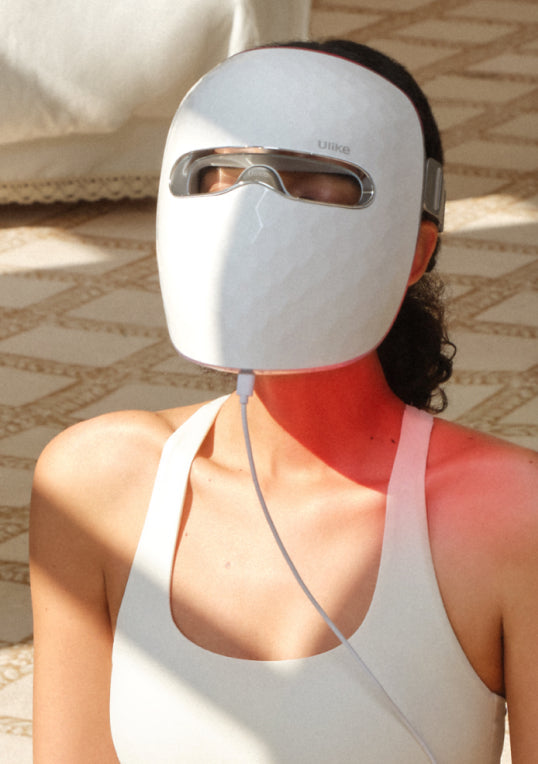
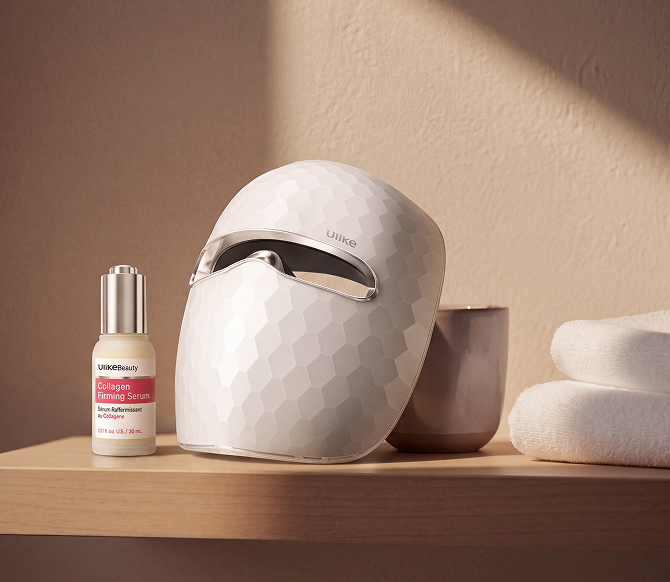
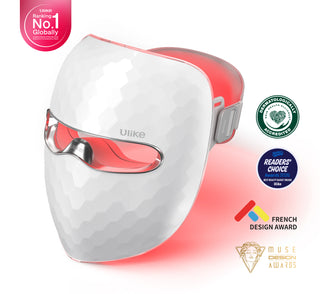
Because the flexible-scheduling case above depends on a device that's actually quick and easy to fit in, a few specific things about Ulike ReGlow Red Light Mask make either a morning or evening slot realistic:
- A tested, moderate schedule— 3 sessions a week, 1-2 modes per session, under 20 minutes total; Glow and Clear run 5 minutes, Firm and Rejuvenate run 8 minutes.
- Four targeted modes in one device— Firm Mode (red 630nm + infrared 830nm) stimulates collagen for plumper skin and fewer wrinkles, Rejuvenate Mode (yellow 590nm + infrared 830nm) strengthens the barrier and calms redness, Clear Mode (blue 465nm + red 630nm + infrared 830nm) targets acne-causing bacteria, and Glow Mode (yellow 590nm + red 630nm + infrared 830nm) brightens tone and dullness.
- 3D ergonomic fit— adjustable, contoured straps and soft cushioning distribute pressure evenly instead of concentrating it around the nose or cheekbones.
Its short-press control cycles through Glow, Firm, Rejuvenate, and Clear in sequence, so you can select Glow for a quick radiance boost on a rushed morning, or Firm for a longer, more deliberate evening wind-down — without locking you into one mode-and-time combination. If you'd like to compare modes and specs side by side, the rest of Ulike's LED Light Therapy Devices collection is worth a look.

Part 8: Conclusion
Consistency matters more than the specific time of day you choose, and ReGlow's short 5-to-8-minute sessions fit comfortably into either a morning or evening routine. Picking a time slot tied to an existing daily habit is the simplest way to make the routine stick long-term — some people build sleep-adjacent evening rituals around it, others prefer mornings, and either can become a genuine self-care habit with enough consistency.
Part 9: Frequently Asked Questions
Q1: Is it better to use an LED mask in the morning or at night?
There's no strong evidence that time of day changes effectiveness. The better choice is whichever time you'll consistently stick to.
Q2: Can I use red light therapy right before bed?
Yes, many people use it as part of an evening wind-down routine after cleansing, since skin undergoes much of its natural repair overnight.
Q3: Does using an LED mask in the morning affect my makeup routine?
You should complete your LED session on clean skin before applying any makeup or sunscreen, so a morning routine works best if you have a few extra minutes before getting ready.
Q4: What should I do if my LED mask routine gets disrupted by travel or schedule changes?
Re-anchor your session to a new consistent daily cue rather than abandoning the habit entirely, since routines tied to specific triggers tend to survive schedule changes better than ones tied only to a clock time.
Q5: Does Ulike specify a best time of day to use ReGlow?
No, Ulike's documented usage steps focus on the sequence of use (cleanse, connect, select mode, relax) rather than recommending a specific time of day.