
 Ulike ReGlow Pro★ 5.0 (511)




-
Red light may support faster healing by boosting cellular energy and calming inflammation.
-
Always follow your provider's specific aftercare instructions first.
-
Ulike's own guidance advises avoiding ReGlow use within 2 weeks after any surgery.
-
Never use any LED device on open, broken, or actively bleeding skin.
Microneedling, chemical peels, and laser resurfacing all work by intentionally creating controlled micro-injury to trigger the skin's renewal process — which also means recovery time and visible redness. Red light therapy has become a common recommendation for supporting that healing window. Here's what the evidence says and how to time it safely.
The appeal here is fairly intuitive: if a treatment's downside is a longer, more uncomfortable recovery period, anything that can shorten or ease that window without compromising results is worth understanding. That said, "supporting recovery" is a more measured, medically appropriate framing than the more dramatic claims sometimes seen in marketing, so it's worth separating the two.

Table of Contents:
- Part 1: Why Red Light Is Often Paired With In-Office Procedures
- Part 2: Clinic-Grade Devices vs. At-Home Masks
- Part 3: How to Safely Time Red Light Therapy After a Procedure
- Part 4: What Providers Look For Before Clearing You
- Part 5: What About Scarring?
- Part 6: Communicating Clearly With Your Provider
- Part 7: A Cautious Restart Once You're Cleared With Ulike Red Light Mask
- Part 8: Conclusion
- Part 9: Frequently Asked Questions
Part 1: Why Red Light Is Often Paired With In-Office Procedures
The Research Behind Light and Healing
Red light therapy wound healing support isn't a new idea — it has roots in decades of photobiomodulation research, including some of the earliest studies on light therapy speeding up healing in soft tissue. WebMD notes that people who've had surgery for skin resurfacing have also had red LED light therapy afterward, with studies showing it can lower redness, swelling, and bruising while speeding up the healing process. The mechanism ties back to increased cellular energy (ATP production), which supports the processes involved in tissue repair, and to red light's anti-inflammatory effects, which can help calm the swelling and redness that follow a resurfacing procedure. This is part of why many dermatologists and medical spas already incorporate LED light into post-procedure protocols, often applying it immediately after microneedling, peels, or laser treatments.
What Specific Studies Have Found
Clinical literature includes case studies specifically examining red LED therapy after procedures like blepharoplasty (eyelid surgery) and periocular laser resurfacing, both of which found that red light exposure appeared to support faster recovery. While at-home devices and clinical protocols aren't identical in intensity, the underlying photobiomodulation mechanism is the same principle behind at-home use after microneedling. The American Academy of Dermatology notes that dermatologists sometimes add red light to a broader treatment plan that includes procedures like microneedling or chemical peels, using it as a complementary, not standalone, therapy.
Part 2: Clinic-Grade Devices vs. At-Home Masks
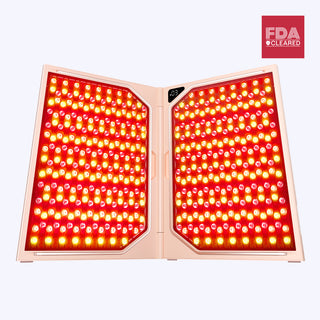
It's worth being clear that the red light devices used immediately post-procedure in a clinical setting are often different in scale and intensity from consumer at-home masks. Clinic devices may deliver treatment through larger panels at controlled, professional-grade settings under direct supervision. At-home devices are designed for a different context: self-administered, lower-intensity, frequent use over the long term. This distinction is part of why "using red light therapy after a procedure" can mean quite different things depending on whether it's happening in the treatment room immediately afterward versus weeks later as part of your personal maintenance routine at home. Some clinics use dedicated, higher-powered LED panels specifically for in-office application, distinct from the at-home masks most people use for ongoing maintenance.
Part 3: How to Safely Time Red Light Therapy After a Procedure
- Always follow your provider's specific aftercare instructions first — they override general guidance.
- Ask your dermatologist or aesthetician when it's safe to reintroduce light therapy after your specific procedure.
- Avoid using any device on broken, actively bleeding, or open skin.
- Start with shorter sessions once cleared, and watch for any unusual reaction.
- Start with shorter sessions once cleared, and watch for any unusual reaction.
General Waiting-Period Guidance by Context
| Situation | General Guidance |
|---|---|
| Any surgery | Ulike advises avoiding use within 2 weeks post-surgery |
| Microneedling / peels | Follow your provider's specific timeline |
| Open or broken skin | Avoid light therapy device use entirely until healed |
| Laser resurfacing | Confirm timing directly with your treating provider |
These are general reference points, not medical advice — always defer to your provider. As a concrete, device-specific reference point, Ulike's own safety guidance for the ReGlow mask advises avoiding use within 2 weeks after any surgery, alongside a broader list of contraindications that includes heart conditions, autoimmune diseases, and reduced ability to sense temperature or stimuli.
Part 4: What Providers Look For Before Clearing You
When your provider evaluates whether you're ready to resume light therapy after a procedure, they're typically assessing whether the skin barrier has sufficiently re-formed, whether any residual swelling or open areas have resolved, and whether you're still within a window where certain topical products or treatments could interact poorly with your specific procedure. This varies significantly by procedure type and individual healing pace, which is exactly why a blanket timeline ("wait one week" or "wait one month") isn't reliable across different treatments and different people. If your provider gives you a specific date or milestone to watch for — like "once peeling has fully stopped" or "at your two-week follow-up" — it's worth documenting that guidance clearly rather than relying on memory, since post-procedure instructions often come alongside a lot of other information to absorb during an appointment.
Setting Realistic Expectations for Recovery Support
It's worth being precise about what "supporting recovery" means in practice: red light therapy may help you feel more comfortable and potentially shorten the visible redness window somewhat, but it doesn't eliminate the need for standard aftercare or accelerate healing to an unsafe degree. Treat it as a complementary comfort and support measure alongside, never as a replacement for, your provider's specific aftercare instructions.
Part 5: What About Scarring?
Beyond immediate post-procedure recovery, some interest in red light therapy scar healing extends to longer-term scar appearance, including surgical scars and acne scarring. Cleveland Clinic lists scars among the concerns red light therapy is being investigated for, alongside wrinkles, redness, and acne. The proposed mechanism is similar — supporting collagen remodeling and reducing inflammation during the extended healing window that scar tissue goes through. As with acute post-procedure recovery, this is generally considered a complementary approach best discussed with the provider managing your specific scar, rather than a guaranteed solution on its own.
Part 6: Communicating Clearly With Your Provider
When discussing resuming your at-home LED mask routine with your provider, it's helpful to bring specific information rather than a general question: your device's brand, the specific wavelengths used in the mode you're considering, and the recommended session length and frequency. This level of detail allows your provider to give more precise guidance than a broad "is light therapy okay" question would generate. If your provider isn't familiar with your specific at-home device, that's not unusual — the at-home LED mask market has grown rapidly, and it's reasonable for your provider to base their guidance on general wavelength and mechanism principles.
Part 7: A Cautious Restart Once You're Cleared With Ulike Red Light Mask
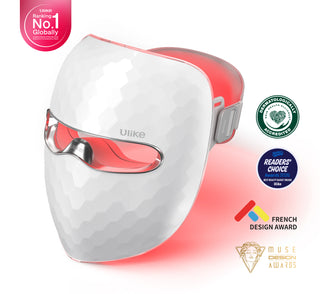
Once your provider confirms it's safe to resume light-based skincare, a mask built around gentler, blue-light-free options and comfortable, low-pressure contact makes for an easier restart. Here's what the Ulike ReGlow LED Light Therapy Mask offers on that front:
- Four targeted modes in one device— Firm Mode (red 630nm + infrared 830nm) stimulates collagen for plumper skin and fewer wrinkles, Rejuvenate Mode (yellow 590nm + infrared 830nm) strengthens the barrier and calms redness, Clear Mode (blue 465nm + red 630nm + infrared 830nm) targets acne-causing bacteria, and Glow Mode (yellow 590nm + red 630nm + infrared 830nm) brightens tone and dullness.
- A precisely engineered 1cm gap— keeps LEDs close enough for even light distribution while avoiding excess heat or skin contact issues.
- 3D ergonomic fit— adjustable, contoured straps and soft cushioning distribute pressure evenly instead of concentrating it around the nose or cheekbones.
- Layered scientific and regulatory backing— FDA-cleared for full-face wrinkles and mild-to-moderate inflammatory acne, backed by photobiomodulation researcher Dr. Michael R. Hamblin, and certified by SGS and the Skin Health Alliance.
Its Rejuvenate Mode — combining yellow and infrared light without blue light — is often the gentlest starting point, since it's designed to calm and support an even-looking complexion rather than target bacteria; starting there, at a reduced frequency below the standard 3-times-weekly guidance, before gradually reintroducing other modes is a conservative approach consistent with the guidance above. ReGlow's 1cm gap between LEDs and skin also helps avoid unnecessary pressure or heat on skin that's still healing, which matters more than usual in the weeks following a procedure. If you'd like to compare modes and specs side by side, the rest of Ulike's LED Light Therapy Devices collection is worth a look.

Part 8: Conclusion
Photobiomodulation research does support a role in wound healing, but provider-specific aftercare should always take priority over general guidance like what's covered here. The 2-week post-surgery guidance from Ulike is a general product safety instruction, separate from and in addition to whatever your treating provider tells you for your specific procedure — when the two differ, the more conservative, longer waiting period should win out. Once you're cleared to resume, a gentle, gradual restart tends to serve recovering skin far better than jumping straight back into a full routine.
Part 9: Frequently Asked Questions
Q1: Can I use red light therapy after microneedling?
Many providers do incorporate red light into post-microneedling protocols, but you should always follow your specific provider's aftercare timeline before reintroducing any at-home device.
Q2: Does red light therapy actually speed up healing?
Photobiomodulation research, including case studies on post-surgical and post-laser recovery, suggests red light may support faster healing by boosting cellular energy and calming inflammation, though results vary by procedure and individual.
Q3: Is red light therapy safe on healing or broken skin?
No — avoid using any LED device on open, broken, or actively bleeding skin. Wait until your provider confirms your skin has healed enough to tolerate light exposure.
Q4: How long after surgery should I wait before using an LED mask?
Ulike's own safety guidance for the ReGlow mask advises avoiding use within 2 weeks after any surgery. Always confirm the specific timing for your procedure with your treating provider as well.
Q5: Which ReGlow mode is recommended when restarting after a procedure?
Rejuvenate Mode (yellow and infrared, without blue light) is often a reasonable, cautious starting point once your provider confirms it's safe to resume light-based skincare.