



Do Planks Burn Belly Fat? The Complete Plank Exercise Guide for a Flatter Stomach

Regarding a fit body and an hourglass figure, belly fat is the most common obstacle. You gain this fat so easily, but it is too hard to lose. In addition to disfiguring your physique, belly fat has other side effects as well. Many people search whether planks help lose belly fat before starting a new core routine — the short answer is yes, when planks are done consistently and paired with the right lifestyle habits.
An excessive amount of belly fat makes you prone to chronic diseases, including fatty liver disease, chronic heart disease, hypertension, and diabetes. Thus, belly fat is a common concern for people of all ages.
Excess belly fat is not just a cosmetic issue; it can lead to serious health complications, making it essential to address this concern.
So what should you do when you have stubborn belly fat? You must have thought of a diet. Although it works wonders for belly fat, the diet is not easy to maintain, which often results in post-diet weight gain. Then comes exercise as one of the most effective methods of reducing belly fat.
One of the most efficient exercises for getting rid of belly fat is the plank. In this guide, we explain what causes belly fat, whether planks burn belly fat, and exactly how to use planks — including the plank crawl and other variations — to lose belly fat safely.
The plank is not only an effective but also a versatile exercise that can fit into almost any fitness routine aimed at reducing belly fat.
Table of Contents:
- Part 1: How Do We Get Belly Fat?
- Part 2: What Are Planks Good For? What Do Planks Work?
- Part 3: Will Planks Burn Belly Fat?
- Part 4: Plank Regime to Lose Belly Fat
- Part 5: Method to Do Planks to Lose Belly Fat
- Part 6: Plank Exercises to Lose Belly Fat
- Part 7: Dos and Don'ts of Planks
- Part 8: More Benefits of Planks Beyond Belly Fat
- Part 9: Frequently Asked Questions
Part 1: How Do We Get Belly Fat?

There are mainly two types of abdominal fat: visceral fat, which surrounds the internal organs, and subcutaneous fat, which lies just under the skin. The major factor resulting in a fat belly is an unhealthy lifestyle. Fast food, sugary drinks, excessive alcohol, lack of exercise, physical inactivity, stress, a low-fiber diet, and reduced protein intake are some of the lifestyle factors behind an unwanted belly.
An improper diet increases appetite, leading to higher calorie intake and fat accumulation. Trans fats cause inflammation and insulin resistance, which reduce fat utilization. A sedentary lifestyle and overeating lead to weight gain.
A balanced diet and regular exercise are vital for managing weight and preventing fat accumulation, especially in the belly area.
Lastly, proteins induce a sense of satiety and fiber adds bulk to the food. Together they help you feel full, balance hunger hormones, and manage food intake. A deficient intake of these macronutrients causes fat to accumulate in your body.
Part 2: What Are Planks Good For? What Do Planks Work?
Planks are a full-body isometric exercise, meaning your muscles work hard without any movement. How do planks work? Primarily, they target the rectus abdominis, transverse abdominis, and oblique muscles — but they also engage your shoulders, chest, back, glutes, and legs as stabilizers.
This wide muscle engagement is exactly what planks help with beyond a flatter stomach: better posture, improved balance, stronger joints, and a more functional core that supports everyday movement, not just the way your belly looks.
Planks engage the whole body's muscles in exercise at once, induce calorie burning, strengthen the core, and ultimately help reduce belly fat. By engaging multiple muscle groups, planks can enhance overall strength and contribute to a more toned appearance, particularly in the core region.
Additionally, planks improve body posture, tone abdominal muscles, and enhance flexibility. Consequently, your belly appears flatter, and planking also helps fight belly bulges caused by fat or fluid accumulation. So, planks are a must-have in your routine.
Part 3: Will Planks Burn Belly Fat?
Planks are superb for overall belly fat loss because they raise your heart rate, engage your deepest core muscles, and burn calories even though you aren't moving. But do planks burn belly fat all on their own? Not exactly — spot reduction isn't how fat loss works in the body.
What planks do is boost your metabolic rate and tighten the muscles underneath your belly fat, so as your overall body fat percentage drops (through diet and total activity), your midsection is one of the areas that visibly tightens first. That's why a plank exercise for belly fat routine works best as part of a broader plan that also includes cardio, strength training, and a balanced, protein-rich diet — not as a standalone fix.
In short: Do planks help lose belly fat? Yes, as a highly effective supporting exercise — just don't expect planks alone to outwork a poor diet.
Part 4: Plank Regime to Lose Belly Fat
Planks only work well when done right. Overdoing or underdoing planks can prove to be more harmful than helpful. It is advised to start with a few-second sets and then gradually increase the duration. Here is a feasible plank regimen you can follow to lose belly fat.
For the First Week
When your body is not used to a workout involving multiple muscles, the first step is to slowly adapt it to exercising. Start with a 20-second plank and increase the duration to 60 seconds across the first week.
For the Second Week
By this point, your body has become used to planks, so you can increase the time from 60 seconds to 90 seconds. As you progress, increasing the duration of your planks further challenges your muscles and improves endurance.
Beyond the Second Week
In the third week, 90–120 second planks can do a great job of burning belly fat. Incorporating longer plank durations can enhance your workout's effectiveness, contributing to fat loss.
For Optimum Results
A 60-second plank set, performed three times a day, can produce significant results. You can lose 2–4 inches from your belly and waistline within one month by following this routine. Following a consistent routine leads to noticeable changes in belly fat and waistline measurements.
Part 5: Method to Do Planks to Lose Belly Fat
-
Spread an exercise mat over a hard surface. Do not try planks on your bed or sofa.
-
Place your forearms and elbows under your shoulders on the mat and elevate your thorax. Make sure your hands are not too close to or too far from each other.
Proper form is crucial to avoid injury and maximize the effectiveness of your planks, so ensure your body alignment is correct.
-
Now bring your toes together and form a straight line from head to toe. Also, tighten your thighs and glutes.
Engaging your core by tightening your thighs and glutes while in position helps build strength and stability.
-
Bring your belly button in and up. This will engage your core muscles.
Maintaining a relaxed neck and a straight head position helps prevent strain and ensures proper alignment while performing the plank.
Engaging your core muscles is crucial, as it helps stabilize your body during the exercise, enhancing its effectiveness.
-
Keep your neck relaxed and your head straight.
Proper alignment of your neck and head during planks is essential for avoiding discomfort and maximizing the exercise's impact.
Holding the proper planking position for an extended duration can significantly increase the benefits, enhancing core strength and stability.
-
• This is the proper planking position. Try to hold it for as long as you can.
Achieving the correct planking position is fundamental for optimizing your workout and preventing injuries. Holding the plank position for longer periods can lead to better results in terms of core conditioning and potential fat loss.
Part 6: Plank Exercises to Lose Belly Fat
There is a variety of planking positions to choose from, so you can pick the one you find easiest. These are five feasible, effective positions for losing belly fat, including the dynamic plank crawl.
Choosing a planking position that suits your fitness level can help you gradually build strength and endurance for better results.
1. Standard Planks
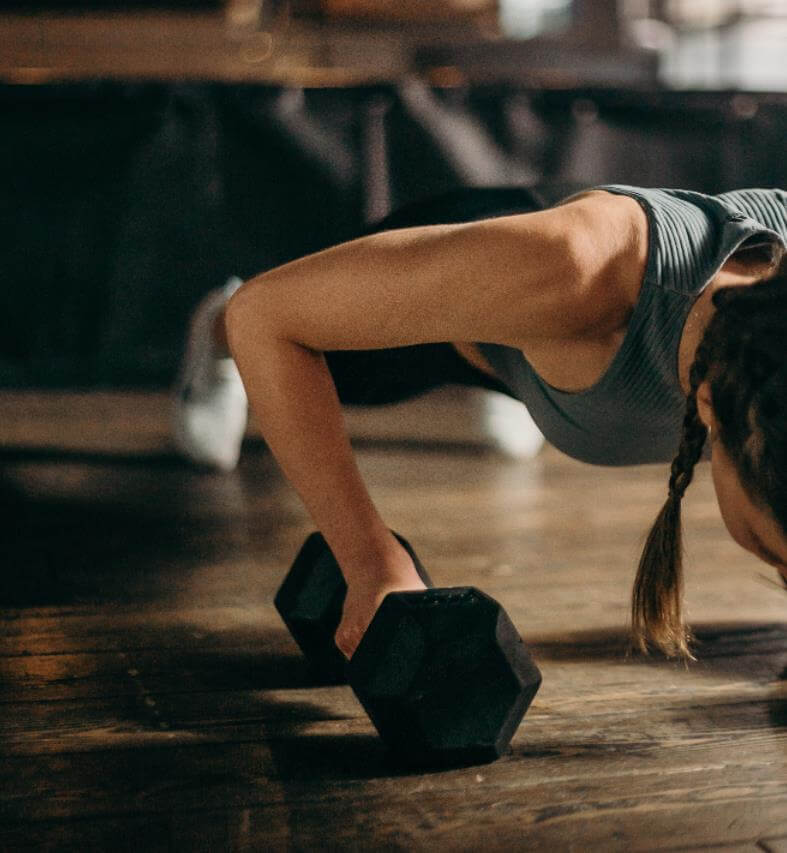
Here, you go into a push-up-style position, keeping your palms on the ground, arms straight, and feet together. It's the easiest planking position and an excellent starting point for beginners, activating multiple muscle groups at once.
2. Forearm Plank
The forearm plank is the most common position for losing belly fat. Keep your elbows and forearms on the ground and raise your upper body and legs so your feet touch the ground and your whole body forms a straight line.
3. Alternate Knee and Elbow Plank
This variation involves moving your body instead of holding it in one position. Start in a standard or forearm plank, then move your legs one by one so your knees touch your chest. This position relaxes certain muscles while burning a greater number of calories, and it engages your core effectively throughout the movement.
4. Side Planks
If you want to focus more on your oblique muscles, the side plank is for you. Lie on your side, keep your elbow and forearm on the ground, raise your body, place the other arm on your waist, and stack your legs. Hold this position for 30–60 seconds.
There are several variations of the side plank: you can raise your free arm in the air, lift yourself onto your feet instead of your knees, or support your body with your palm instead of your elbow. Variations of the side plank can target different muscle groups, enhancing your workout's effectiveness.

5. Plank Crawl
The plank crawl turns the static hold into a moving, calorie-torching exercise. Start in a high or forearm plank, then walk your hands and feet forward a few steps, pause briefly, and walk back to the start. Because it keeps your core continuously engaged through movement, the plank crawl is one of the most effective ways to increase calorie burn while still building deep core stability — a great answer if you're wondering what do planks workout beyond a static hold.
Part 7: Dos and Don'ts of Planks
When it comes to any type of exercise, the most important thing is to protect yourself from injury while working the target muscles. Here are some dos and don'ts of planks so you can get the results you want without mistakes.
Dos
The most important thing with a plank is the right position, held for a bearable duration. Achieving the right position and maintaining it for a suitable duration are crucial for maximizing the benefits of planking.
Proper Planking Position
For a proper planking position, your body must form a straight line, with your legs lengthened, your quads and glutes tightened, your core engaged, and your arms under your shoulders. Also make sure you're breathing adequately to give your muscles the oxygen they need.
Using a Mirror to Check Position
It's difficult to judge whether your body is in the proper position and maintaining it. Try planking in front of a mirror to monitor your form, or use your phone's front camera if there's no mirror nearby.
Slowly Increasing Planking Duration
The optimum time for planking is 60+ seconds, but that isn't achievable in one go. It's better to set 60 seconds as a goal and gradually work toward it. Gradually increasing your planking duration helps build strength and endurance without risking injury.
Don'ts
After the dos, you should also know what not to do while planking. Being aware of the dos and don'ts is essential to prevent injury and ensure an effective workout.
Don't Keep Your Buttocks Too High or Too Low
Do not lift your buttocks up or let them sag toward the ground when you're tired. Instead, release the position, rest for a few seconds, and do another rep. The goal is to strengthen your body and lose belly fat — not to set a record for how long you can hold a plank. A 30–60 second plank is enough as long as your position is right.
Don't Arch Your Back
As you work your belly muscles, don't arch your back or let your head dip down — doing so reduces abdominal muscle engagement and can strain your neck. Maintaining proper form is crucial during planks to maximize effectiveness and prevent injury.
Don't Hold Your Breath
You've probably seen breathe-in, breathe-out cues in other exercises. With planks, breathing adequately is just as important — don't forget to breathe while focusing on the correct position, or you risk passing out. Consistent breathing helps maintain endurance and concentration during your planking session.
Don't Hold a Plank for Too Long
As mentioned, 60 seconds is enough. Holding for much longer than that can cause your form to break down and may even lead to injury. Shorter durations maintain muscle engagement and reduce the risk of injury.
Part 8: More Benefits of Planks Beyond Belly Fat
Beyond answering do planks burn belly fat, regular planking offers whole-body benefits that make it worth keeping in your routine long after you've reached your goal:
-
Strengthens your core, back, shoulders, and glutes at the same time
-
Helps correct posture built up from long hours sitting at a desk
-
Improves balance, which carries over into yoga and other workouts
-
Increases flexibility through full-body muscle engagement
-
Acts as a quick stress reliever thanks to focused, controlled breathing
-
Raises your metabolic rate, supporting fat loss throughout the day
Part 9: Frequently Asked Questions
Q1: Do planks burn belly fat?
Yes, but not in isolation. Do planks burn belly fat when done alone? Planks strengthen and tighten your core muscles and raise your metabolic rate, which supports overall fat loss. Combined with a protein-rich diet, regular cardio, and consistent practice, planks are one of the most efficient exercises for plank exercise for belly fat results.
Q2: Will planks burn belly fat fast?
Most people following a consistent plank regime — starting at 20 seconds and building up to 60–90 seconds per set, three times a day — start to notice a tighter, flatter belly within about 3–4 weeks, with more visible changes in waistline measurements after one to two months.
Q3: What do planks work?
Planks primarily train the rectus abdominis, transverse abdominis, and obliques, while also engaging the shoulders, chest, lower back, glutes, and legs as stabilizing muscles — making it one of the most efficient full-body holds you can do.
Q4: What are planks good for besides a flatter stomach?
Planks improve posture, balance, and flexibility, strengthen joints and bones, and build the kind of functional core strength that supports everyday movement — this is what do planks help with that goes well beyond aesthetics.
Q5: What's the difference between a plank crawl and a regular plank?
A standard plank is a static, isometric hold, while the plank crawl adds movement — you walk your hands and feet forward and backward while staying in plank position. This extra movement increases calorie burn and challenges your shoulders and core even further, making it a great progression once standard planks feel easy.
Q6: Can planks alone give me a flat stomach, or do I need other treatments too?
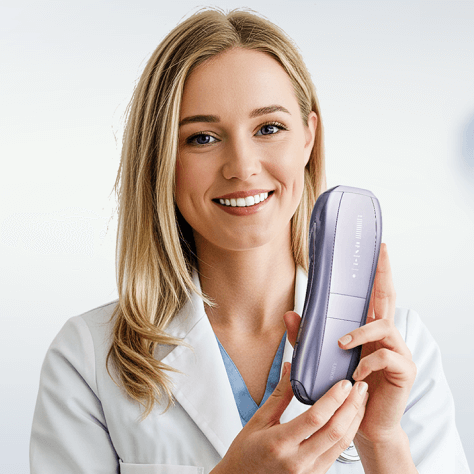
Planks build the muscle tone underneath your skin, but visible results also depend on your overall body fat percentage and skin condition. Many people pair their core routine with broader self-care — for example, using the Ulike Air 10 IPL hair removal device to keep skin smooth and confidence-ready while their plank routine works on tightening the core underneath.
Conclusion
If you want to get rid of belly fat, get your dream body, and prevent lifestyle diseases, the plank could be the right exercise for you. We've covered how fat accumulates over your belly, will planks burn belly fat, and how effective planks — including the plank crawl — are at treating it.
We also covered the correct plank position, plank duration, and variations, so you can answer what are planks good for with confidence and lose belly fat as long as you stay consistent, no matter which position you choose or how long you can hold a plank.
Lastly, it's important to know what to do and what to avoid while planking, because you want to lose fat, not strain your body. Understanding plank techniques can enhance your results and safety as you work toward your fitness goals. Good luck planking — here's to a stronger core and a smoother, more confident you!
Featured Products

Ulike Air 10
2 weeks to silky smooth skin.
96% Hair Density Reduction
The next-generation in simple,
lasting hair removal.
The 10 Best Gym Towels for Your Fitness/Exercise (2026)

5 Exercises to Lose Face Fat, Make Your Facial Look Slim
Does Skipping Reduce Belly Fat and Lose Weight? (& How Many Skip)

Explore Beauty
Ulike Air 10
2 weeks to silky smooth skin.
96% Hair Density Reduction in 2 Weeks

Ulike Air 3
3 weeks to silky smooth skin.
93% Hair Density Reduction in 4 Weeks

Ulike Air 4
4 weeks to silky smooth skin.
95.8% hair reduction in just 2 weeks*
Ulike Reglow
Clearer skin in 2 weeks: Fewer breakouts
Smoother skin in 4 weeks: Fewer lines, firmer feel