Crystal Hair Remover: Does It Work and Is It Safe?

Getting smooth skin at home often means choosing between razors, waxing, creams, and newer tools like a crystal hair remover. For many people, the appeal is simple: a compact device that fits into a bathroom drawer and can be used without blades, messy wax, or strong-smelling creams. Howevaer, viral videos do not always explain how these tools work or what results you can realistically expect. A crystal hair remover uses surface friction to remove visible hair, not to reduce future growth.
This guide explores how it works, how to use it safely, possible skin concerns, and when at-home IPL may be a better option.

Table of Contents:
- Part 1: Quick Answer: What Is a Crystal Hair Remover?
- Part 2: How Does a Crystal Hair Remover Work?
- Part 3: Do Crystal Hair Removers Actually Work?
- Part 4: How to Use a Crystal Hair Remover Safely
- Part 5: What Are the Benefits of a Crystal Hair Remover?
- Part 6: Crystal Hair Remover Side Effects and Risks
- Part 7: Best At-Home IPL Alternatives to Crystal Hair Removers
- Part 8: Conclusion
- Part 9: Frequently Asked Questions
Part 1: Quick Answer: What Is a Crystal Hair Remover?
In short, a crystal hair remover is a handheld, reusable hair-removal tool that uses micro-abrasive glass technology to buff away hair at the surface level while exfoliating dead skin cells.
Part 2: How Does a Crystal Hair Remover Work?
To understand the process, forget the futuristic “nano” language often used in ads. The device relies on mechanical friction rather than light, heat, or a chemical reaction.
Its textured face abrades each exposed hair as you move the tool in small circles. The weakened strands break or roll away near the follicle opening. At the same time, the surface buffs off loose cells from the outermost skin layer, which explains the initial smoother feel.
So, how do crystal hair removers work in practical terms? They act like a very fine manual buffer. The phrases crystalline hair removal and “nano-glass technology” describe the product’s surface, not a process that changes hair growth beneath the skin.
This distinction matters. The tool works only on exposed hair, unlike IPL, which directs light toward pigment in the follicle. New growth therefore becomes visible again on a timetable often similar to shaving.
Part 3: Do Crystal Hair Removers Actually Work?
In practice, the answer depends on what you expect. If your goal is to remove some visible hair and leave a temporarily polished feel, the device can work. If you expect a lasting reduction, it cannot deliver that kind of result.
People asking do crystal hair removers work should consider hair texture and technique. Fine hair on broad areas such as the lower legs or arms may come away more evenly. Coarse, dense, or very short hair may need extra passes, increasing friction before the result looks uniform.
The experience varies by skin type. Some users find it comfortable, while others notice warmth, stinging, or redness. Results may look patchy on curved areas or when pressure changes.
Treat crystal hair removal as short-term surface grooming, not follicle treatment. It may take longer than shaving and create visible debris. A small trial area is more informative than a dramatic social-media clip.
Part 4: How to Use a Crystal Hair Remover Safely
If you decide to try one, a cautious technique can reduce unnecessary friction. Check the manufacturer’s directions first because the surface and recommended treatment areas can vary. Patch-test a small area, wait for any delayed reaction, and stop if you feel burning rather than mild rubbing.
The steps below explain how to use crystal hair remover tools without treating speed as the main goal.
Start with Clean, Dry Skin
First, wash away sweat, body oil, makeup, and product residue, then dry the area carefully. Moisture can change how the tool moves and may tempt you to press harder. Do not apply body oil or moisturizer before treatment unless the instructions specifically direct you to do so.
Check the skin in good light. Postpone use over cuts, rashes, sunburn, or recently irritated areas. Test a discreet patch before treating a larger section.
Use Light Pressure and Gentle Circular Motions
Next, hold the device flat against the skin and make small, slow circles with minimal pressure. Let the textured surface contact the hair instead of grinding it against the body. Switch direction occasionally if the instructions permit, as hair grows at different angles.
Work in small sections so you can track each pass. If the hair does not lift gently, stop rather than increasing force. The tool may not suit that hair texture, length, or area.
Avoid Repeatedly Rubbing the Same Area
Most importantly, limit the number of passes. Friction builds gradually, so skin may not look irritated until after you finish. Repeatedly chasing a few remaining hairs can turn a mild exfoliating effect into soreness, grazing, or a rash.
Move on once an area feels warm or looks pink. Use another hair-removal method later for missed strands instead of going over them immediately. Give the skin time to recover, and follow the device’s guidance on how long to wait between sessions.
Moisturize and Soothe the Skin Afterward
Afterward, rinse or gently wipe away loose hair and skin debris without scrubbing. Pat the area dry and apply a simple, fragrance-free moisturizer if the skin feels comfortable. Avoid exfoliating acids, retinoids, scented body products, and tight clothing on a tender area.
Protect sensitive, exposed skin from strong sunlight and further friction. For persistent pain, marked swelling, blistering, or broken skin, stop use and contact a primary care provider or dermatologist.
Part 5: What Are the Benefits of a Crystal Hair Remover?
Even with its limitations, this simple tool has practical advantages for the right user. The benefits mainly concern convenience and surface grooming rather than longer-term changes to hair growth.
- No exposed blade: The smooth-edged body may feel easier to grip for someone who dislikes handling a razor. It can still graze skin through over-rubbing, so gentle use remains important.
- Two effects in one step: This form of exfoliating hair removal buffs visible hair and loosens surface cells together. Skin may feel smoother immediately, although more exfoliation is not always better.
- Reusable design: A washable tool creates less day-to-day waste than repeatedly replacing disposable razors, provided you clean, dry, and store it as directed.
- No depilatory chemicals: Users avoid the strong smell and timed application associated with some creams. Friction can still irritate skin, so “chemical-free” does not mean risk-free.
- No power required: Its compact shape fits into a toiletry bag and works without charging or a wall outlet.
Part 6: Crystal Hair Remover Side Effects and Risks
That convenience comes with a trade-off: the same rubbing that removes hair also acts on skin. Common crystal hair remover side effects include temporary redness, dryness, tenderness, itching, and a burning or grazed feeling. Applying excess pressure or treating one spot repeatedly raises the chance of irritation.
These areas may feel more sensitive because the skin is thinner or more prone to friction. Avoid sunburn, cuts, and active rashes. Extra caution is sensible with eczema, psoriasis, rosacea, acne, very dry skin, or retinoid use because the skin may already be sensitized.
A patch test is useful because reactions differ. Cleveland Clinic notes that crystal hair erasers may cause irritation, redness, or rash when overused.
Clean the tool as directed and do not share it. If discomfort increases, stop. Blistering, bleeding, worsening pain, or signs of infection warrant prompt medical advice. Seek urgent care if the reaction is severe or rapidly worsening.
Part 7: Best At-Home IPL Alternatives to Crystal Hair Removers
If repeated surface removal feels like a cycle you would rather reduce, IPL offers a different route. Friction-based hair removers buff away the visible strand, whereas an IPL hair removal device sends broad-spectrum light toward melanin in the hair. The absorbed energy affects the follicle over repeated treatments, helping reduce regrowth over time.
IPL requires consistency and compatible hair and skin pigment. Blonde, gray, white, and red hair may respond poorly, while some deeper skin tones may not suit a given device. Check its compatibility chart and perform a patch test before a wider session.
Home IPL differs from professional laser treatment, but careful use still matters. U.S. dermatology safety guidance notes that incorrect laser hair removal can cause burns, blisters, infection, or dark spots. Follow the home device’s labeling, treatment schedule, and precautions for your skin tone.
| Feature | Crystal eraser | At-home IPL |
|---|---|---|
| Main action | Abrades visible hair at the surface | Uses light energy to target pigmented hair follicles |
| Result goal | Immediate, temporary hair removal | Progressive reduction in regrowth |
| Routine | Repeat when stubble returns | Follow a scheduled treatment course, then maintenance |
| Main consideration | Friction and skin sensitivity | Hair color, skin tone, light sensitivity, and consistent use |
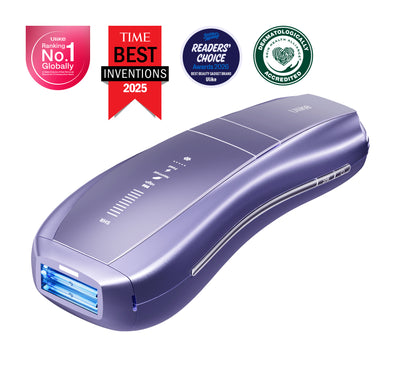
Ulike Air 10 for Fast, Comfortable Full-Body Hair Reduction
For faster routines across larger areas, Ulike Air 10 is designed for full-body hair reduction with enhanced coverage and comfort. Its Dual Lights system helps cover larger areas more efficiently, while AutoGlide enables continuous flashes without repeated button presses. With a stated 10-minute full-body treatment time, it is suitable for treating areas such as legs, arms, and torso in a single session.
Best for: Users looking for faster IPL treatments and stronger performance on different hair types, including coarse and stubborn hair.
Key features
- • Dual Lights design for wider coverage and improved treatment efficiency.
- • SHR mode uses rapid multi-pulse delivery to target stubborn hair.
- • SkinSensor automatically detects skin tone and helps adjust intensity.
- • Sapphire Ice Cooling keeps the treatment surface around 65°F (18°C) for improved comfort.
- • Fast, Normal, and High modes allow users to customise treatment intensity.

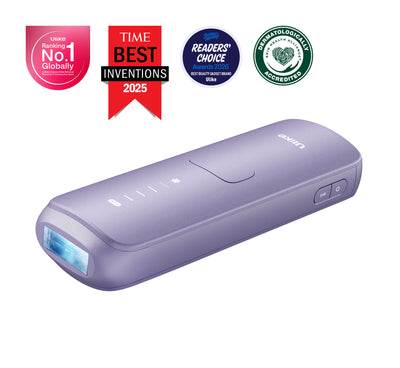
Ulike Air 4 for Simple and Comfortable At-Home IPL Treatments
If simplicity matters more than maximum coverage speed, Ulike Air 4 offers a simple and comfortable solution for users starting or maintaining an at-home IPL hair reduction routine. Its four treatment modes allow users to adjust intensity based on different areas and hair types, while AutoGlide supports continuous flashing for easier use on larger areas. With a stated 12-minute full-body treatment time, it provides a practical option for regular hair reduction sessions.
Best for: Users who prioritise ease of use, comfort, and flexible treatment options for everyday IPL care.
Key features
- • Four modes: Soft, Body, Power, and multi-pulse USHR for different treatment needs.
- • Up to 24J energy output and 7.2J/cm² energy density.
- • Flash intervals as short as 0.4 seconds for faster sessions.
- • AutoGlide reduces repeated button presses during treatment.
- • Sapphire Ice Cooling maintains the treatment surface around 64.4°F (18°C) for a more comfortable experience.

Part 8: Conclusion
Ultimately, a crystal hair remover is worth considering only if its short-term result matches your expectations and your skin tolerates friction. A patch test and a light touch matter more than finishing quickly. If a few hairs remain, stopping is kinder to your skin than rubbing until every strand disappears.
Your preferred routine should also fit the outcome you want. Occasional surface grooming calls for a different tool from progressive hair reduction. IPL requires preparation, compatibility checks, and repeat sessions, but it addresses regrowth rather than simply polishing away what you can see. Whichever method you choose, treat discomfort as useful feedback. Read the instructions, respect sensitive areas, and give your skin enough recovery time between treatments.
Part 9: Frequently Asked Questions
Q1: Do crystal hair removers actually work?
Yes, crystal hair removers can remove visible body hair by using a finely textured glass surface to rub and break the strands close to the skin. They do not pull hair from the root or affect the follicle, so the results are temporary. Effectiveness varies with hair thickness, treatment area, pressure, and skin type, while excessive rubbing may cause redness or irritation.
Q2: What is the disadvantage of a crystal hair remover?
The main disadvantage of a crystal hair remover is the friction it creates against the skin. Applying too much pressure or making repeated passes can cause redness, tenderness, chafing, dryness, or a grazed feeling. It also removes hair only at the skin’s surface, so regrowth may appear within a few days. People with sensitive, irritated, or damaged skin may find the tool unsuitable.
Q3: Can you use a crystal hair remover on your pubic area?
It is generally best to avoid using a crystal hair remover on the pubic area, including the genitals and surrounding delicate skin. The etched surface removes hair through repeated friction, which can cause soreness, abrasions, or irritation in this sensitive region. Product instructions may differ, but a bikini trimmer or another method specifically designed for intimate areas is usually a more suitable option.
Q4: How long does a crystal hair remover work?
The smooth result from a crystal hair remover generally lasts about as long as shaving—often a few days—because the tool removes hair at or near the skin’s surface rather than from the root. Regrowth speed varies by person and treatment area. The device’s usable lifespan depends on its build quality, frequency of use, cleaning, and storage, so follow the manufacturer’s replacement guidance.
Featured Products

Ulike Air 10
2 weeks to silky smooth skin.
96% Hair Density Reduction
The next-generation in simple,
lasting hair removal.
Crystal Hair Remover: Does It Work and Is It Safe?
Hair Removal Cream vs IPL — Results & Irritation Risk
Upper Lip Cream Irritation vs Switching to IPL or a Facial Shaver

Explore Beauty
Ulike Air 10
2 weeks to silky smooth skin.
96% Hair Density Reduction in 2 Weeks
Ulike Air 3
3 weeks to silky smooth skin.
93% Hair Density Reduction in 4 Weeks
Ulike Air 4
4 weeks to silky smooth skin.
95.8% hair reduction in just 2 weeks*
Ulike Reglow
Clearer skin in 2 weeks: Fewer breakouts
Smoother skin in 4 weeks: Fewer lines, firmer feel