 Ulike ReGlow Pro★ 5.0 (511)




Disclosure (read first): This post summarizes one creator's personal experience using an at-home ipl hair removal device on underarms. The video does not state that the device was gifted, sponsored, or paid for, and no additional sponsorship information is available. Results and safety can vary a lot by skin tone, hair color, settings, and consistency, so treat this as a real-world diary, not a promise of outcomes.
Author and review notes (for trust): Written by the Ulike Editorial Team, focused on at-home optical skincare and device education. Key claims were checked against the third-party references listed at the end, plus Ulike's published technology and company information (patents, certifications, and global footprint).
Reviewed by: Reference-checked editorial review against dermatology and regulator guidance (no individual clinician sign-off).
Last updated: 2026-03-05
Why she tried at-home IPL hair removal on her underarms first
It starts with a tiny problem most people know too well. She spots hair that's "barely" visible, but still there, and decides it's time to handle it. The device is charged, the goal is clear, and she's ready to test it where the stakes feel lower: the underarm area.
Still, there's an instant speed bump. The instructions include a skin tone warning, the kind that makes you pause and look at your arm a little longer than usual. She notices the chart and basically asks herself, "Is my skin that color?" Her answer is honest. It's "yes" at first glance, but she also points out a big detail: the skin tone under her arm looks lighter to her than the surrounding area.
That matters because IPL works by sending light that targets pigment in hair, and skin pigment can also absorb that light. As a result, many professional resources stress that skin tone and hair color contrast play a major role in both results and risk (burns and pigment changes are commonly discussed concerns).12
She also admits something relatable. She doesn't like reading instructions, not because she can't read them, but because she hates learning someone else's "mental order" for how to do things. She thinks in one sequence, the manual explains it in another, and it feels annoying. Even so, she does call out one important step from the guide: the idea of doing a test (a patch test concept).
If you want deeper background specific to this topic, her experience pairs well with this Ulike explainer on IPL on brown and darker skin, since it focuses on the same big concern she keeps coming back to: skin tone compatibility.
The prep routine she used (and why it mattered for irritation)
Shave prep: shave butter, a clean surface, and keeping it simple
Before she flashes anything, she preps like she would for an in-office session. She's very into shave butter, and she emphasizes how moisturizing it feels and how good it smells. Her main point is practical: she wants the underarm skin to feel soft and ready before shaving.
She also spends a minute talking about packaging and how much it can influence buying decisions. It's not a clinical point, but it explains why her bathroom shelf is stocked. For her, the ritual is part of staying consistent.
The practical takeaway is straightforward: her session starts with shaving, and she treats shaving as part of the IPL routine, not a separate chore. That aligns with what many dermatology resources say about hair removal methods in general: irritation often comes from repeated friction, dull blades, and shaving too often on reactive skin.2
Her strongest shaving rule: brand-new blades every time
She's blunt about what triggers ingrowns for her. Using a razor more than once makes the blade feel dull, and dull blades lead to more irritation. So she insists on brand-new blades every time.
She even explains how she shops around that rule. She'd rather buy cheaper multi-packs and use each razor once, instead of paying more for a "premium" razor and stretching it. She frames it as a cost and comfort trade, because ingrowns are the thing she's trying to avoid in the first place.
That ingrown hair theme never leaves the story. It becomes the main way she judges whether her routine is working, especially once she compares her at-home results to her past clinic experience.
Her first Ulike session: what it felt like and why she stayed on a low level
The setup she followed: goggles, power, and that cool feeling in-hand
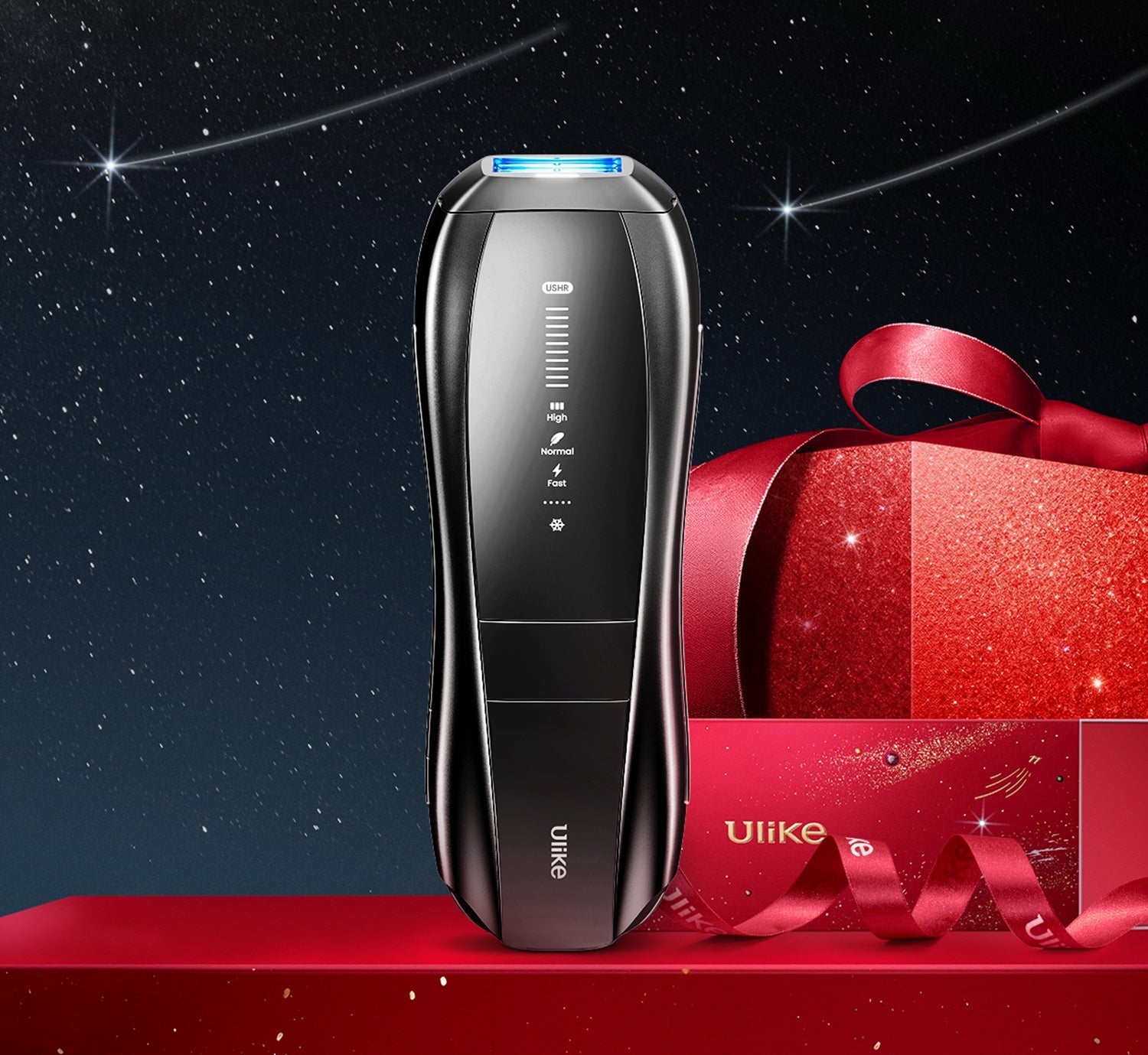
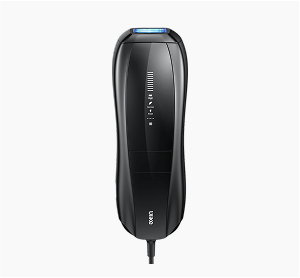
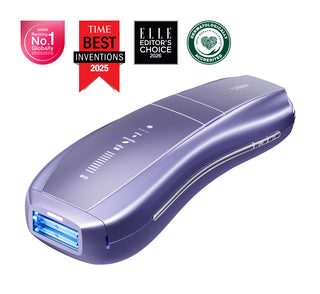
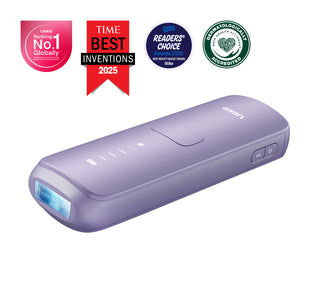
Once she's shaved, she follows the basic safety setup: she puts on the protective goggles. Then she powers the device on and notes that the display shows energy level and cooling.
The first sensory detail she shares is the cooling. She describes it as feeling "super cool" in her hand. That matters because she's comparing it to what she recognizes from professional settings. She has experience with in-office hair removal sessions on intimate areas, so she's not coming in totally new to the idea of light-based hair reduction.
If you're curious about what Ulike calls its cooling approach, here's the brand's overview of Sapphire ice-cooling technology.
The first flashes: lowest setting, and she says it was not painful
For her first try, she stays conservative because of skin tone concerns. She uses the lowest setting and then reacts with surprise at how easy it feels. In her words, it's basically not painful. She also comments that she can barely feel it.
That "barely felt" reaction is important context. A lot of people assume at-home IPL will feel intense. Her experience, at least on underarms at a low level, is that discomfort is minimal.
She also sets an early expectation: she plans to check back after a week to see whether hair grows back aggressively, and to see how her skin reacts. That's her boundary for judging success early, not just hair reduction but also skin calmness.
For a quick explainer on why IPL depends so much on pigment and hair growth cycles, Ulike's FAQ on how Ulike IPL works on skin gives the core mechanism in plain language.
Brown-skin considerations she took seriously (and where she drew the line)
She's careful about where she uses the device. Underarms feel "safer" to her because she's done chemical peels there, and she believes that reduced some pigment over time. She contrasts that with her Brazilian area, which she describes as darker and therefore riskier for her comfort level.
So she draws a clear line:
- Underarms: yes, because she perceives the skin as lighter (and already treated with peels).
- Bikini line: she implies it's lighter due to lightening treatments.
- Brazilian area: no, because the pigment is darker and she fears harming herself.
This is also where the larger safety conversation matters. Professional dermatology sources commonly flag burns and pigment changes as real risks with light-based hair removal, especially when skin contains more melanin.12 The FDA also frames home-use light and laser devices as tools that still require careful adherence to instructions and attention to skin response.3
If you want a focused explanation of the underlying issue, this Ulike article on why IPL can be unsuitable for very dark skin mirrors the same concern she's reacting to in her own way.
Months later: her honest update on consistency, ingrowns, and settings
She comes back much later than planned. The initial clip was filmed in summer (August), and the update happens in November. That matters, because her final opinion is based on living with the routine, not just a first impression.
Her headline is simple: she thinks it works if you use it consistently.
She describes starting strong, shaving and using the device regularly, following a twice-a-week rhythm. Then she falls off and drops closer to once a week. When she does that, the ingrowns come back, and she feels genuinely discouraged, especially because the underarm area had been doing well.
Then she tightens up again, returns to consistent use, and sees improvement. Her message is repetitive on purpose: consistency is what makes this feel worth it.
She also shares a setting boundary from her personal experience. She starts at level 1 to feel safe, but she says she had to move up to level 2 for better impact. At the same time, she warns against going higher than 2 for her skin tone, because she believes it could cause burns or scars.
To make her routine easier to copy, here's her experience as a simple log, based only on what she describes (frequency changes, setting changes, and what happened).
Personal test log (as described)
| Time period | Area treated | Shave first | Device level used | Frequency she followed | What she noticed |
|---|---|---|---|---|---|
| Early phase (summer) | Underarms | Yes | Level 1 | About 2 times per week | Comfortable, minimal pain, early optimism |
| Inconsistent phase | Underarms | Yes | Level 1 to 2 | About 1 time per week | Ingrowns returned, frustration |
| Back on track (fall) | Underarms | Yes | Level 2 | About 2 times per week | Fewer ingrowns again, better day-to-day smoothness |
Her biggest value comparison is also cost-based. She previously paid about $1,500 for professional laser with six sessions, and she still saw regrowth. With an at-home device in a lower price range (she mentions about $400), she feels she can avoid going back for more office sessions.
For readers who want more context on expectations for dark skin and at-home devices, this Ulike guide on at-home IPL on dark skin lays out compatibility factors and common outcomes in a more structured way.
Decision helpers: who her approach fits best, and where it can go wrong
This section keeps things grounded in what she actually did, plus what major medical sources say about risk patterns.
A quick "fit check" based on her experience
Her results and comfort seemed to line up when these conditions were true:
- She picked a small area first (underarms) instead of jumping straight to the darkest, most sensitive zones.
- She stayed strict about shaving and used a fresh blade, because ingrowns were her deal-breaker.
- She kept a consistent schedule, because hair growth cycles require repeated sessions to catch hairs in growth phases.4
- She respected her own boundaries around pigment differences across body areas.
Risk list and common failure scenarios (the stuff she's warning you about)
She's not shy about what she thinks can go wrong. Her warnings also match the general concerns seen in dermatology guidance for light-based hair removal.12
- Too high of a setting for your skin tone: She believes this increases burn risk fast.
- Inconsistent routine: For her, it meant ingrowns and irritation came back.
- Treating darker intimate areas out of fear or pressure: She avoids it because pigment is darker.
- Assuming pro laser means permanent: She paid for sessions and still saw regrowth, which lines up with how many clinics describe results as reduction, not always total removal.1
High-value takeaway: Her "win" wasn't just less hair. It was less irritation, especially fewer ingrowns, but only when she stayed consistent.
Frequency snapshot: her routine vs. the bigger picture
This table shows a simple comparison between what she did and what clinical sources emphasize about hair growth cycles. It's not a prescription, just a way to understand why "one-and-done" rarely matches real life.
| Topic | What she did | What third-party sources commonly emphasize |
|---|---|---|
| Timing | Repeated sessions over months | Hair grows in cycles, so multiple sessions are needed over time4 |
| Main success metric | Ingrowns and irritation, plus visible regrowth | Safety and side effects matter as much as reduction12 |
| Area choice | Underarms first, avoided darker Brazilian area | Darker pigment can raise risk of burns or pigment changes with light-based methods2 |
FAQ: the practical questions people ask before trying IPL hair removal
How soon did she see results?
She doesn't give a precise week count for visible reduction. What she does make clear is that her opinion only turned into a confident "yes" after months, not days. The bigger pattern is that consistency made the difference, and inconsistency brought problems back.
Clinical sources describe hair removal as a multi-session process because of growth cycles, so patience is part of the method, even with professional treatments.4
What did she do when ingrowns came back?
In her story, ingrowns returned when she dropped frequency. Her fix was behavioral, not fancy: she got consistent again and stayed on a level that felt effective but still safe for her.
Can you use it on the Brazilian area if you have brown skin?
She personally chose not to. Her reason is pigment. She felt her Brazilian area was darker and she didn't want to risk harm. That's also consistent with why many resources stress that darker skin can absorb more light energy, which can raise the risk of burns or pigment shifts.2
What if you notice dark spots or irritation?
She doesn't report dark spot issues in her update, but she is very concerned about burns and scarring if the level is too high. In general, dermatology sources list burns and pigment changes as possible side effects of light-based hair removal, and the FDA encourages careful use and attention to skin response with home devices.23
Do you have to shave every time?
She treats shaving as part of the routine, even when hair feels minimal, because she links shaving habits to irritation and ingrowns. Her story is basically: if she skips the discipline, her skin reminds her.
Final thoughts: her bottom line on Ulike for brown skin
Her review lands in a clear place. She likes the cooling feel, she likes the convenience, and she likes not having to schedule appointments. Most importantly, she says the device is a 10 out of 10 for Black girls, as long as you respect settings, stay consistent, and don't ignore what your skin is telling you.
On the brand side, Ulike positions itself as a long-term player in optical skincare tech, founded in 2013, with products sold across dozens of countries and a large global patent portfolio.5 That doesn't replace personal fit, but it adds context for why so many people are curious about at-home IPL now.
In short, her message is simple: consistency plus caution is what made this feel worth it.
References
Footnotes
-
American Academy of Dermatology Association, guidance on laser hair removal, candidacy, and possible side effects like burns and pigment changes: Laser hair removal. ↩ ↩2 ↩3 ↩4 ↩5
-
Mayo Clinic, overview of laser hair removal, what affects results, and risks: Laser hair removal. ↩ ↩2 ↩3 ↩4 ↩5 ↩6 ↩7 ↩8
-
U.S. Food and Drug Administration, consumer guidance around lasers and energy-based devices and safe use concepts: Laser products and your skin. ↩ ↩2
-
Cleveland Clinic, explanation of laser hair removal process and why multiple sessions are needed because hair grows in cycles: Laser hair removal. ↩ ↩2 ↩3
-
Ulike published company and market claims (patents, certifications, countries, and sales ranking), including Frost and Sullivan citation for global sales volume ranking and stated global reach: Ulike Labs. ↩