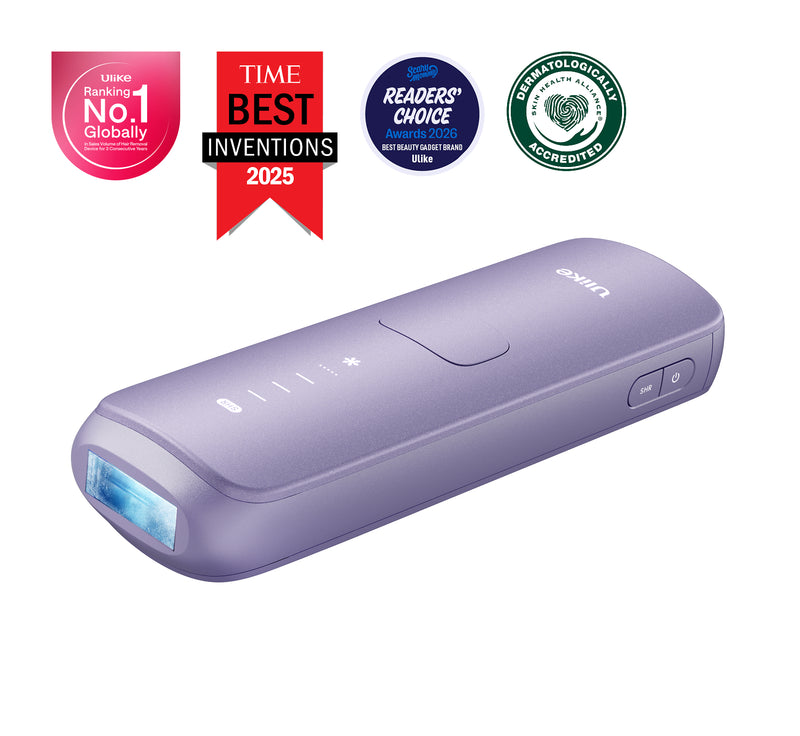
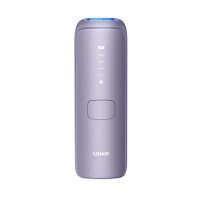
 Ulike ReGlow Pro★ 5.0 (511)




Table of Contents
Last Updated: 2026-08-11— This update adds a Fitzpatrick skin-tone decision matrix, an explanation of how laser hair removal responds to coarse, dense hair, the reason certain areas keep regrowing hair, and a correction to how IPL technology is described.
Table of Contents:
- Part 1: Which Laser Is Best for Your Skin Tone and Hair Type? The Fitzpatrick Decision Matrix
- Part 2: Intense Pulse Light Device
- Part 3: Alexandrite Laser Machine
- Part 4: Diode Hair Removal Laser
- Part 5: Nd:YAG Laser Machine
- Part 6: Ruby Hair Removal Laser Machine
- Part 7: Quanta Light Evo Machine
- Part 8: Why Do You Need Multiple Sessions, No Matter Which Laser You Choose?
- Part 9: Why Does Hair Keep Coming Back in Some Areas After Treatment?
- Part 10: Conclusion
- Part 11: Frequently Asked Questions
Part 1: Which Laser Is Best for Your Skin Tone and Hair Type? The Fitzpatrick Decision Matrix
Fitzpatrick skin type — a dermatology scale that runs from I (very fair) to VI (deeply pigmented) — is one of the biggest factors in choosing a safe, effective laser. The table below summarizes which technology tends to fit which skin tone and hair type.
| Laser Type | Wavelength | Fitzpatrick Range | Best For Hair Type | Main Limitation |
|---|---|---|---|---|
| Alexandrite | 755 nm | I–III | Fine to medium, dark hair | Higher pigmentation risk on darker skin tones |
| Diode | 810 nm | II–IV | Thick, dense, coarse dark hair | More sessions typically needed on very dark skin |
| Nd:YAG | 1064 nm | IV–VI | Coarse, dark hair on deep skin tones | Lower melanin absorption can mean more sessions on fine/light hair |
| IPL (at-home) | 500–1200 nm | I–IV (device-dependent, per skin sensor) | Light to moderate hair; maintenance | Broad-spectrum light targets follicles less precisely than laser |
For Fitzpatrick IV–VI, Nd:YAG's longer wavelength can pass through surface melanin and reach the follicle more safely, which is why it's a common clinical choice for deeper skin tones. Alexandrite and Diode remain effective options, but they carry a higher risk of pigmentation changes when used on deeper skin.
Evidence Note: These Fitzpatrick ranges are drawn from a 2025 meta-analysis of 10 RCTs in Fitzpatrick III–V (n = 1,163). The research covers professional laser devices only and does not include at-home IPL data.
Major Types of Laser Hair Removal
To help you decide which laser you should choose and talk to your doctor like a pro, we have arranged all the information you need to know about the 6 types of laser hair removal machines.
Part 2: Intense Pulse Light Device

Example of Machine:
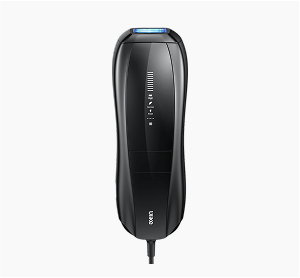
Hair Removal IPL Handset
The Wavelength of Light:
500–1200 nm
Basic Systems with IPL:
-
Aculight
-
Photoderm
-
Epilight
-
Vasculight
-
Quantum
Pros:
-
Little to no damage to the surrounding areas
-
At-home hair removal treatments while maintaining privacy
-
Cost-effective
-
Quick and efficient treatments
-
Intensity and modes can be adjusted easily
Cons:
-
Does not work for all skin tones and types
-
Is not absorbed by hair having no pigment
Suitable Skin Types:
All fair to medium color skin tones except medium brown to dark brown and black skin colors.
Compatible Hair Colors:
All naturally pigmented hair colors other than grey, white, red, or blonde hair.
IPL devices emit a broad-spectrum, multi-wavelength pulse of light rather than a single, focused laser wavelength. Because the light is spread across many wavelengths at once, IPL targets individual hair follicles less precisely than a professional laser.
This light is absorbed into the pigment of hair and travels to hair follicles where it is converted to heat and burns the hair follicles in a process called thermophotolysis.
Laser hair removal, including IPL, is FDA cleared for permanent hair reduction — a long-term, stable decrease in the number of hairs that regrow — rather than permanent removal. Electrolysis remains the only hair removal method the FDA recognizes as truly permanent.
However, the intensity of IPL is not as strong as that of the laser. So, it takes a greater number of sessions to achieve desired results.
As you can use IPL at home, the greater number of sessions is no big deal and 2-3 sessions can be performed every week allowing you to go hairless in 1-2 months.
Part 3: Alexandrite Laser Machine

Example of Machine:
Candela Alexandrite Laser
The Wavelength of Light:
755 nm
Basic Systems with Alexandrite Laser:
-
Candela
-
Cynosure apogee
-
Gentle lase
-
Epitouch plus
Pros:
-
Fastest machine because of its fast repetitions and increased spot size
-
Better penetration into the hair
-
Can be used on all skin tones from white to olive colors
-
Works from thick and thin hair
Cons:
-
The treatment is painful
-
Does not work on very dark skin tones
-
Can cause hypo or hyperpigmentation of the skin
Suitable Skin Types:
All from white to olive
Compatible Hair Colors:
Only dark hair colors. No effect on light hair shades.
Alexandrite Laser hair removal machines are the most commonly used lasers at professional levels because of their fast treatment time. Just like other laser lights, its radiation is absorbed into the hair pigment and it destroys the hair follicle.
It stands out because it works especially well on Fitzpatrick I–III (light to medium) skin tones with dark hair, since the strong contrast between skin and hair melanin in this range allows for precise targeting.
However, the treatment is painful and often requires anesthetic gels to go through your session. Also, aftercare after your Alexandrite session is a must.
Additionally, treatment with Alexandrite laser can take up to a year with sessions scheduled over a span of 1 month.
Part 4: Diode Hair Removal Laser

Example of Machine:
Epi Star Diode Laser Machine
The Wavelength of Light:
810 nm
Basic Systems with Diode Laser:
-
Apex 800
-
F1 Diode
-
Laser Light
-
SLP 100
-
Me Dio Star
-
Light Sheer
-
Sopra Noxl
Pros:
-
Safe and effective laser penetration into the skin
-
Adjustable intensity of light
-
Suitable for dark hair colors
-
Does not damage the skin
-
Treats coarse hair effectively
Cons:
-
More sessions are required for people with dark skin
-
May cause skin discoloration
-
May cause urticaria
-
Most advanced laser with little research available on it
Suitable Skin Types:
Fair, light, medium, and dark skin tones
Compatible Hair Colors:
Can be used on black, brown, red, or dark blonde hair colors. Does not work on white, grey, or light blonde hair
Diode hair removal lasers use laser light emitted from a combination of diodes or semiconductors. So, its wavelength can be changed according to the requirement. The process of treatment with diode is similar to Alexandrite. But it is associated with relatively less pain and fewer sessions.
It works best for thick, dense, and coarse hair. So, long-lasting hair removal in men is often done by the diode. Additionally, it is the best laser to remove hair from the back and chest.
Diode is now one of the most extensively studied professional hair removal laser technologies, with a substantial body of clinical research supporting its safety and effectiveness for Fitzpatrick II–IV skin tones.
Evidence Note: This summary draws on findings published in clinical research on diode laser (Wiley Dermatology Reviews). The cited studies examine professional-grade devices and parameters, not at-home diode devices.
Part 5: Nd:YAG Laser Machine

Example of Machine:
Lyra Yag Laser Machine
The Wavelength of Light:
532–1064 nm
Basic Systems with Yag Laser:
-
Cool Glide
-
Image
-
Lyra
-
Sciton
-
Cutera
-
Gentle Yag
-
Candela
-
Athos
-
Varia
Pros:
-
Suitable for medium and dark skin tones
-
Destroys hair at papilla and Offers long-lasting results as compared to other lasers
Cons:
-
Not much effective for light skin tones
-
Poor absorption into melanin. So, it requires a greater number of sessions for effective results
Suitable Skin Types:
All skin tones from light to dark
Compatible Hair Colors:
Black, brown, or dark blonde hair colors. No effect of light or white hair
Nd:YAG laser machines either work at 1064 nm wavelength or use a dual frequency of 532 nm.
At 1064 nm, Nd:YAG light is still absorbed by melanin in the hair follicle, but at a lower rate than shorter-wavelength lasers. That lower level of surface melanin absorption is actually what allows the beam to penetrate deeper to the follicle without causing excess heat damage at the skin's surface — which is why Nd:YAG is considered the clinical gold-standard wavelength for deeper skin tones. (A separate "carbon laser" technique, which does use a topical carbon lotion, is a specialized application rather than the standard mechanism.)
This makes Yag one of the safest lasers.
Because the carbon-assisted technique is a specialized variant rather than the standard approach, most Nd:YAG treatments don't involve a carbon lotion step at all.
Yag laser also has a speedy repetition rate and you can get done with the treatment quickly. Additionally, it works well on thick hair.
Part 6: Ruby Hair Removal Laser Machine

Example of Machine:
Ruby Palomar E2000
The Wavelength of Light:
694 nm
Basic Systems with Ruby Laser:
-
Ruby Star
-
Epi Pulse Ruby
Pros:
-
Ruby machines have an integrated cooling system to prevent heating or burning of the skin
-
It is great for fine hair
-
Less pain as compared to other lasers
-
Results last for a longer time after the completion of treatment
Cons:
-
Does not work on large skin areas
-
Each treatment session takes a long time because it needs to be repeated
-
Is absorbed into the skin pigment. So, it can cause pigmentation, scaring, or swelling in people with dark skin tone
Suitable Skin Types:
Fair skin tones as there is increased absorption in melanin of dark skin colors
Compatible Hair Colors:
Black and brown hair colors
Laser hair removal machines came into being with the invention of Ruby Laser decades ago. This laser is also absorbed by melanin in the hair and also the skin. So, it works perfectly for dark hair but not for dark skin tones.
Additionally, Ruby laser machines have a built-in sapphire cooling system to keep the skin cool during the procedure. There is also a pause of 2 seconds in subsequent pulses. While this pause prevents the constant application of laser to the skin, it elongates treatment time.
Regardless of its nearly painlessness, Ruby lasers are rarely used these days because of the availability of better machines.
In modern clinical practice, Ruby lasers have largely been replaced by Alexandrite and Diode systems, which offer faster treatment times and broader skin-tone compatibility.
Part 7: Quanta Light Evo Machine

Example of Machine:
Q Plus Quanta Light Machine
The Wavelength of Light:
532–1320 nm
Basic Systems with Quanta Light:
Q Plus Evo Series has wavelengths of 532 nm, 755 nm, 1064 nm, and 1320 nm
Pros:
-
It is suitable for a wide range of hair and skin colors
-
Can be used to treat several skin conditions in addition to treating unwanted hair
-
Longterm hair reduction in few treatments
Cons:
-
It can rarely cause skin redness, swelling, blisters, and scarring.
Suitable Skin Types:
All skin tones but needs more treatments on dark skin colors
Compatible Hair Colors:
Almost all hair colors other than lighter ones
Quanta Laser is actually a combination of several types of lasers like Alexandrite and Nd:Yag laser or IPL or Erbium Yag laser. Most Quanta laser machines use a combination of Alexandrite and Nd:Yag lasers in different wavelengths.
Although the Quanta laser helps with hair regrowth reduction, it is mostly used to treat active acne, angiomas, tattoos, skin surfacing, age spots, and more.
In practice, a Quanta Light system's hair removal performance depends on which wavelength module it's equipped with — typically Alexandrite or Nd:YAG — rather than on the Quanta platform itself.
Part 8: Why Do You Need Multiple Sessions, No Matter Which Laser You Choose?
The main reason any laser requires multiple sessions is the hair growth cycle, not hair thickness. At any given time, only about 10–20% of hair follicles are in the active growth phase (anagen) — the only phase in which a laser can effectively target and disable the follicle. Coarse, dark hair does have an advantage: its higher melanin content means a laser is more likely to successfully hit the follicle on each pass. But that higher per-session success rate doesn't shorten the overall treatment timeline, because sessions still need to be spaced out to catch follicles as they cycle into anagen. For a closer look at how many sessions different areas typically need, see laser hair removal sessions.
Part 9: Why Does Hair Keep Coming Back in Some Areas After Treatment?
When hair regrows in areas like the chin, jawline, or bikini line even after a full course of treatment, it's usually not a sign the laser didn't work — it's more often driven by hormones. Androgen-sensitive areas can keep activating new follicles over time, especially for people with hormonal conditions like PCOS. If you're seeing persistent regrowth in these areas, it's worth talking to a dermatologist or physician about what maintenance schedule makes sense for you. Learn more about PCOS and laser hair removal.
Part 10: Conclusion

Hair removal laser machines have come a long way starting with the Ruby laser which is no longer used and advancing to the Diode laser with little research on it. In between them lies Alexandrite, Nd:YAG, and IPL laser machines.
Most of them only work for light skin tones and dark hair colors. But Yag and Diode are compatible with dark skin as well. Regardless of the compatibility, they are expensive. Out of all these lasers, the IPL device is the only one which can be used at home safely.
Lastly, we leave deciding the best one for yourself up to you.
If you're looking for a home option to maintain results between professional treatments, the Ulike Air 10 pairs a skin-tone sensor with sapphire cooling and is designed for Fitzpatrick I–IV skin tones with light-to-moderate hair — a solid maintenance and starter option, not as a replacement for professional laser treatment.
For stubborn areas that neither Air 10 nor laser fully resolves, electrolysis is the only hair removal method the FDA recognizes as permanent, and it can serve as a supplement.
Part 11: Frequently Asked Questions
Q1: Which laser is best for coarse, dark hair?
There's no single best laser for coarse, dark hair — it depends on your skin tone. Diode (Fitzpatrick II–IV) and Nd:YAG (Fitzpatrick IV–VI) are the most commonly used professional options for coarse, dark hair, while Alexandrite tends to work best on lighter skin tones (Fitzpatrick I–III). See the decision matrix above for a full comparison.
Q2: Why do I need multiple laser sessions?
Because hair grows in cycles, and a laser can only disable a follicle while it's in its active growth phase. At any given time, only about 10–20% of hair follicles are in that phase, which is why sessions are spaced out over weeks or months rather than done all at once.
Q3: Why does hair keep growing back after laser treatment?
Persistent regrowth in certain areas is often hormonally driven rather than a sign the laser isn't working. Areas like the chin, jawline, and bikini line are sensitive to androgens, which can continue activating new follicles, particularly in conditions like PCOS.
Q4: Is at-home IPL effective for thick, coarse hair?
At-home IPL can help manage thick, coarse hair, but because it uses broad-spectrum, lower-energy light, it typically has a lower per-session hit rate on individual follicles than professional lasers. Devices like the Ulike Air 10 are best positioned as an entry point or a maintenance tool between professional treatments, rather than a full replacement for them.
Q5: What is the difference between laser and IPL?
A laser emits a single, focused wavelength of light, while IPL emits a broad spectrum of wavelengths in one pulse. Both are FDA-recognized permanent hair reduction technologies — a long-term decrease in regrowth — but a laser's focused wavelength generally allows more precise targeting of individual follicles.
Q6: Is electrolysis better than laser for stubborn regrowth?
It's not simply a matter of one being better than the other — they serve different roles. Electrolysis is the only method the FDA recognizes as truly permanent, which makes it useful for stubborn spots that persist after laser treatment, while laser remains a faster option for treating larger areas.