Laser Hair Removal at Home: Is It Safe and Effective?
Hair Removal

Laser Hair Removal at Home: Is It Safe and Effective?

To set the scene, removing unwanted hair can feel like a recurring chore, especially when shaving leaves stubble within days or waxing irritates your skin. Laser hair removal at home offers another option: a handheld light-based device you can use privately and on your own schedule. Most consumer models use intense pulsed light, or IPL, rather than a true medical laser. These devices can gradually reduce visible regrowth, but they are not equally suitable for every skin tone, hair color, or body area. Results also depend on careful preparation and regular sessions. Before buying a device, it helps to understand what the technology can realistically do, how it differs from clinic treatment, and which safety features matter. Table of Contents: Part 1: Quick Answer: What Is At-Home Laser Hair Removal? Part 2: How Does At-Home Laser Hair Removal Work? Part 3: Is At-Home Laser Hair Removal Safe? Part 4: Step-by-Step Guide: How to Use Laser Hair Removal at Home Part 5: What Results to Expect and How Long They Take Part 6: Top-Rated At-Home IPL Hair Removal Devices Part 7: Common Mistakes to Avoid for Best Results Part 8: Conclusion Part 9: Frequently Asked Questions Part 1: Quick Answer: What Is At-Home Laser Hair Removal? To begin with, at-home laser hair removal usually refers to IPL devices that send broad-spectrum light into the skin. Melanin in the hair absorbs that light and converts it into heat, which disrupts the follicle’s growth cycle. With consistent use, IPL can provide long-term hair reduction, although maintenance sessions may be needed as some hair returns. Part 2: How Does At-Home Laser Hair Removal Work? At its core, a laser treatment for hair removal at home works when the device can distinguish darker hair pigment from the surrounding skin. The treatment window flashes light over a small area. Pigment in the hair shaft and follicle absorbs the energy, heat builds around the root, and future growth may become slower, finer, and less dense. Hairs grow in different cycles, so one session cannot reach every follicle at its most responsive stage. Repeated treatments are therefore part of the process. IPL sends multiple wavelengths, while a true diode laser uses a more focused wavelength. Many products are casually called “laser” devices even when their underlying technology is IPL. How At-Home Devices Compare to Professional Treatments By comparison, home devices usually deliver lower energy than clinic equipment. This provides more room for safe self-use, but it may also mean more sessions and continued maintenance. Clinic treatments can use different laser types and settings selected for the patient’s skin, hair, and treatment area. Factor At-Home IPL Professional Treatment Technology Usually broad-spectrum IPL IPL or medical laser Power Lower consumer-level output Higher, professionally controlled output Schedule Frequent sessions at home Appointments spaced by the provider Customization Limited presets and sensors Settings selected for the individual Cost pattern One upfront device purchase Payment per session or package Best suited to Convenient, gradual reduction More customized treatment Home IPL may suit someone who values privacy, flexible timing, and gradual progress. Professional care may be the better route for deeper skin tones, difficult facial growth, a complex skin history, or anyone who wants settings chosen by an experienced clinician. Part 3: Is At-Home Laser Hair Removal Safe? In general, the answer to is at home laser hair removal safe depends on correct use, compatible skin and hair colors, and close attention to the manual. Common short-term reactions can include warmth, mild redness, itching, or temporary sensitivity. Burns, blisters, and pigment changes become more likely when users treat recently tanned skin, select unsuitable settings, or expose one area to excessive flashes. Some reactions reported in clinical research were linked to incorrect device use or poor sun protection. Skin Tone and Hair Color Compatibility Most importantly, IPL usually performs best when hair contains much more melanin than the surrounding skin, such as dark hair on fair to medium skin. Blonde, red, gray, and white hair may absorb too little light for useful results. Deeply pigmented skin can absorb more energy at the surface, increasing the risk of heat-related irritation or discoloration. Check the exact compatibility chart for the device rather than relying on a broad marketing claim. Areas to Avoid: Tattoos, Moles, and Sensitive Zones Equally important, keep the flash window away from tattoos, dark moles, birthmarks, and other concentrated pigment because these areas may absorb excess light. Avoid using a home IPL device around the eyes, over eyebrows, or directly on genital tissue. “Bikini line” usually means external skin outside underwear edges, not internal or highly sensitive areas. Follow the manufacturer’s body-area diagram for your exact model. FDA Clearance and What It Means For U.S. shoppers, FDA clearance is a useful screening point, but it is not a promise of ideal results for each user. A 510(k) clearance means the device was reviewed as substantially equivalent to a legally marketed device for its intended use. FDA registration alone does not show that a product has been cleared, reviewed, or authorized. Buyers can search the Devices@FDA database using the company name, model number, or device details before purchasing. Clearance also assumes that the consumer follows the approved labeling and contraindications. If your skin tone falls outside the compatibility chart, or the area has an open wound, active irritation, or an unusual pigmented lesion, seek professional advice before treating it. Part 4: Step-by-Step Guide: How to Use Laser Hair Removal at Home Before beginning, it is important to understand how to use laser hair removal at home safely and consistently. Most consumer devices use IPL, and each model may have different intensity levels, treatment schedules, and approved body areas. The following steps explain how to use at home laser hair removal devices while reducing the risk of irritation, uneven coverage, or missed treatments. Perform the manufacturer’s recommended patch test before your first full treatment. Test a small area of skin from the same body part you plan to treat, as skin thickness, sensitivity, and pigmentation can vary across different areas of the body. Pre-Treatment Preparation First, confirm that your natural skin tone and hair color appear on the compatibility chart. Shave the treatment area so the root stays in place, but surface hair does not absorb the flash. Avoid waxing, plucking, threading, or epilating because those methods remove the target from the follicle. Wash away deodorant, lotion, oil, makeup, and self-tanner. Dry the skin fully and postpone treatment if the area is sunburned, inflamed, or recently tanned. During Your Treatment Session Next, begin with the recommended lower setting and place the treatment window flat against the skin. Good contact allows the built-in sensor to recognize that the device is correctly positioned. Move in an orderly grid so you can cover the area evenly without repeatedly treating the same patch. Keep the device at the angle specified in the instructions, and stop if you feel sharp pain, intense heat, or see unusual whitening, blistering, or swelling. Post-Treatment Aftercare Afterward, let the skin cool and apply a plain, fragrance-free moisturizer if it feels warm or dry. A cool compress may help with minor redness or sensitivity. Avoid strong exfoliants, retinoids, fragranced products, very hot showers, saunas, and tight clothing until the area feels calm. Protect exposed skin with broad-spectrum sunscreen and limit direct sun. Persistent pain, blistering, or marked pigment changes deserve medical advice. Part 5: What Results to Expect and How Long They Take Over time, progress usually appears as slower regrowth, patchier coverage, and finer hairs rather than an instantly bare result. Timing varies with hair density, body area, hormone patterns, skin tone, device output, and schedule consistency. Consumer brands frequently advertise visible changes within two to four weeks. Treat these timelines as estimates because test conditions, body areas, and individual hair cycles vary. Controlled studies of home-use devices have found meaningful reductions, but the percentage and speed of improvement differ among users. A practical way to track progress is to photograph the same area in similar lighting every two weeks. Keep shaving when needed because shaving does not remove the follicle target. Follow the initial treatment cycle in the manual, then move to touch-ups when noticeable regrowth appears. Body areas can also progress at different speeds. Underarms, lower legs, the external bikini line, and facial hair may not follow identical timelines. Compare each area with its own starting point rather than expecting one result across your body. Some hair may return after the main treatment course. Regrowth can appear finer, lighter, or less dense, which is why “long-term hair reduction” is generally a more useful expectation than permanent clearance. Part 6: Top-Rated At-Home IPL Hair Removal Devices When comparing devices, focus on features that change the real treatment experience: cooling temperature, flash interval, treatment-window size, skin sensing, maximum energy, and controls for coarse versus fine hair. Ease of use also matters. A device with impressive output may bring little practical value if sessions feel too slow, hot, or difficult to repeat. Wider windows and continuous-flash modes suit large areas, while precise controls can help with underarms, facial zones approved by the manufacturer, and the external bikini line. The Ulike Air 10 and Air 4 both use IPL with sapphire cooling, but they serve different priorities. The Air 10 emphasizes higher-output treatment, automated skin sensing, and fast full-body coverage. The Air 4 offers a simpler, lower-priced option with four treatment modes and a slightly longer claimed session time. Ulike Air 10: Advanced IPL Hair Removal with Cooling Comfort For users treating coarse growth or several large body areas, the Ulike Air 10 stands out through its dual-light design, 26-joule multi-pulse SHR mode, and automatic skin sensing. Its cooling system keeps the contact window near 65°F, while AutoGlide enables continuous flashing. Together, those features address two common obstacles: discomfort at stronger settings and hand fatigue during legs, arms, chest, or back sessions. Key features and specifications Dual light sources with a wider treatment window Up to 26J across a four-pulse SHR burst Fast, Normal, High, and SHR modes SkinSensor for automatic energy adjustment Continuous flashing through AutoGlide Claimed 10-minute full-body treatment Why it works well in real life The SHR setting gives dense areas, such as underarms or the external bikini line, a dedicated multi-pulse option instead of encouraging extra passes. SkinSensor reduces guesswork when skin tone varies across the body, while AutoGlide helps cover broad areas with fewer button presses. Ulike Air 4: Easy-to-Use IPL Hair Removal for Consistent Home Treatments For someone who wants straightforward controls at a lower entry price, the Ulike Air 4 balances usable power with a clear four-mode layout. It delivers up to 24J and 7.2J/cm², flashes as quickly as 0.4 seconds, and includes AutoGlide for continuous movement. Its sapphire window stays near 64.4°F during extended use, which may make it easier to finish a planned session without the treatment head becoming uncomfortably warm. Key features and specifications Soft, Body, Power, and USHR modes Maximum listed energy of 24J Energy density up to 7.2J/cm² Fastest listed flash interval of 0.4 seconds Sapphire Ice Cooling Claimed 12-minute full-body treatment Why it suits a consistent routine Soft mode supports quick passes and touch-ups, Body mode covers typical growth, and Power or USHR modes address thicker hair. That clear progression makes intensity selection easier for first-time users. Part 7: Common Mistakes to Avoid for Best Results Finally, disappointing outcomes often come from inconsistent use, unsuitable hair or skin color, or overly aggressive treatment. Keep the routine methodical and allow the hair cycle time to respond. Waxing before treatment: This removes the follicle target. Shave instead. Treating over skin products: Lotion, oil, deodorant, makeup, or self-tanner can interfere with clean contact. Flashing one spot repeatedly: Heavy overlap can increase heat, irritation, and pigment risk. Using IPL on a tan: Recent tanning reduces contrast between the skin and hair. Choosing maximum power immediately: Begin with the recommended test setting and increase only when appropriate. Using sessions randomly: Irregular timing may miss too many hairs during active growth. Stopping too early: Progress develops across several hair-growth cycles. Skipping maintenance: Touch-ups may be needed after the initial program. Expecting identical results everywhere: Different body areas can respond at different speeds. Part 8: Conclusion Ultimately, laser hair removal at home can be a practical choice when the device matches your skin tone, hair color, treatment areas, and tolerance for a scheduled routine. The strongest energy figure does not automatically identify the most suitable model. Comfort, clear controls, treatment speed, skin sensing, and reliable instructions can matter just as much because they influence whether you stay consistent. Treat IPL as a long-term grooming tool rather than a one-session fix. Start cautiously, document your progress, and adjust settings only within the manual’s guidance. If your skin sits outside the compatibility chart, your hair contains little pigment, or you experience recurring irritation, a board-certified dermatologist can help you compare professional treatment and other hair-removal options. Part 9: Frequently Asked Questions Q1: Does laser hair removal at-home really work? Yes, at-home IPL hair removal can work when used consistently and according to the manufacturer's instructions. These devices target melanin in the hair follicle to slow future growth, leading to long-term hair reduction rather than permanent hair removal. Most users notice slower, finer, and patchier regrowth after several treatments, although results vary based on hair color, skin tone, and treatment consistency. Q2: Is it cheaper to do laser hair removal at-home? Yes, at-home IPL hair removal is generally more affordable than professional treatments. Most at-home devices cost between $60 and $400, while a full course of in-office laser hair removal commonly ranges from $900 to $3,050 or more, depending on the treatment area and number of sessions. Although home devices require ongoing consistency, they can provide long-term hair reduction without the recurring cost of clinic appointments. Q3: Is it better to do electrolysis or laser hair removal? The better option depends on your goals. Electrolysis is the only FDA-recognized method for permanent hair removal and can treat all hair and skin colors. Laser and IPL treatments provide long-term hair reduction and tend to treat larger areas more quickly, but they work best on darker hair with sufficient pigment. If speed is your priority, laser or IPL may be preferable, while electrolysis is often chosen for permanent removal of smaller areas.
Aug 5, 2026
Share:

Up to 40% Off
Limited stock. Limited time.

Buy Now
Table of Contents

To set the scene, removing unwanted hair can feel like a recurring chore, especially when shaving leaves stubble within days or waxing irritates your skin. Laser hair removal at home offers another option: a handheld light-based device you can use privately and on your own schedule. Most consumer models use intense pulsed light, or IPL, rather than a true medical laser.


These devices can gradually reduce visible regrowth, but they are not equally suitable for every skin tone, hair color, or body area. Results also depend on careful preparation and regular sessions. Before buying a device, it helps to understand what the technology can realistically do, how it differs from clinic treatment, and which safety features matter.


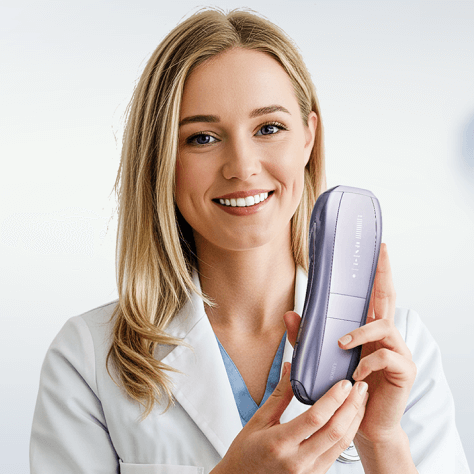
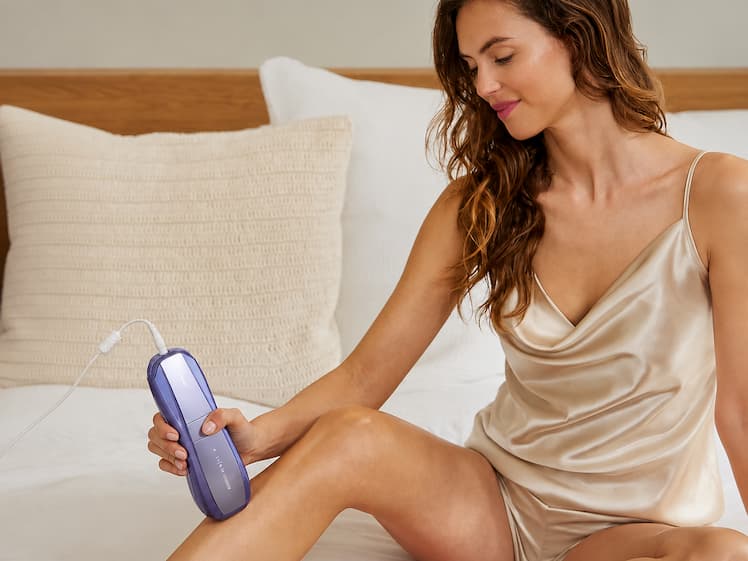
Woman removing hair

Table of Contents:

Part 1: Quick Answer: What Is At-Home Laser Hair Removal?

To begin with, at-home laser hair removal usually refers to IPL devices that send broad-spectrum light into the skin. Melanin in the hair absorbs that light and converts it into heat, which disrupts the follicle’s growth cycle. With consistent use, IPL can provide long-term hair reduction, although maintenance sessions may be needed as some hair returns.

Part 2: How Does At-Home Laser Hair Removal Work?

At its core, a laser treatment for hair removal at home works when the device can distinguish darker hair pigment from the surrounding skin. The treatment window flashes light over a small area. Pigment in the hair shaft and follicle absorbs the energy, heat builds around the root, and future growth may become slower, finer, and less dense.


Hairs grow in different cycles, so one session cannot reach every follicle at its most responsive stage. Repeated treatments are therefore part of the process. IPL sends multiple wavelengths, while a true diode laser uses a more focused wavelength. Many products are casually called “laser” devices even when their underlying technology is IPL.

How At-Home Devices Compare to Professional Treatments

By comparison, home devices usually deliver lower energy than clinic equipment. This provides more room for safe self-use, but it may also mean more sessions and continued maintenance. Clinic treatments can use different laser types and settings selected for the patient’s skin, hair, and treatment area.


Factor At-Home IPL Professional Treatment
Technology Usually broad-spectrum IPL IPL or medical laser
Power Lower consumer-level output Higher, professionally controlled output
Schedule Frequent sessions at home Appointments spaced by the provider
Customization Limited presets and sensors Settings selected for the individual
Cost pattern One upfront device purchase Payment per session or package
Best suited to Convenient, gradual reduction More customized treatment

Home IPL may suit someone who values privacy, flexible timing, and gradual progress. Professional care may be the better route for deeper skin tones, difficult facial growth, a complex skin history, or anyone who wants settings chosen by an experienced clinician.

Part 3: Is At-Home Laser Hair Removal Safe?

In general, the answer to is at home laser hair removal safe depends on correct use, compatible skin and hair colors, and close attention to the manual. Common short-term reactions can include warmth, mild redness, itching, or temporary sensitivity.


Burns, blisters, and pigment changes become more likely when users treat recently tanned skin, select unsuitable settings, or expose one area to excessive flashes. Some reactions reported in clinical research were linked to incorrect device use or poor sun protection.

Skin Tone and Hair Color Compatibility

Most importantly, IPL usually performs best when hair contains much more melanin than the surrounding skin, such as dark hair on fair to medium skin. Blonde, red, gray, and white hair may absorb too little light for useful results.


Deeply pigmented skin can absorb more energy at the surface, increasing the risk of heat-related irritation or discoloration. Check the exact compatibility chart for the device rather than relying on a broad marketing claim.

Areas to Avoid: Tattoos, Moles, and Sensitive Zones

Equally important, keep the flash window away from tattoos, dark moles, birthmarks, and other concentrated pigment because these areas may absorb excess light. Avoid using a home IPL device around the eyes, over eyebrows, or directly on genital tissue.


“Bikini line” usually means external skin outside underwear edges, not internal or highly sensitive areas. Follow the manufacturer’s body-area diagram for your exact model.

FDA Clearance and What It Means

For U.S. shoppers, FDA clearance is a useful screening point, but it is not a promise of ideal results for each user. A 510(k) clearance means the device was reviewed as substantially equivalent to a legally marketed device for its intended use.


FDA registration alone does not show that a product has been cleared, reviewed, or authorized. Buyers can search the Devices@FDA database using the company name, model number, or device details before purchasing.


Clearance also assumes that the consumer follows the approved labeling and contraindications. If your skin tone falls outside the compatibility chart, or the area has an open wound, active irritation, or an unusual pigmented lesion, seek professional advice before treating it.

Part 4: Step-by-Step Guide: How to Use Laser Hair Removal at Home

Before beginning, it is important to understand how to use laser hair removal at home safely and consistently. Most consumer devices use IPL, and each model may have different intensity levels, treatment schedules, and approved body areas. The following steps explain how to use at home laser hair removal devices while reducing the risk of irritation, uneven coverage, or missed treatments.


Perform the manufacturer’s recommended patch test before your first full treatment. Test a small area of skin from the same body part you plan to treat, as skin thickness, sensitivity, and pigmentation can vary across different areas of the body.

Pre-Treatment Preparation

First, confirm that your natural skin tone and hair color appear on the compatibility chart. Shave the treatment area so the root stays in place, but surface hair does not absorb the flash.


Avoid waxing, plucking, threading, or epilating because those methods remove the target from the follicle. Wash away deodorant, lotion, oil, makeup, and self-tanner. Dry the skin fully and postpone treatment if the area is sunburned, inflamed, or recently tanned.

During Your Treatment Session

Next, begin with the recommended lower setting and place the treatment window flat against the skin. Good contact allows the built-in sensor to recognize that the device is correctly positioned.


Move in an orderly grid so you can cover the area evenly without repeatedly treating the same patch. Keep the device at the angle specified in the instructions, and stop if you feel sharp pain, intense heat, or see unusual whitening, blistering, or swelling.

Post-Treatment Aftercare

Afterward, let the skin cool and apply a plain, fragrance-free moisturizer if it feels warm or dry. A cool compress may help with minor redness or sensitivity.


Avoid strong exfoliants, retinoids, fragranced products, very hot showers, saunas, and tight clothing until the area feels calm. Protect exposed skin with broad-spectrum sunscreen and limit direct sun. Persistent pain, blistering, or marked pigment changes deserve medical advice.

Part 5: What Results to Expect and How Long They Take

Over time, progress usually appears as slower regrowth, patchier coverage, and finer hairs rather than an instantly bare result. Timing varies with hair density, body area, hormone patterns, skin tone, device output, and schedule consistency.


Consumer brands frequently advertise visible changes within two to four weeks. Treat these timelines as estimates because test conditions, body areas, and individual hair cycles vary. Controlled studies of home-use devices have found meaningful reductions, but the percentage and speed of improvement differ among users.


A practical way to track progress is to photograph the same area in similar lighting every two weeks. Keep shaving when needed because shaving does not remove the follicle target. Follow the initial treatment cycle in the manual, then move to touch-ups when noticeable regrowth appears.


Body areas can also progress at different speeds. Underarms, lower legs, the external bikini line, and facial hair may not follow identical timelines. Compare each area with its own starting point rather than expecting one result across your body.


Some hair may return after the main treatment course. Regrowth can appear finer, lighter, or less dense, which is why “long-term hair reduction” is generally a more useful expectation than permanent clearance.

Part 6: Top-Rated At-Home IPL Hair Removal Devices

When comparing devices, focus on features that change the real treatment experience: cooling temperature, flash interval, treatment-window size, skin sensing, maximum energy, and controls for coarse versus fine hair.


Ease of use also matters. A device with impressive output may bring little practical value if sessions feel too slow, hot, or difficult to repeat. Wider windows and continuous-flash modes suit large areas, while precise controls can help with underarms, facial zones approved by the manufacturer, and the external bikini line.


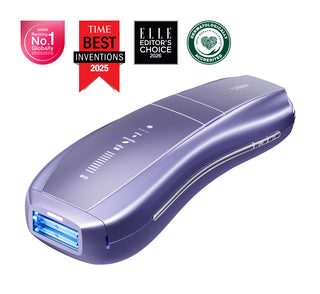
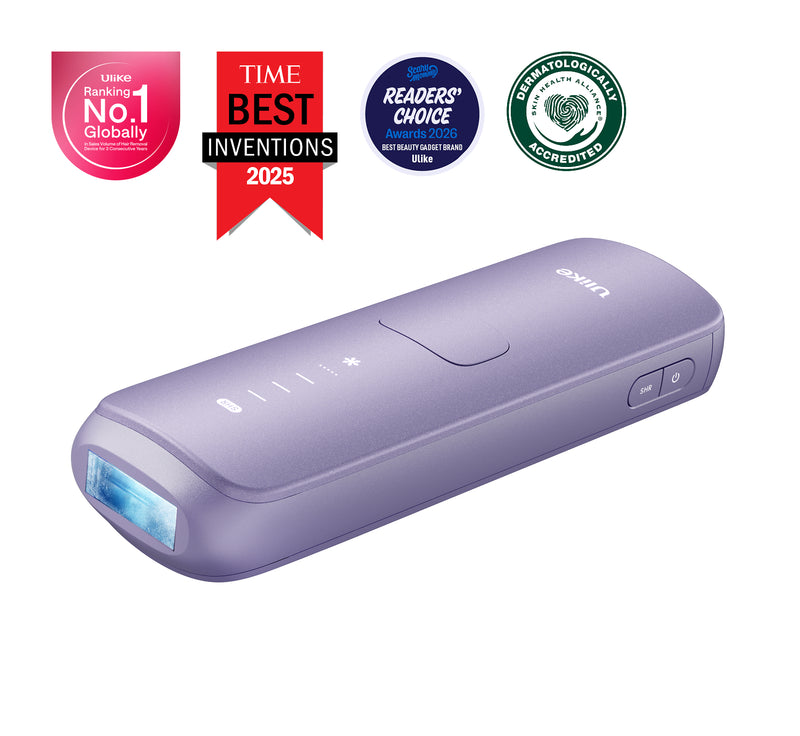
The Ulike Air 10 and Air 4 both use IPL with sapphire cooling, but they serve different priorities. The Air 10 emphasizes higher-output treatment, automated skin sensing, and fast full-body coverage. The Air 4 offers a simpler, lower-priced option with four treatment modes and a slightly longer claimed session time.

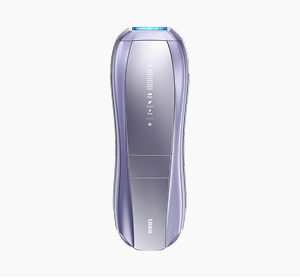
Ulike Air 10: Advanced IPL Hair Removal with Cooling Comfort

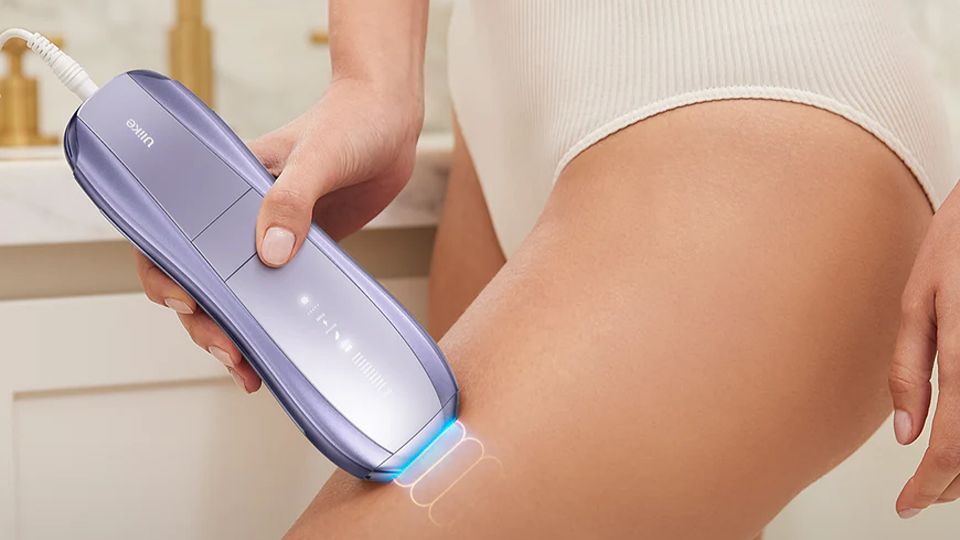
For users treating coarse growth or several large body areas, the Ulike Air 10 stands out through its dual-light design, 26-joule multi-pulse SHR mode, and automatic skin sensing. Its cooling system keeps the contact window near 65°F, while AutoGlide enables continuous flashing.


Together, those features address two common obstacles: discomfort at stronger settings and hand fatigue during legs, arms, chest, or back sessions.


Ulike Air 10

Key features and specifications

  • Dual light sources with a wider treatment window
  • Up to 26J across a four-pulse SHR burst
  • Fast, Normal, High, and SHR modes
  • SkinSensor for automatic energy adjustment
  • Continuous flashing through AutoGlide
  • Claimed 10-minute full-body treatment

Why it works well in real life

The SHR setting gives dense areas, such as underarms or the external bikini line, a dedicated multi-pulse option instead of encouraging extra passes. SkinSensor reduces guesswork when skin tone varies across the body, while AutoGlide helps cover broad areas with fewer button presses.

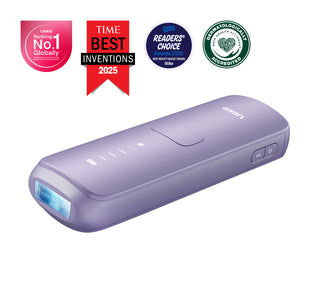
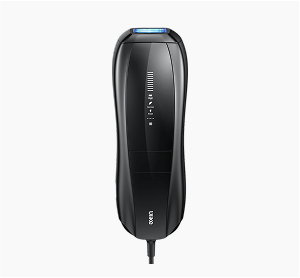
Ulike Air 4: Easy-to-Use IPL Hair Removal for Consistent Home Treatments

For someone who wants straightforward controls at a lower entry price, the Ulike Air 4 balances usable power with a clear four-mode layout. It delivers up to 24J and 7.2J/cm², flashes as quickly as 0.4 seconds, and includes AutoGlide for continuous movement.


Its sapphire window stays near 64.4°F during extended use, which may make it easier to finish a planned session without the treatment head becoming uncomfortably warm.


Ulike Air 10

Key features and specifications

  • Soft, Body, Power, and USHR modes
  • Maximum listed energy of 24J
  • Energy density up to 7.2J/cm²
  • Fastest listed flash interval of 0.4 seconds
  • Sapphire Ice Cooling
  • Claimed 12-minute full-body treatment

Why it suits a consistent routine

Soft mode supports quick passes and touch-ups, Body mode covers typical growth, and Power or USHR modes address thicker hair. That clear progression makes intensity selection easier for first-time users.

Part 7: Common Mistakes to Avoid for Best Results

Finally, disappointing outcomes often come from inconsistent use, unsuitable hair or skin color, or overly aggressive treatment. Keep the routine methodical and allow the hair cycle time to respond.

  • Waxing before treatment: This removes the follicle target. Shave instead.
  • Treating over skin products: Lotion, oil, deodorant, makeup, or self-tanner can interfere with clean contact.
  • Flashing one spot repeatedly: Heavy overlap can increase heat, irritation, and pigment risk.
  • Using IPL on a tan: Recent tanning reduces contrast between the skin and hair.
  • Choosing maximum power immediately: Begin with the recommended test setting and increase only when appropriate.
  • Using sessions randomly: Irregular timing may miss too many hairs during active growth.
  • Stopping too early: Progress develops across several hair-growth cycles.
  • Skipping maintenance: Touch-ups may be needed after the initial program.
  • Expecting identical results everywhere: Different body areas can respond at different speeds.

Part 8: Conclusion

Ultimately, laser hair removal at home can be a practical choice when the device matches your skin tone, hair color, treatment areas, and tolerance for a scheduled routine. The strongest energy figure does not automatically identify the most suitable model. Comfort, clear controls, treatment speed, skin sensing, and reliable instructions can matter just as much because they influence whether you stay consistent.


Treat IPL as a long-term grooming tool rather than a one-session fix. Start cautiously, document your progress, and adjust settings only within the manual’s guidance. If your skin sits outside the compatibility chart, your hair contains little pigment, or you experience recurring irritation, a board-certified dermatologist can help you compare professional treatment and other hair-removal options.

Part 9: Frequently Asked Questions

Q1: Does laser hair removal at-home really work?

Yes, at-home IPL hair removal can work when used consistently and according to the manufacturer's instructions. These devices target melanin in the hair follicle to slow future growth, leading to long-term hair reduction rather than permanent hair removal. Most users notice slower, finer, and patchier regrowth after several treatments, although results vary based on hair color, skin tone, and treatment consistency.

Q2: Is it cheaper to do laser hair removal at-home?

Yes, at-home IPL hair removal is generally more affordable than professional treatments. Most at-home devices cost between $60 and $400, while a full course of in-office laser hair removal commonly ranges from $900 to $3,050 or more, depending on the treatment area and number of sessions. Although home devices require ongoing consistency, they can provide long-term hair reduction without the recurring cost of clinic appointments.

Q3: Is it better to do electrolysis or laser hair removal?

The better option depends on your goals. Electrolysis is the only FDA-recognized method for permanent hair removal and can treat all hair and skin colors. Laser and IPL treatments provide long-term hair reduction and tend to treat larger areas more quickly, but they work best on darker hair with sufficient pigment. If speed is your priority, laser or IPL may be preferable, while electrolysis is often chosen for permanent removal of smaller areas.
Previous
What Is Laser Hair Removal? How It Works and What to Expect
Share:

Featured Products

Ulike Air 10

Ulike Air 10

2 weeks to silky smooth skin.

96% Hair Density Reduction

The next-generation in simple,

lasting hair removal.

 $259.00 $349.00
Learn More
What Is Laser Hair Removal? How It Works and What to Expect

What Is Laser Hair Removal? How It Works and What to Expect

If shaving, waxing, or plucking feels like a recurring chore, you may be asking, what is laser h...
Aug 5, 2026
Is Lazer Hair Removal Bad for Your Skin? What to Know

Is Lazer Hair Removal Bad for Your Skin? What to Know

A little redness after a laser appointment can look alarming, especially when your goal was smoo...
Aug 4, 2026
How Many Sessions for Laser Hair Removal Do You Need?

How Many Sessions for Laser Hair Removal Do You Need?

Laser hair removal can simplify grooming, but it works as a course rather than a one-visit fix. ...
Aug 4, 2026
Ulike Air 10

Ulike Air 10

The next-generation in simple,

lasting hair removal.

Learn More

Explore Beauty

Ulike Air 10

2 weeks to silky smooth skin.

96% Hair Density Reduction in 2 Weeks

Ulike Air 3

3 weeks to silky smooth skin.

93% Hair Density Reduction in 4 Weeks

Ulike Air 4

4 weeks to silky smooth skin.

95.8% hair reduction in just 2 weeks*

Ulike Reglow

Clearer skin in 2 weeks: Fewer breakouts
Smoother skin in 4 weeks: Fewer lines, firmer feel

Leave a comment

All comments are moderated before being published.

Back to top