What Happens to Your Skin Cells During Red Light Therapy? (ATP & Mitochondria Explained)

-
Red and infrared light are absorbed by cytochrome c oxidase inside mitochondria.
-
This is believed to boost ATP (cellular energy) production.
-
More cellular energy supports collagen production and reduces inflammation over time.
-
Results build cumulatively over weeks, not from a single session.
It's one thing to know that red light therapy is supposed to help your skin. It's another to understand what's actually happening underneath the surface while you sit there for eight minutes with a glowing mask on your face. The answer comes down to a process called photobiomodulation, and it starts inside your cells' tiniest structures: the mitochondria.
This cellular explanation matters because it's the difference between trusting a marketing claim and actually understanding why the treatment works the way it does. Once you know the mechanism, timelines, session lengths, and even wavelength choices start to make a lot more sense — they aren't arbitrary, they're downstream of this specific biological process.

Table of Contents:
- Part 1: Meet the Mitochondria: Your Skin Cells' Power Plants
- Part 2: From ATP to Collagen: How Energy Becomes Visible Results
- Part 3: Inflammation, Healing, and the Bigger Cellular Picture
- Part 4: Why Multi-Wavelength Devices Work on More Than One Cellular Pathway
- Part 5: Wavelength-to-Cellular-Target Map
- Part 6: What This Means for How You Use Your Mask
- Part 7: Does Photobiomodulation Help Healthy Cells Too, or Only Damaged Ones?
- Part 8: How This Research Connects to Other Photobiomodulation Uses
- Part 9: Why Cellular Energy Alone Isn't the Whole Story
- Part 10: Why This Explanation Matters Beyond Satisfying Curiosity
- Part 11: The Cellular Science Reflected in ReGlow's FDA Clearance
- Part 12: Conclusion
- Part 13: Frequently Asked Questions
Part 1: Meet the Mitochondria: Your Skin Cells' Power Plants
Meet the Mitochondria
Mitochondria are often described in biology class as the "powerhouse of the cell," and that description holds up here. These structures convert nutrients into adenosine triphosphate, or ATP — the molecule that fuels virtually every process a cell performs, from repair to reproduction. UCLA Health describes red light therapy as a treatment that uses near-infrared light to affect the body's cells and systems at exactly this level, which is why its effects go beyond a simple surface treatment.
How Light Triggers the Cellular Response
When red and near-infrared light reach mitochondria, they're absorbed by a light-sensitive enzyme called cytochrome c oxidase. This absorption is believed to boost the mitochondria's efficiency, resulting in increased ATP production — essentially giving skin cells more energy to work with. Think of it like plugging a slightly underpowered device into a stronger outlet: the cell isn't being given new instructions, it's being given more energy to carry out the instructions it already has.
Part 2: From ATP to Collagen: How Energy Becomes Visible Results
From Energy to Visible Change
More cellular energy doesn't automatically show up on your face overnight, but it does fuel processes that eventually do. With more ATP available, fibroblasts — the cells responsible for producing collagen and elastin — can work more efficiently. Over consistent use, this is believed to translate into the smoother texture, firmer feel, and reduced look of fine lines that people associate with red light therapy.
Why Results Build Cumulatively
This mechanism also explains why red light therapy at the cellular level is described as a cumulative, not instant, process. Just like exercise doesn't build muscle in one session, photobiomodulation needs repeated sessions to produce a compounding cellular effect. Each session contributes a small amount of additional cellular energy; it's the accumulation of many sessions over weeks that eventually produces a visible shift in collagen density and skin texture.
Part 3: Inflammation, Healing, and the Bigger Cellular Picture
Beyond collagen, increased cellular energy is also linked to a calmer inflammatory response and more efficient cellular repair. This is part of why red light therapy shows up not just in anti-aging conversations but also in discussions of wound healing, redness reduction, and general skin recovery. The American Academy of Dermatology notes that red light therapy is considered generally safe, unlike UV light, which damages cells rather than supporting their function.
This cellular-first mechanism is also what separates genuine photobiomodulation devices from gimmicky "LED" products — the light has to be delivered at the right wavelength and intensity to actually trigger this cytochrome c oxidase response, not just glow for aesthetic effect. A mask that lights up but doesn't deliver the correct wavelength or sufficient irradiance may look identical to an effective one while doing very little at the cellular level.
Part 4: Why Multi-Wavelength Devices Work on More Than One Cellular Pathway
Different wavelengths interact with different chromophores (light-absorbing molecules) in the skin. Red and infrared light primarily target cytochrome c oxidase in mitochondria, while blue light interacts with porphyrins produced by acne-causing bacteria. This is why a single-wavelength device can only address one biological pathway, while a multi-wavelength device can influence several at once.
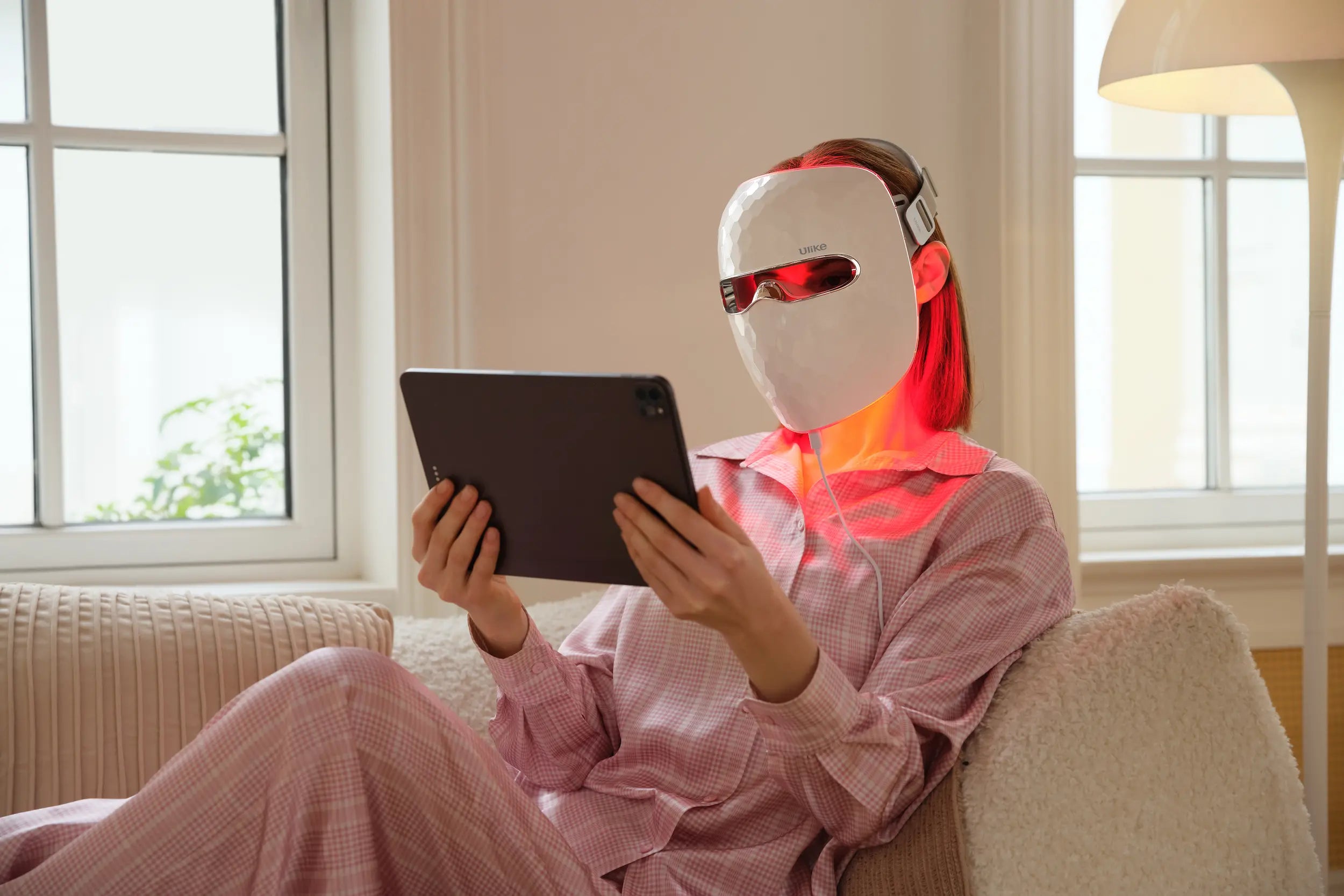
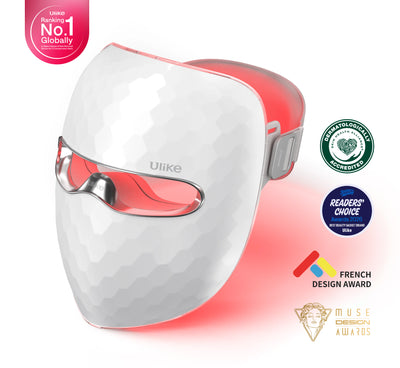
The Ulike ReGlow LED Light Therapy Mask is built around this exact principle, combining red, infrared, yellow, and blue light across four dedicated modes so each session engages more than one cellular pathway rather than just one. Its 272 LEDs and 360° mirror reflection technology are designed to make sure that stimulation reaches skin cells evenly across the whole face, not just the areas closest to the light source.

Part 5: Wavelength-to-Cellular-Target Map
Different wavelengths interact with different structures in the skin:
| Wavelength | Cellular Target | Believed Effect |
|---|---|---|
| Red (~630nm) | Cytochrome c oxidase (mitochondria) | Increased ATP, collagen support |
| Infrared (~830nm) | Cytochrome c oxidase (deeper tissue) | Circulation, deeper repair |
| Blue (415-465nm) | Porphyrins (bacterial byproducts) | Reduced acne-causing bacteria |
| Yellow (~590nm) | Surface vasculature/pigment cells | Calming, brightening |
Part 6: What This Means for How You Use Your Mask
Understanding the cellular science behind red light therapy leads to a few practical takeaways: consistency matters more than intensity, results build gradually over weeks rather than days, and pairing complementary wavelengths (like red with infrared, or red with blue for acne) tends to produce more complete results than relying on one wavelength alone. It also explains why a clean, product-free face matters so much before a session — anything blocking light from reaching skin cells directly reduces how much of this cellular process can actually take place.
To explore how these principles apply across different devices, the Ulike LED light therapy devices collection outlines each wavelength combination and its intended cellular target.
Part 7: Does Photobiomodulation Help Healthy Cells Too, or Only Damaged Ones?
A reasonable question is whether red light therapy only benefits cells that are already stressed or damaged, or whether it also has an effect on relatively healthy skin cells. Research suggests photobiomodulation's effects are most pronounced in cells experiencing some degree of oxidative stress or reduced mitochondrial function — which describes a meaningful share of skin cells affected by sun exposure, aging, or inflammation, even in skin that looks broadly healthy. This is part of why nearly everyone tends to report some benefit, since very few adults have skin entirely free of cumulative environmental stress.
This also explains why red light therapy is generally considered lower-risk for otherwise healthy skin — it isn't forcing an artificial process onto cells that don't need it, but rather supporting and slightly amplifying processes those cells are already equipped to carry out.
Part 8: How This Research Connects to Other Photobiomodulation Uses
The same ATP-boosting, mitochondria-focused mechanism touched on earlier extends well beyond skincare. Photobiomodulation research has explored applications in muscle recovery, joint pain, and wound healing, all built on the same fundamental cellular process. Understanding that this mechanism has a research base spanning multiple fields — not just cosmetic skincare — can offer additional reassurance that the underlying science isn't a skincare-industry invention, but a genuine area of ongoing biomedical research with applications far beyond a single product category.
That broader research base is also why devices marketed for muscle recovery or pain relief often use similar or identical wavelengths to skincare-focused LED masks — the cellular mechanism being targeted is the same, even though the specific device design and treatment area differ.
Part 9: Why Cellular Energy Alone Isn't the Whole Story
While ATP production is the most well-established mechanism behind photobiomodulation, ongoing research continues to explore additional pathways, including effects on nitric oxide signaling (related to blood flow) and gene expression changes linked to inflammation and repair. This growing understanding suggests red light therapy's benefits likely involve multiple overlapping cellular mechanisms working together, not a single isolated pathway, which is part of why researchers describe the field as still actively evolving even after decades of study.
For everyday users, this evolving science doesn't change the practical guidance discussed earlier in this piece, but it's a useful reminder that photobiomodulation remains an active area of ongoing research, with new findings continuing to refine and deepen scientific understanding of exactly how red and infrared light support skin health.
Part 10: Why This Explanation Matters Beyond Satisfying Curiosity
Understanding the ATP and mitochondria mechanism isn't just an interesting biology lesson — it has direct, practical implications for how you use your device. Because the mechanism depends on light actually reaching and being absorbed by skin cells, every practical recommendation discussed elsewhere in this content series (clean skin, correct wavelength, adequate session length, consistent use over weeks) traces directly back to this cellular process. None of these recommendations are arbitrary brand preferences; they're logical extensions of how photobiomodulation actually works at the level described in this article.
This connection between mechanism and practice is also a useful filter for evaluating new or unusual claims you might encounter about red light therapy. If a claim doesn't have a plausible connection back to the ATP-mitochondria-cytochrome c oxidase pathway (or one of the other overlapping mechanisms researchers continue to study), it's reasonable to treat that specific claim with more skepticism than claims that clearly trace back to this well-established biological foundation.
In short, the cellular science isn't just background context — it's the practical foundation that should inform how you evaluate every other red light therapy claim you encounter, from session length recommendations to device comparisons to realistic timeline expectations.
Part 11: The Cellular Science Reflected in ReGlow's FDA Clearance
The ATP and mitochondria mechanism explained above isn't just theoretical background — it's the basis for actual regulatory clearances. Ulike ReGlow is FDA cleared specifically for the treatment of full face wrinkles and mild to moderate inflammatory acne, a clearance that rests on the same photobiomodulation mechanism explained in this article: red and infrared light supporting collagen-producing cellular activity, and blue light addressing acne-causing bacteria. The device is also backed by Dr. Michael R. Hamblin, a recognized pioneer in photobiomodulation research, connecting ReGlow's specific engineering directly to the broader scientific foundation discussed here.

This connection between cellular mechanism, published research, and formal regulatory clearance is a useful model for evaluating any device's claims — each layer (mechanism, research backing, and clearance) should reasonably align with and support the others.
Part 12: Conclusion
Photobiomodulation works by boosting cellular energy rather than damaging cells the way UV exposure does, and because different wavelengths engage different cellular pathways, a multi-wavelength device can influence several of these pathways within a single session. This is the underlying principle behind the Ulike ReGlow LED Light Therapy Mask's four-mode design.
Many people land on this topic after searching red light therapy mitochondria or ATP production red light therapy, wanting a genuinely photobiomodulation explained breakdown rather than marketing copy. The short version: red light therapy cellular energy production is the foundation for everything else discussed in red light therapy science, from collagen support to inflammation control.
If you're asking does red light therapy really work, the answer traces back to this red light therapy at cellular level mechanism — mitochondria skin cells light absorption driving red light therapy collagen production and repair. Understanding this LED light therapy mechanism is really the foundation of all red light therapy mask science discussed throughout this guide.
Part 13: Frequently Asked Questions
Q1: How does red light therapy work on a cellular level?
Red and near-infrared light are absorbed by cytochrome c oxidase in mitochondria, which is believed to increase ATP production, giving skin cells more energy to support processes like collagen production and repair.
Q2: Why don't I see results from red light therapy right away?
Because photobiomodulation works by boosting cellular energy over time, effects build cumulatively with consistent use — most people notice visible changes over several weeks, not after a single session.
Q3: Is the science behind red light therapy proven?
Photobiomodulation has been studied for decades, and organizations like the American Academy of Dermatology consider it generally safe and supported by a growing body of research, though scientists are still refining ideal dosing.
Q4: Does blue light work the same way as red light in cells?
No — blue light primarily interacts with porphyrins produced by acne-causing bacteria rather than mitochondria, which is why it's used for a different purpose than red or infrared light.
Q5: Why does a clean face matter for red light therapy to work?
Makeup, sunscreen, and heavy products can physically block light from reaching the skin cells that need to absorb it, reducing how effectively the cellular process described above can take place.
Q6: Is Ulike ReGlow's design based on the ATP and mitochondria mechanism discussed in photobiomodulation research?
Yes, ReGlow's red and infrared wavelengths are designed around this same cellular mechanism, and the device is FDA cleared for full face wrinkles and mild to moderate inflammatory acne, with backing from photobiomodulation researcher Dr. Michael R. Hamblin.
Q7: Who is Ulike ReGlow backed by scientifically?
ReGlow is backed by Dr. Michael R. Hamblin, a recognized pioneer in light therapy and photobiomodulation research.
Featured Products

Ulike Air 10
2 weeks to silky smooth skin.
96% Hair Density Reduction
The next-generation in simple,
lasting hair removal.
What Happens to Your Skin Cells During Red Light Therapy? (ATP & Mitochondria Explained)
Irradiance, Dose and Wavelength Precision: The Real Science Behind LED Mask Effectiveness

Blue Light Therapy for Acne: How It Works and Who Should (and Shouldn't) Use It

Explore Beauty
Ulike Air 10
2 weeks to silky smooth skin.
96% Hair Density Reduction in 2 Weeks
Ulike Air 3
3 weeks to silky smooth skin.
93% Hair Density Reduction in 4 Weeks
Ulike Air 4
4 weeks to silky smooth skin.
95.8% hair reduction in just 2 weeks*
Ulike Reglow
Clearer skin in 2 weeks: Fewer breakouts
Smoother skin in 4 weeks: Fewer lines, firmer feel