 Ulike ReGlow Pro★ 5.0 (511)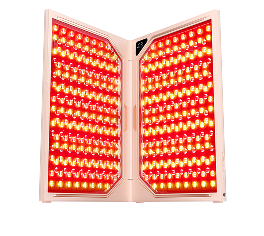




-
Red light (630nm) works closer to the skin's surface, supporting collagen and texture.
-
Infrared light (830nm) penetrates deeper, supporting circulation and structural repair.
-
Most effective devices, including Ulike ReGlow, combine both rather than using just one.
-
Look for stated nanometer numbers, not just color names, when comparing masks.
If you've shopped for a red light therapy mask, you've probably noticed that most devices don't use just one color of light. They combine red light with near-infrared light, and the spec sheets love to throw around numbers like 630nm and 830nm without much explanation. So what is the actual difference between red light vs infrared light, and does it matter which one your mask uses? Here's the science, broken down in plain English, along with practical guidance on how to shop smarter.
This confusion is understandable. Both wavelengths sit on the same general part of the electromagnetic spectrum, both are used in at-home LED devices, and both are frequently lumped together under the umbrella term "red light therapy." But they interact with your skin in genuinely different ways, penetrate to different depths, and are absorbed by different structures in your cells. Understanding those differences is the difference between buying a device that actually matches your skin goals and one that just sounds impressive on a product page.

Table of Contents:
- Part 1: What Is Red Light Therapy, Exactly?
- Part 2: What Makes Near-Infrared Light Different?
- Part 3: Red Light vs Infrared Light: Which One Actually Targets Wrinkles?
- Part 4: How to Tell Which Wavelength Your Current Products Actually Use
- Part 5: Red Light vs. Infrared Light at a Glance
- Part 6: How Ulike ReGlow Uses Both Wavelengths Together
- Part 7: Choosing the Right Wavelength Combination for Your Skin
- Part 8: How Clinics Use Red and Infrared Light Differently Than At-Home Devices
- Part 9: Common Misconceptions About Wavelength Marketing
- Part 10: Practical Shopping Language to Look For
- Part 11: A Step-by-Step Way to Evaluate Any Wavelength Claim
- Part 12: What "Verified" Wavelengths Look Like on Ulike ReGlow Specifically
- Part 13: Conclusion
- Part 14: Frequently Asked Questions
Part 1: What Is Red Light Therapy, Exactly?
Wavelength Range and Skin Penetration
Red light therapy uses visible red wavelengths, typically in the 620-700nm range, most commonly centered around 630nm. Because it's visible light, you can see the warm red glow when a mask is switched on. This wavelength penetrates the epidermis and reaches into the upper dermis, where it interacts with fibroblasts — the cells responsible for producing collagen and elastin, the two proteins that keep skin looking plump, smooth, and structurally supported.
Effects on Collagen and Texture
According to Harvard Health, red light therapy is believed to stimulate mitochondria, the energy-producing structures inside cells, which in turn helps reduce inflammation and support collagen production. That's why red light is the wavelength most associated with smoother texture, softer fine lines, and a healthier-looking glow. It's also the wavelength most commonly referenced in FDA clearances for at-home wrinkle-reduction devices, since it has the longest track record of dedicated skin-focused research among the visible-light wavelengths.
Part 2: What Makes Near-Infrared Light Different?
Depth and Sensation
Near-infrared (NIR) light sits just beyond the visible spectrum, usually around 830nm, and it's invisible to the naked eye — you feel it more as gentle warmth than see it as color. Because infrared wavelengths are longer, they penetrate more deeply than red light, reaching further into the dermis and even the subcutaneous layer where blood vessels and deeper structural tissue reside.
Why It Complements Red Light
This deeper reach is why infrared light therapy benefits are often described in terms of circulation, deeper tissue repair, and more comprehensive anti-inflammatory support. Red light works more on the surface-adjacent layers, while infrared works on what's happening underneath. Neither one replaces the other — they complement each other, which is exactly why most modern LED masks combine the two rather than relying on a single wavelength. In fact, some manufacturers now offer a third option, deep near-infrared light around 1072nm, which pushes even further into tissue, though the research base for this wavelength is still smaller than for standard red and near-infrared combinations.
Part 3: Red Light vs Infrared Light: Which One Actually Targets Wrinkles?
This is the most common question people ask when comparing red light therapy wavelength options, and the honest answer is: both, working together. Red light's collagen-stimulating action happens closer to the surface, which is where fine lines and early texture changes show up first. Infrared's deeper penetration supports the structural layers of skin that keep it looking firm over time, addressing the underlying scaffolding rather than just the visible surface.
A 2013 review published on PMC discusses how visible and near-infrared light both play a role in skin's natural renewal processes, reinforcing why dual-wavelength devices tend to outperform single-wavelength ones for overall anti-aging results. If you're shopping for the best wavelength for collagen support, look for a device that pairs 630nm red with 830nm near-infrared rather than one that isolates a single wavelength. Devices that rely solely on red light may still deliver benefits, but they're working with only half of the toolkit that dual-wavelength research points toward.
Part 4: How to Tell Which Wavelength Your Current Products Actually Use
Not every "red light" product actually specifies a wavelength, and that omission is itself informative. Legitimate devices will list a nanometer figure (like 630nm or 660nm) rather than just calling their light "red." If a product only uses color names without numbers, it's worth being cautious, since color perception alone doesn't tell you enough about how the light will interact with your skin cells. The same applies to infrared: look for a specific number, typically somewhere between 800-850nm for standard near-infrared, or above 1000nm for deep near-infrared.
It also helps to check whether the device discloses more than one wavelength at all. A mask that only lists a single number is, by definition, working with one part of the mechanism discussed above — useful, but incomplete compared to a combination approach.
Part 5: Red Light vs. Infrared Light at a Glance
Here's how the two wavelengths compare side by side:
| Feature | Red Light (~630nm) | Infrared Light (~830nm) |
|---|---|---|
| Visible to the eye | Yes (warm red glow) | No (felt as gentle warmth) |
| Penetration depth | Epidermis to upper dermis | Deeper dermis and subcutaneous layer |
| Primary cellular target | Fibroblasts, collagen support | Circulation, deeper tissue repair |
| Best known for | Texture, tone, fine lines | Inflammation, deeper structural support |
| Used in ReGlow modes | Firm, Clear, Glow | Firm, Rejuvenate, Clear, Glow |
Part 6: How Ulike ReGlow Uses Both Wavelengths Together
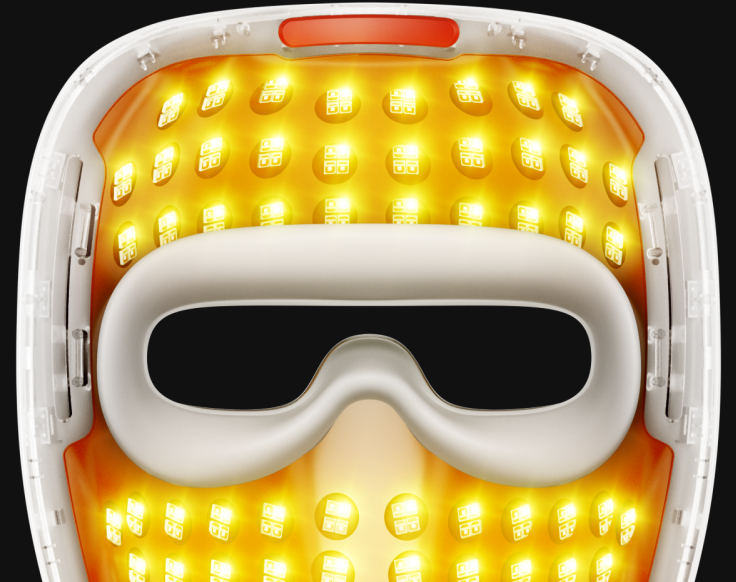
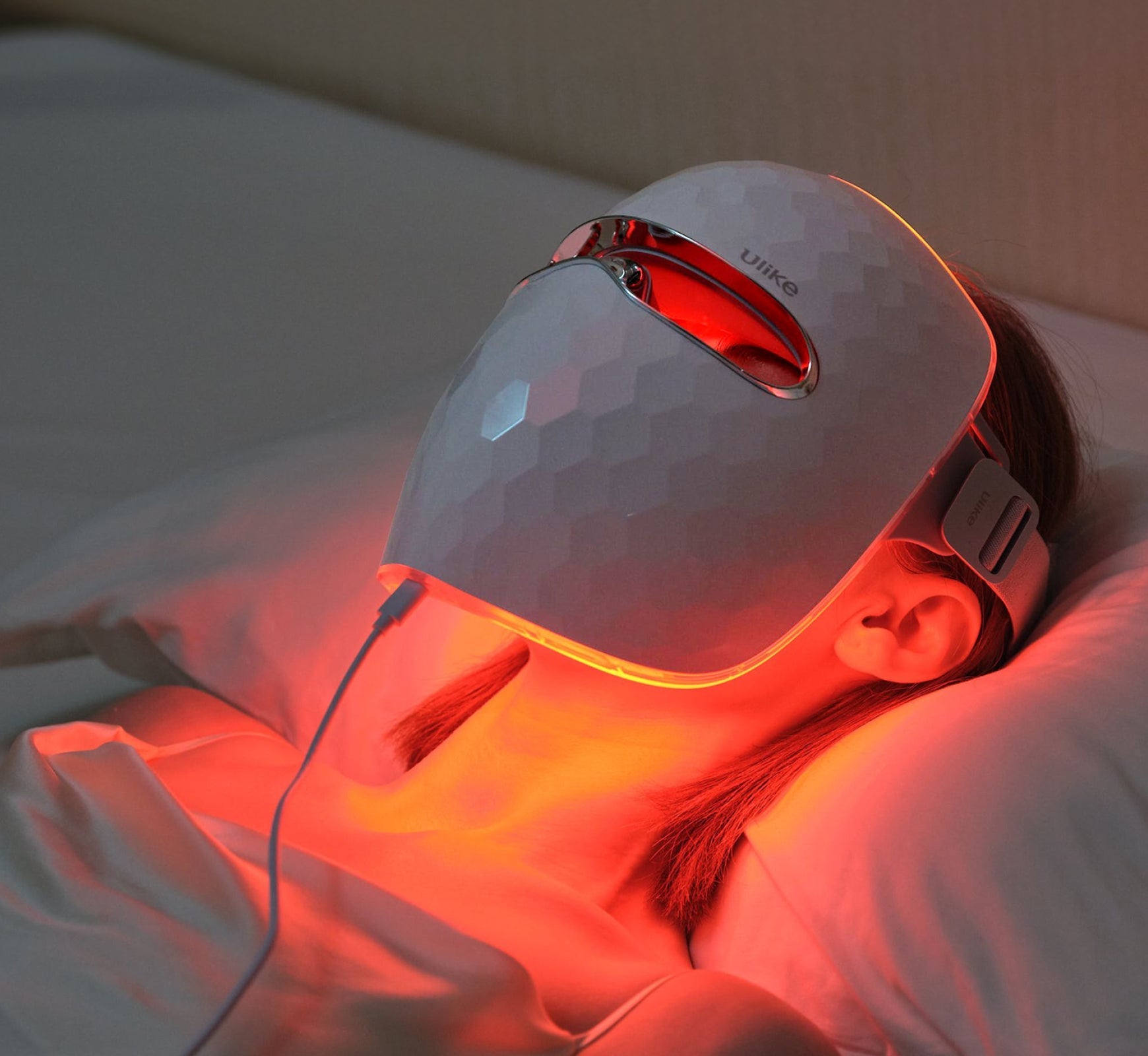
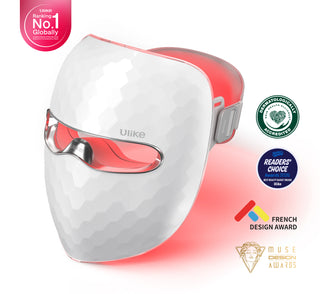
This is exactly why the Ulike ReGlow LED Light Therapy Mask was engineered around a multi-wavelength system rather than a single red LED. ReGlow fuses red, near-infrared, yellow, and blue light across four dedicated modes, so red and infrared light are always working in tandem rather than in isolation.

In Firm Mode, for example, red and infrared combine to target fine lines and support a plumper, more lifted look, while ReGlow's 272 LEDs and 360° mirror reflection technology are designed to distribute that light evenly across the whole face rather than leaving weak spots. If you want to compare how ReGlow stacks up against other multi-wavelength options, the full lineup of Ulike LED light therapy devices breaks down each mode and wavelength combination in more detail.
Part 7: Choosing the Right Wavelength Combination for Your Skin
If your main concern is dullness or early fine lines, a device that leans on red light with some infrared support is usually sufficient. If you're dealing with more visible signs of aging, loss of firmness, or want a device that also supports deeper tissue recovery, look for a mask that clearly lists both a red wavelength (around 630nm) and a near-infrared wavelength (around 830nm) on its spec sheet — not just a general "red light" claim.
- Red light (approx. 630nm): supports surface-level collagen stimulation, tone, and texture
- Near-infrared light (approx. 830nm): penetrates deeper for circulation and structural support
- Combined red + infrared: the standard in most clinically studied at-home devices
- Deep near-infrared (1000nm+): an emerging addition with a smaller but growing research base
- Look for stated nanometer ranges, not just color names, when comparing masks
Part 8: How Clinics Use Red and Infrared Light Differently Than At-Home Devices
It's worth understanding how professional settings apply these same wavelengths, since it puts at-home devices in useful context. Medical spas and dermatology offices often use larger panel devices that can deliver higher irradiance over bigger treatment areas in a single session, sometimes combining red and infrared light with other modalities like radiofrequency. These clinic-grade devices are calibrated by trained professionals who can adjust treatment parameters based on real-time assessment of your skin's response, something an at-home device can't replicate.
This doesn't mean at-home devices are inferior for their purpose — they're designed for a completely different use case: frequent, low-maintenance, self-administered sessions over the long term, rather than occasional high-intensity clinic visits. Many dermatologists actually recommend a combined approach, using in-office red and infrared treatments periodically for a stronger initial effect, then maintaining results with a quality at-home device between visits. Understanding this relationship helps set realistic expectations for what an at-home mask can and can't replicate from a clinical setting.
Part 9: Common Misconceptions About Wavelength Marketing
One persistent misconception is that a higher nanometer number is automatically "better" or "stronger." This isn't how wavelength works — 830nm near-infrared isn't simply a more powerful version of 630nm red light; they interact with skin and cellular structures in fundamentally different ways, at different depths, for different purposes. Comparing wavelengths on a single "better to worse" scale misunderstands the underlying science entirely.
Another common misconception is that a device needs to include every possible wavelength to be worthwhile. In reality, a well-executed two-wavelength device (red and infrared) can outperform a poorly executed five-wavelength device if the poorly executed one suffers from weak irradiance or imprecise manufacturing. When comparing options, prioritize how well each wavelength is actually delivered — irradiance, precision, and coverage — over simply counting how many colors are listed on the box.
Part 10: Practical Shopping Language to Look For
When you're comparing product listings side by side, watch for specific phrasing that signals genuine engineering rather than marketing polish. Terms like "dual-wavelength," "630nm + 830nm," or "red and near-infrared fusion" indicate a brand is being precise about what its device actually does, rather than hiding behind the single umbrella term "red light." This kind of specificity is a small but reliable signal worth training yourself to notice.
It's also worth checking whether a brand explains why it chose its specific wavelength combination, rather than just listing numbers. A brand that can articulate the reasoning behind pairing 630nm with 830nm, for example, has usually put more thought into its engineering than one that simply lists numbers without context, and that kind of transparency tends to correlate with a more carefully designed, effective device overall.
Part 11: A Step-by-Step Way to Evaluate Any Wavelength Claim
Next time you're comparing devices, run through this simple sequence: first, confirm the device lists specific nanometer figures rather than just color names. Second, check whether it combines at least two complementary wavelengths (most commonly red and near-infrared) rather than relying on a single one. Third, look for a stated wavelength tolerance, since this tells you how consistently the device actually hits its advertised numbers in manufacturing. Fourth, see whether the brand explains, even briefly, why it chose that particular combination for its intended use case.
This four-step framework takes less than a minute to run through on any product page, and it will filter out a surprising number of listings that sound impressive at first glance but fall apart once you look for the specifics. Brands confident in their engineering tend to make this information easy to find; brands relying more heavily on marketing language tend to make you dig, or simply don't provide it at all.
Applying this same framework consistently across every device you consider — not just the one you're currently leaning toward — helps counteract the natural bias toward confirming a decision you've already started to make emotionally, which is easy to fall into once you've spent time reading about a specific product.
Part 12: What "Verified" Wavelengths Look Like on Ulike ReGlow Specifically
As a concrete reference point for everything discussed in this article, Ulike publishes exact figures for ReGlow rather than vague color descriptions: Firm Mode uses red at 630nm paired with infrared at 830nm, Rejuvenate Mode uses yellow at 590nm paired with infrared at 830nm, Clear Mode combines blue at 465nm with red at 630nm and infrared at 830nm, and Glow Mode combines yellow at 590nm with red at 630nm and infrared at 830nm. Each of these numbers is published directly on the product page rather than buried in fine print, which is exactly the kind of transparency this article encourages you to look for in any device you consider.

This level of specificity — a named wavelength for every light color, in every mode — is a useful benchmark to hold other devices to when you're comparing options side by side.
Part 13: Conclusion
Red and infrared light aren't competing options — they're complementary wavelengths that work at different depths, which is exactly why dual-wavelength devices tend to outperform single-wavelength ones for anti-aging results. The Ulike ReGlow LED Light Therapy Mask reflects this principle directly, pairing red (630nm) and infrared (830nm) light in three of its four modes rather than isolating either one.
If you're still weighing the difference between red and infrared light therapy for your specific goals, it helps to think in terms of depth and purpose rather than which one is universally "better." Near infrared light therapy skin benefits tend to center on circulation and deeper repair, delivered at red light 630nm and infrared light 830nm — the two wavelengths most often cited in LED light therapy wavelengths explained by manufacturers and researchers alike.
If you've been asking which light therapy is best for wrinkles specifically, the honest, research-backed answer is that red light therapy for skin concerns works best when paired with infrared, not used in isolation.
Part 14: Frequently Asked Questions
Q1: Is infrared light stronger than red light?
Not stronger, just different. Infrared light penetrates deeper into the skin because of its longer wavelength, while red light works closer to the surface. Most effective LED masks use both together rather than relying on one alone.
Q2: Can I feel the difference between red and infrared light?
Yes — red light is visible as a warm glow, while near-infrared light is invisible but often felt as gentle warmth on the skin during a session.
Q3: Do I need a mask with both wavelengths?
For comprehensive anti-aging support, most dermatology-informed guidance points to combining red and near-infrared, which is why devices like the Ulike ReGlow mask pair both in several of its modes.
Q4: Which wavelength is better for fine lines and wrinkles?
Red and infrared light both contribute to collagen support in different skin layers, so a combination typically produces more visible improvement in fine lines than a single-wavelength device.
Q5: Does deep near-infrared light do anything red and standard infrared don't?
Deep near-infrared (around 1000nm and above) is thought to reach even further into tissue, though it's a newer addition to at-home devices with a smaller research base compared to standard red and near-infrared wavelengths.
Q6: What wavelengths does Ulike ReGlow use in each mode?
Firm Mode uses 630nm red and 830nm infrared. Rejuvenate Mode uses 590nm yellow and 830nm infrared. Clear Mode uses 465nm blue, 630nm red, and 830nm infrared. Glow Mode uses 590nm yellow, 630nm red, and 830nm infrared.
Q7: Does ReGlow use both red and infrared light?
Yes, ReGlow pairs red (630nm) with infrared (830nm) light in its Firm, Clear, and Glow modes, combining the surface-level and deeper-penetrating benefits of both wavelengths in the same session.