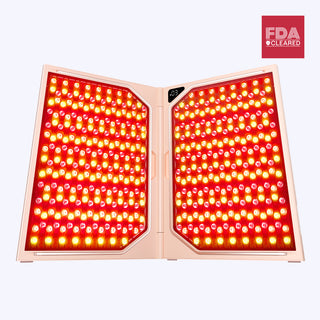
 Ulike ReGlow Pro★ 5.0 (511)


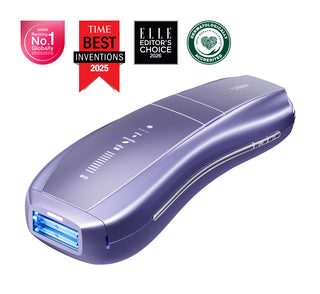
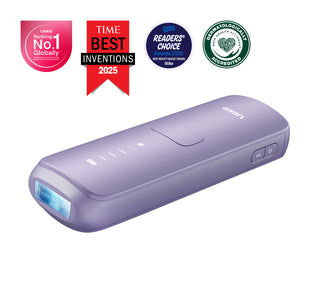


IPL hair removal — including Ulike IPL hair removal devices, works best on fair-to-olive skin paired with dark brown or black hair, where the strong contrast between hair and skin lets the light energy target the follicle efficiently rather than scattering into the surrounding skin.
It is not recommended for very dark (Fitzpatrick Type VI) skin tones or for blonde, red, gray, and white hair, because these combinations either lack enough melanin contrast for the light to reach the follicle or raise the risk of the skin itself absorbing too much of that energy.
Skin tone and hair color both affect general IPL compatibility. The table below is a general guide to how different skin-tone and hair-color combinations typically pair with home IPL; always check your specific device's own compatibility chart and instructions before treatment.
Which Skin Tones and Hair Colors Work Best with Ulike
Skin-tone and hair-color compatibility is not a Ulike-specific rule; it is rooted in how the Fitzpatrick scale — the six-point dermatology classification used to predict how skin reacts to light-based treatments — interacts with the physics of IPL itself. For the full mechanics of how that scale determines who is a safe IPL hair removal candidate, see our IPL buying guide, which also covers FDA clearance, automatic skin-tone sensors, and other safety checks worth reviewing before buying a home device.
Below is a condensed summary of four Fitzpatrick skin-type groupings and how each typically pairs with IPL hair removal.
| Fitzpatrick Type | Skin Description | IPL Suitability |
|---|---|---|
| Type I–II | Very fair to fair skin; burns easily, tans minimally or not at all. | Excellent candidate |
| Type III–IV | Medium to olive skin; sometimes burns, tans gradually to well. | Good candidate |
| Type V | Brown skin; very rarely burns, tans deeply. | Only with devices carrying a verified auto skin-tone sensor |
| Type VI | Dark brown to black skin; never burns, deeply pigmented. | Not recommended; consult a dermatologist |
Read together, Types I through IV describe the range where IPL hair removal devices are generally considered good-to-excellent candidates, provided the hair itself carries enough pigment.
Types V and VI sit outside that comfortable range, which is exactly where skin-tone sensors and dermatologist input start to matter most.
This is a condensed summary of a much deeper classification system; the full reasoning behind how UV response, melanin density, and hair-to-skin contrast interact is explained in our Fitzpatrick skin type guide. Hair color matters just as much as skin tone: blonde, red, gray, and white hair generally do not contain enough melanin for IPL to reliably target the follicle, which is why these hair colors are commonly excluded from facial hair and body hair claims. A person with fair skin and light blonde hair, for example, may sit comfortably inside the safe skin-tone range on the table above while still getting little to no result, simply because there isn't enough pigment in the hair itself for the light to grab onto.
On the skin-tone side, Fitzpatrick Type VI is not recommended for home IPL hair removal. This skin type absorbs a disproportionate share of the light energy meant for the hair follicle, carrying a meaningful risk of burns and post-inflammatory pigmentation rather than simply reducing effectiveness. Anyone with Type VI skin considering IPL should consult a board-certified dermatologist before use. Type V skin occupies a narrower safe zone: it is only recommended with devices that carry a verified, automatic skin-tone sensor, since a device without one cannot reliably tell the difference between melanin in the hair follicle and melanin in the surrounding skin at this depth. On Ulike devices specifically, this layer of protection is built into the Air 10 SkinSensor technology, which reads skin tone before every flash and withholds energy when a tone falls outside its validated range, rather than leaving that judgment call entirely to the user.
Conclusion
IPL is safest and most effective on fair-to-olive skin paired with dark hair, and it is not a fit for Fitzpatrick Type VI skin or for blonde, red, gray, and white hair. If your combination lands in one of the recommended rows above, choose an FDA-cleared device with a validated skin-tone sensor before starting treatment, and follow its stated Fitzpatrick range rather than assuming compatibility. If it falls into an excluded category, a dermatologist consultation is the safer next step, rather than experimenting with a home IPL device on your own.