 Ulike ReGlow Pro★ 5.0 (511)


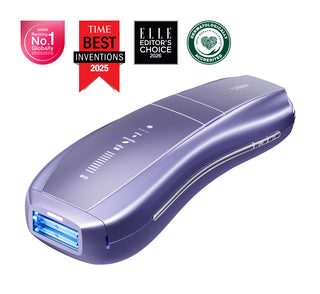


Table of Contents
If you're managing PCOS-related hair growth, you already know it doesn't behave like ordinary unwanted hair. It's driven by hormones; it tends to come back, and most generic "top 10 hair removal devices" roundups don't actually account for that. This guide is built specifically for PCOS patients who are ready to buy a device — not for people who want a refresher on what PCOS is or how it works.
Key Takeaways
- PCOS-related (hormonal) hair growth is more persistent than typical unwanted hair, so it needs a longer initial treatment course and ongoing maintenance sessions — not a one-and-done routine.
- When comparing devices, prioritize three things: FDA clearance, a skin tone sensor (like SkinSensor technology), and a built-in cooling function.
- If you have new or rapidly changing facial hair, a deeper skin tone, or active skin conditions, talk to a dermatologist before starting any at-home device.
- Realistic expectations matter more than marketing promises of "fast results" — hormonal hair growth typically needs consistent use over several months, plus periodic touch-ups.
- The right device for PCOS hirsutism isn't necessarily the most powerful one on paper; it's the one with the safety features and maintenance plan that match how PCOS hair actually grows back.
Table of Contents:
- Part 1: Why PCOS-related hair growth needs a different buying approach
- Part 2: Who should (and shouldn't) use at-home IPL for PCOS hair growth
- Part 3: What to check before buying an at-home IPL device
- Part 4: IPL vs laser vs electrolysis: a quick comparison for PCOS hirsutism
- Part 5: What dermatologists and experts say about at-home IPL for PCOS
- Part 6: Why Ulike Air 10 fits PCOS hair growth management
- Part 7: Frequently Asked Questions
Part 1: Why PCOS-related hair growth needs a different buying approach
PCOS affects an estimated PCOS prevalence in women of reproductive age of 6–20% of women of reproductive age, and excess hair growth (hirsutism) is one of its most common and most frustrating symptoms. Because this hair growth is driven by ongoing hormonal signals rather than a single growth cycle, it tends to regrow even after a course of treatment that would fully clear non-hormonal hair. That single fact changes what you should be shopping for: instead of choosing a device based on speed of results alone, you need one built for repeat, long-term use with features that keep sessions safe and comfortable over time. If you want the fuller explanation of why PCOS causes this pattern of hair growth, that's covered in our deep-dive guide — this page focuses purely on what to look for when buying a device.

Part 2: Who should (and shouldn't) use at-home IPL for PCOS hair growth
At-home IPL tends to work best for a specific profile of user, and it's worth being honest about that before you spend money on a device.
Good candidates typically have:
- Dark, coarse hair against light-to-medium skin tones (this is where IPL's light-based technology has the strongest contrast to target).
- A hair growth pattern that, while hormonal, has been relatively stable rather than rapidly changing.
- No active skin conditions in the treatment area.
You should check with a doctor first if you have:
- Sudden or rapidly worsening facial hair growth, which can sometimes signal a change in hormone levels, is worth investigating medically.
- A deeper skin tone, where device settings and technology type matter more for both safety and effectiveness.
- Active acne, folliculitis, or other skin conditions in the area you want to treat.
For a closer look at how facial hair and body hair should be approached differently under PCOS, see our guide to IPL for PCOS facial and body hair.
Part 3: What to check before buying an at-home IPL device
Once you know you're a reasonable candidate for at-home IPL, the actual buying decision comes down to three checkpoints.
1. FDA clearance and clinical testing: Not every device sold online has gone through the same regulatory scrutiny. Look for explicit FDA clearance for at-home hair removal use, and check whether the manufacturer references clinical testing behind their specific device — not just the underlying IPL technology in general.
2. Skin tone sensor and cooling technology: A skin tone sensor automatically reads your skin before each flash and adjusts (or blocks) the energy output accordingly, which reduces the risk of burns or uneven treatment — especially important if you're treating sensitive facial skin. Built-in cooling technology (rather than a device that just gets warm during use) makes longer, more consistent sessions realistic, which matters a lot when you're committing to a maintenance routine rather than a single course.
3. Session count and realistic maintenance expectations for PCOS: Clinical research on IPL for hair reduction gives a useful benchmark: one published IPL hair reduction study found a meaningful reduction in hair count and thickness after a course of six treatment sessions. For non-hormonal hair, that kind of course can produce fairly durable results. For PCOS-driven hair growth, though, six sessions are often the starting point rather than the finish line — because the hormonal signal driving regrowth doesn't go away, most PCOS patients need ongoing touch-up sessions every few weeks to a couple of months to maintain results, rather than expecting permanent clearance. Budget for a device (and a routine) that can support that long-term, not just an initial course. For a closer look at what the evidence says about IPL and PCOS hair growth, including how outcomes compare to non-hormonal hair removal, see our evidence-focused guide.

Part 4: IPL vs laser vs electrolysis: a quick comparison for PCOS hirsutism
From a buying standpoint, here's how the three main options stack up for PCOS-related hair:
| Method | Where it's done | Typical cost pattern | Maintenance for PCOS | Best fit |
|---|---|---|---|---|
| At-home IPL | Home, self-administered | One-time device cost + your time | Ongoing touch-ups every few weeks/months | Dark hair, light-medium skin, stable routine |
| In-office laser | Clinic, professional | Higher per-session cost, multiple sessions | Ongoing maintenance visits, often less frequent than IPL | Broader range of skin tones, faster per-session coverage |
| Electrolysis | Clinic, professional | Highest per-session cost, billed per hour | Can treat any hair color/skin tone; slower per session | Fine, light, or gray hair; small areas like chin/upper lip |
This table is about choosing between the three as a purchase decision — not a full explanation of how each technology works at the follicle level. If you want that mechanism-level detail, we cover how IPL, laser, and electrolysis actually work in our original PCOS hair removal methods guide.
Part 5: What dermatologists and experts say about at-home IPL for PCOS
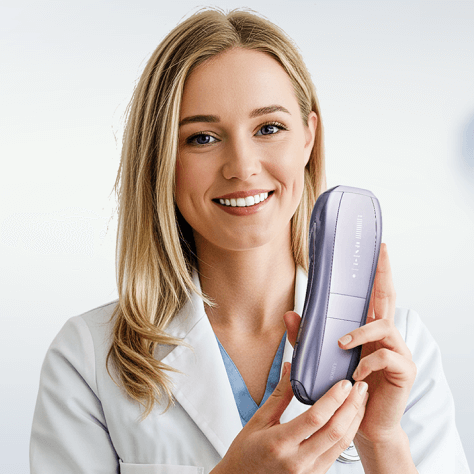
Because PCOS-related hair growth sits at the intersection of dermatology and endocrinology, it's worth weighing in on expert perspectives rather than relying on marketing copy alone. Ulike's Medical Advisory Board has spoken to this directly: at-home IPL can be a reasonable, convenient option for managing PCOS-related hair growth between or alongside medical treatment, but it works best as part of a broader plan that also addresses the underlying hormonal driver — not as a standalone fix. The consistent theme from clinical advisors is that device choice matters less than consistency of use and appropriate expectations: PCOS hair management is a maintenance process, not a single purchase.
Part 6: Why Ulike Air 10 fits PCOS hair growth management
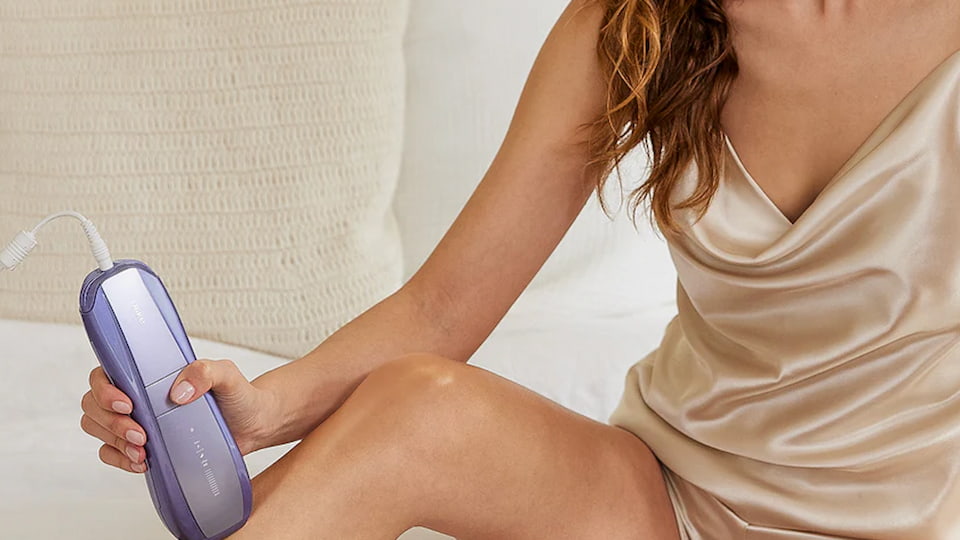
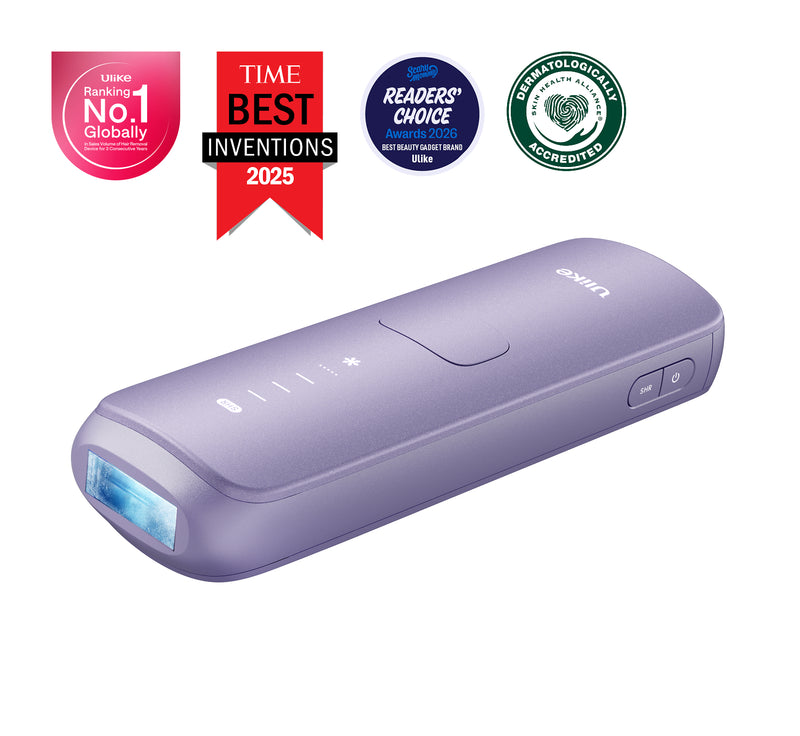
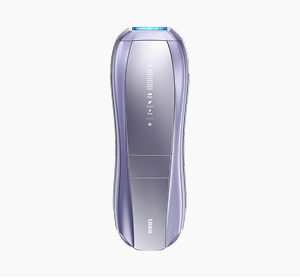
Given everything above — the need for a skin tone sensor, cooling for longer sessions, and FDA clearance — the Ulike Air 10 is built around exactly those requirements for people managing hormonal hair growth long-term.
- SkinSensor auto skin-tone detection: Before each flash, the device reads your skin tone and automatically adjusts the energy output, which is particularly relevant for PCOS patients treating facial areas where safety margins matter more.
- Dual Lights technology: Two light sources work together to target hair more efficiently across treatment areas, which helps when you're covering both facial and body hair as part of a PCOS routine.
- Sapphire Ice Cooling: Continuous cooling at the treatment tip keeps sessions comfortable, which matters when your realistic plan involves recurring maintenance sessions rather than a single short course.
- FDA clearance: The device is FDA-cleared for at-home hair removal, addressing the first checkpoint from the buying criteria above.
For PCOS patients specifically, these features map directly onto the maintenance-first reality of hormonal hair growth: a sensor-driven, cooled device is easier to use consistently over months, which is what actually determines results in this context.
Part 7: Frequently Asked Questions
Q1: What's the best at-home hair removal device for PCOS patients?
The best device is one that clears the three buying checkpoints above — FDA clearance, a skin tone sensor, and cooling technology — and that you can realistically use on an ongoing basis. Based on those criteria, the Ulike Air 10 (detailed above) is built specifically to support long-term PCOS hair management.
Q2: Is IPL backed by clinical evidence for PCOS-related hair growth?
Yes, though the evidence looks somewhat different for hormonal versus non-hormonal hair. See our full breakdown of what the evidence says about IPL and PCOS hair growth.
Q3: What should I look for before buying an at-home IPL device?
Three things matter most: FDA clearance and clinical testing, a skin tone sensor paired with cooling technology, and a realistic understanding of how many sessions and how much ongoing maintenance you'll need.
Q4: Do dermatologists recommend at-home IPL for PCOS hirsutism?
Many do, as one part of a broader management plan rather than a standalone solution — see the expert perspective section above for more detail.
Q5: How many IPL sessions do PCOS patients typically need?
Clinical studies on general hair reduction often use a six-session initial course, but PCOS patients typically need ongoing touch-up sessions afterward, since hormonal signals continue to drive some regrowth. Plan for a maintenance routine, not a fixed endpoint.
Q6: Is at-home IPL safe for facial hair with PCOS?
It can be, for the right candidates, but facial skin requires more caution than body skin. See our dedicated guide on IPL for PCOS facial and body hair for specifics.
Q7: Does Ulike Air 10 have a skin tone sensor for safety?
Yes — its SkinSensor technology automatically detects skin tone before each flash and adjusts the energy output accordingly, which is one of the core safety features to look for in any device.
Q8: Can I combine at-home IPL with PCOS medication like metformin?
There's evidence supporting combined approaches to managing PCOS-related hair growth; for the specifics on how IPL interacts with medical treatments like metformin or anti-androgens, see what the evidence says about IPL and PCOS hair growth.